
Link structure matters
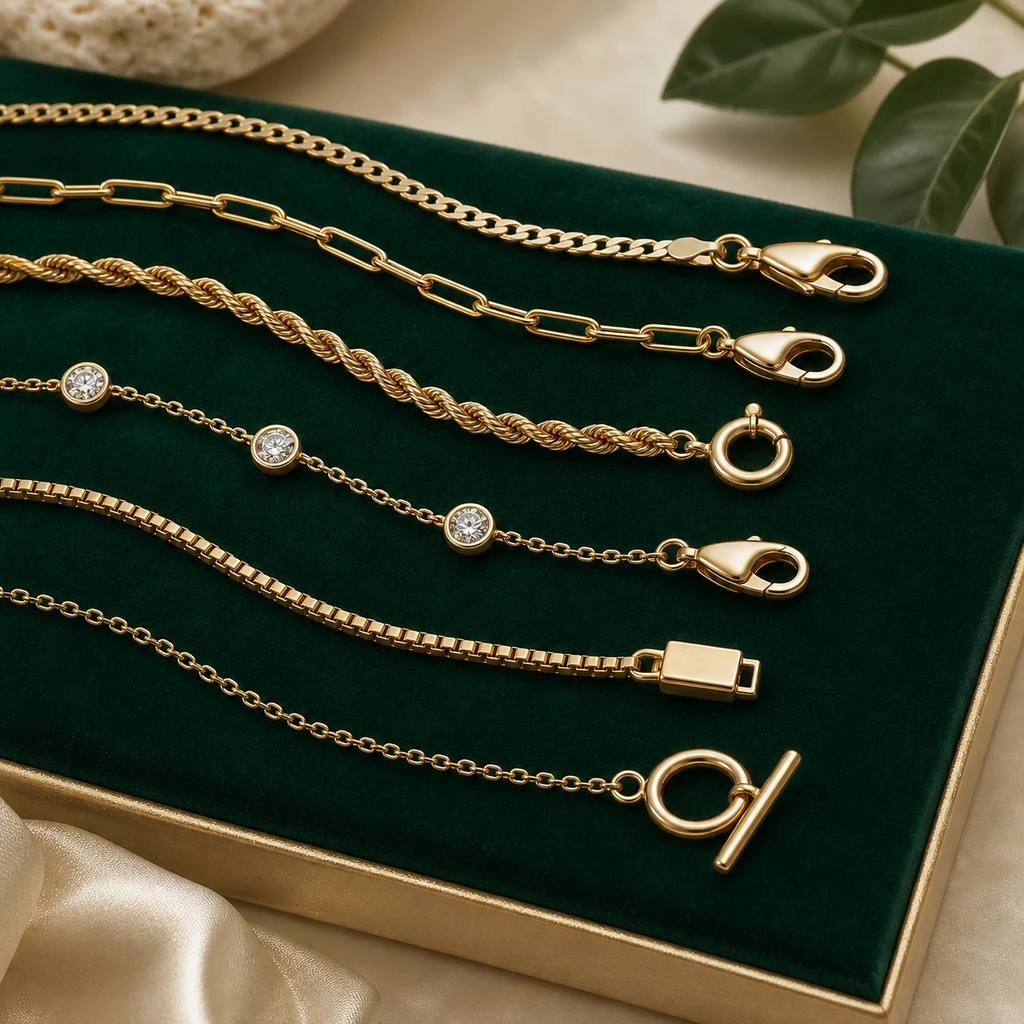
Open links, interwoven links, and flat articulated links move and wear differently.
Necklace & Bracelet Construction
AI-generated educational visual; artistic representation.
The Essential Idea
A chain is more than a way to carry a pendant. Link shape, wire thickness, flexibility, surface area, soldering, weight, and clasp construction determine how the piece drapes, reflects light, layers, and wears over time.
Names can vary by manufacturer, and two chains with the same name can differ greatly in substance. Compare measurements, gram weight, whether links are solid or hollow, and the scale of the clasp—not the style name alone.
The styles shown here are representative examples from a much wider world of chain and clasp construction. Link proportions, finishes, and naming conventions continue to vary across makers.
Open links, interwoven links, and flat articulated links move and wear differently.
The closure should suit the chain’s weight, opening size, and intended ease of use.
Different lengths, weights, and textures reduce tangling and create visual separation.
Everyday Foundations
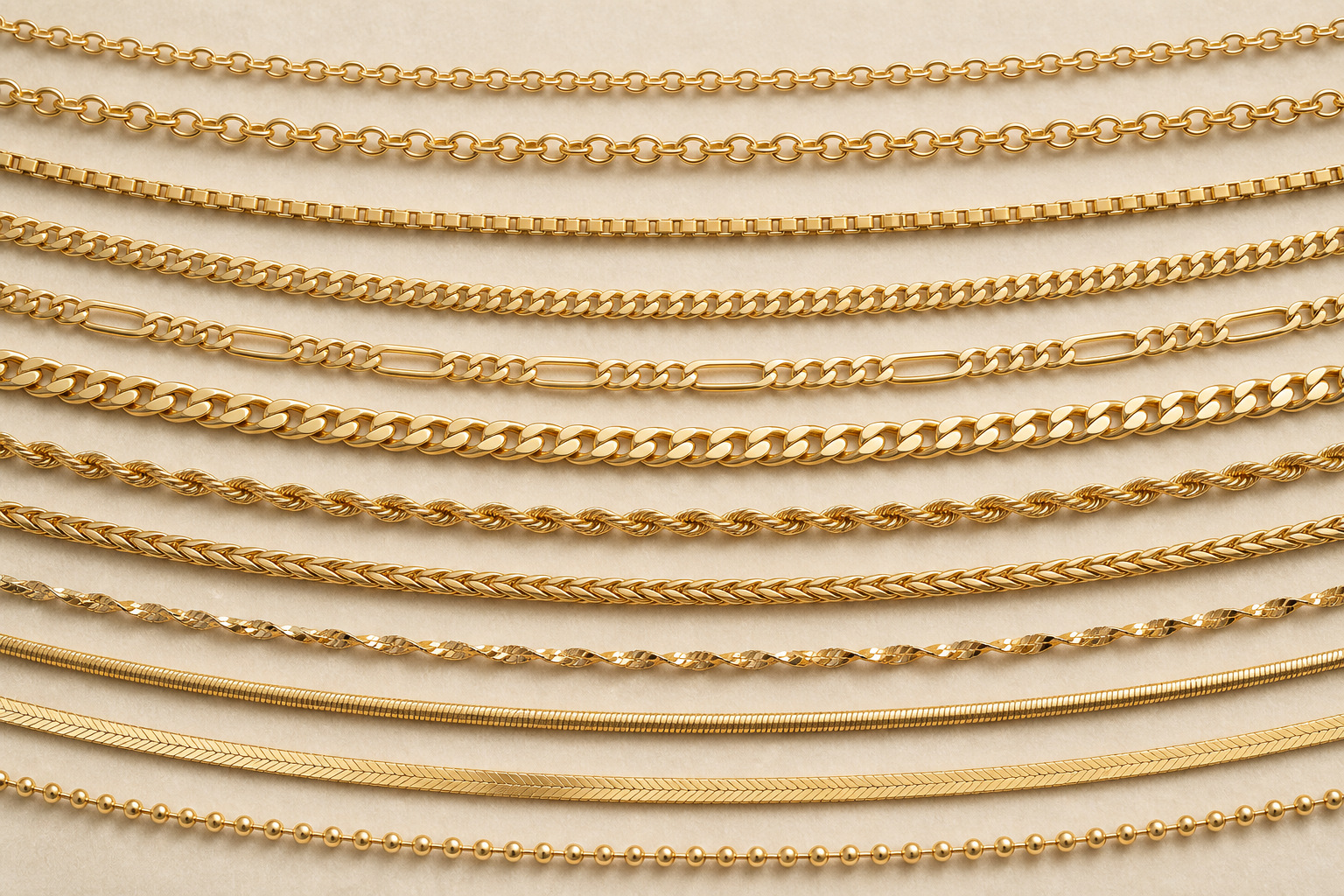
Cable chain uses repeated oval or round links and is one of the most versatile choices for pendants. Rolo chain is a rounder, often heavier-looking variation. Box chain forms squared links with a geometric profile and smooth visual rhythm.
Curb chain uses flattened, twisted links that lie in one plane. Figaro follows a repeating pattern—commonly several short links followed by one elongated link—creating more visual movement. Cuban chain is a substantial, tightly interlocking curb-family style prized for its smooth, dense appearance. Link thickness and solder quality influence strength in every style.
Texture & Movement
Rope chain twists groups of links into a spiral that reflects light from many angles. Wheat chain interweaves links in a symmetrical pattern for a flexible, substantial texture. Singapore chain uses twisted, interconnected segments for a lighter, fluid sparkle.
Byzantine chain creates an intricate dimensional weave from grouped links. Complex woven chains can be strong for their scale, but repairs may require a specialist who can restore the original pattern without creating a stiff section.
Fluid Surfaces
Snake chain uses tightly connected plates or bands to create a smooth, rounded surface. Herringbone uses short flat segments arranged in a V pattern, producing a broad ribbon of reflected light. Omega chain creates a smooth, semi-rigid collar effect, while mesh uses woven wire for textile-like flexibility.
These styles should not be sharply folded or stored in a tight knot. Kinks can be difficult or impossible to remove invisibly, and some cannot accommodate a pendant unless the bail is appropriately large and the chain is designed for one.
Modern Scale
Paperclip chain uses elongated links with airy negative space and can range from delicate to bold. Anchor or mariner links often include a center bar inspired by nautical chain. Cuban chain creates a dense, polished statement through tightly interlocking curb links. Sphere chains—also called bead or ball chains—join small round elements with connectors to create a clean dotted line.
Larger open links may allow charms or clasps to connect at multiple points, making length more adjustable. Confirm that the chosen link can accept the clasp without distortion and that hollow statement links are not mistaken for solid construction.
Closures
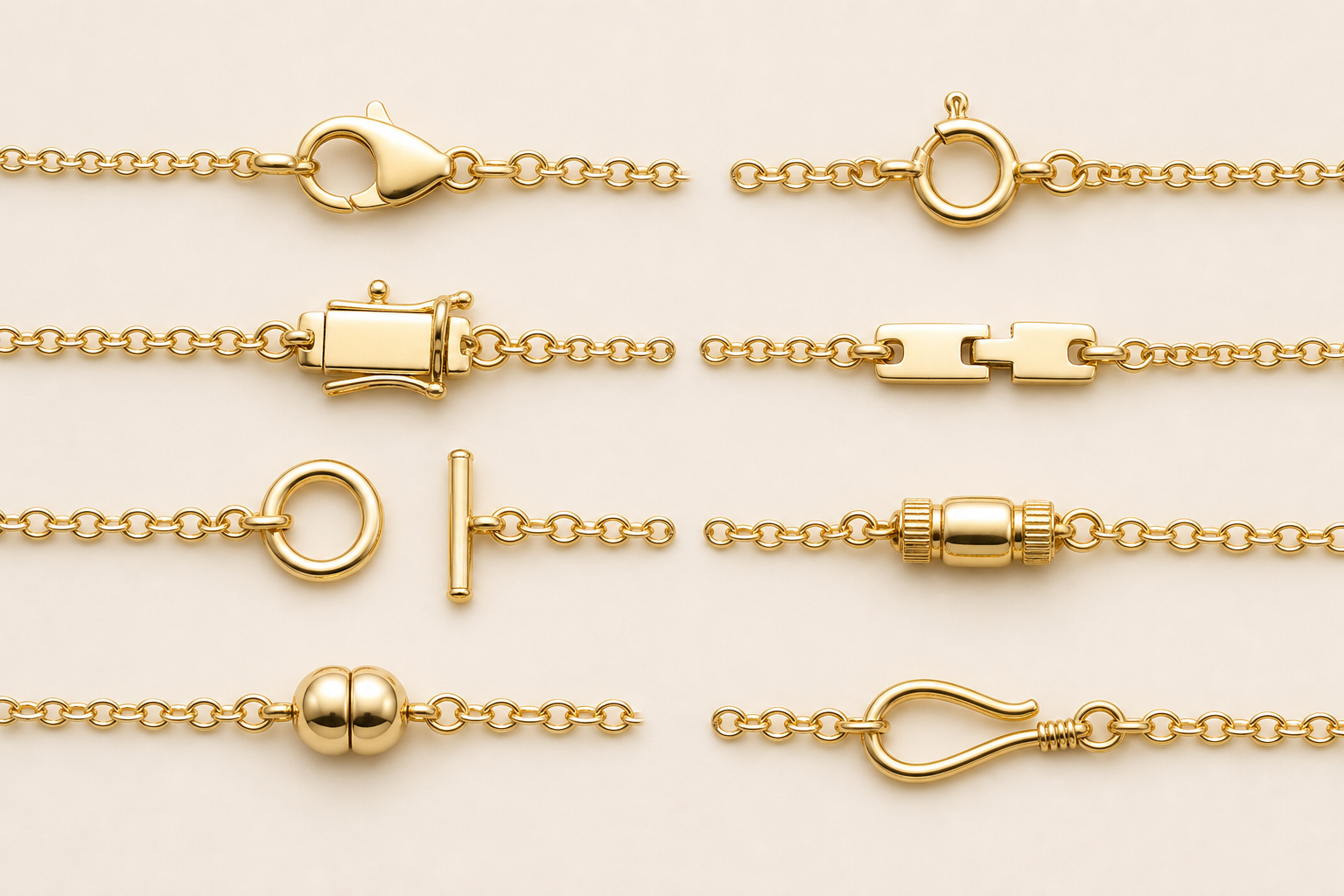
A lobster clasp uses a spring-loaded lever and is common for everyday necklaces and bracelets. A spring ring is circular and lighter in scale. Box and tongue-and-groove clasps hide a flexible tongue inside a housing and often include one or two safety latches for tennis bracelets and substantial pieces.
Toggle clasps pass a bar through a ring and work best when gravity or adequate length keeps the bar from slipping back through. Barrel clasps screw or twist together. Fishhook clasps use a shaped hook or tongue, often integrated decoratively into pearl strands or bracelets. Magnetic clasps are easy to operate, but holding strength and intended use must be considered.
Care & Selection
A pendant chain should be substantial enough for the pendant and have a clasp and end ring that pass through the bail. A bracelet clasp must tolerate more movement and accidental contact than many necklace clasps. Check that links articulate freely and that solder seams are closed.
Separate chains before storage, fasten clasps, and lay delicate or flat chains straight. Have worn end rings, thinning links, distorted clasps, and safety catches repaired before they fail.
From Education to Exploration
Continue From Learning to Exploring
Terminology and facts were reviewed against current guidance from independent gemological and U.S. consumer-protection authorities. Report formats and services can change.