Color is multidimensional
Hue, tone, and saturation work together to create the face-up appearance.
Color Diamond Education
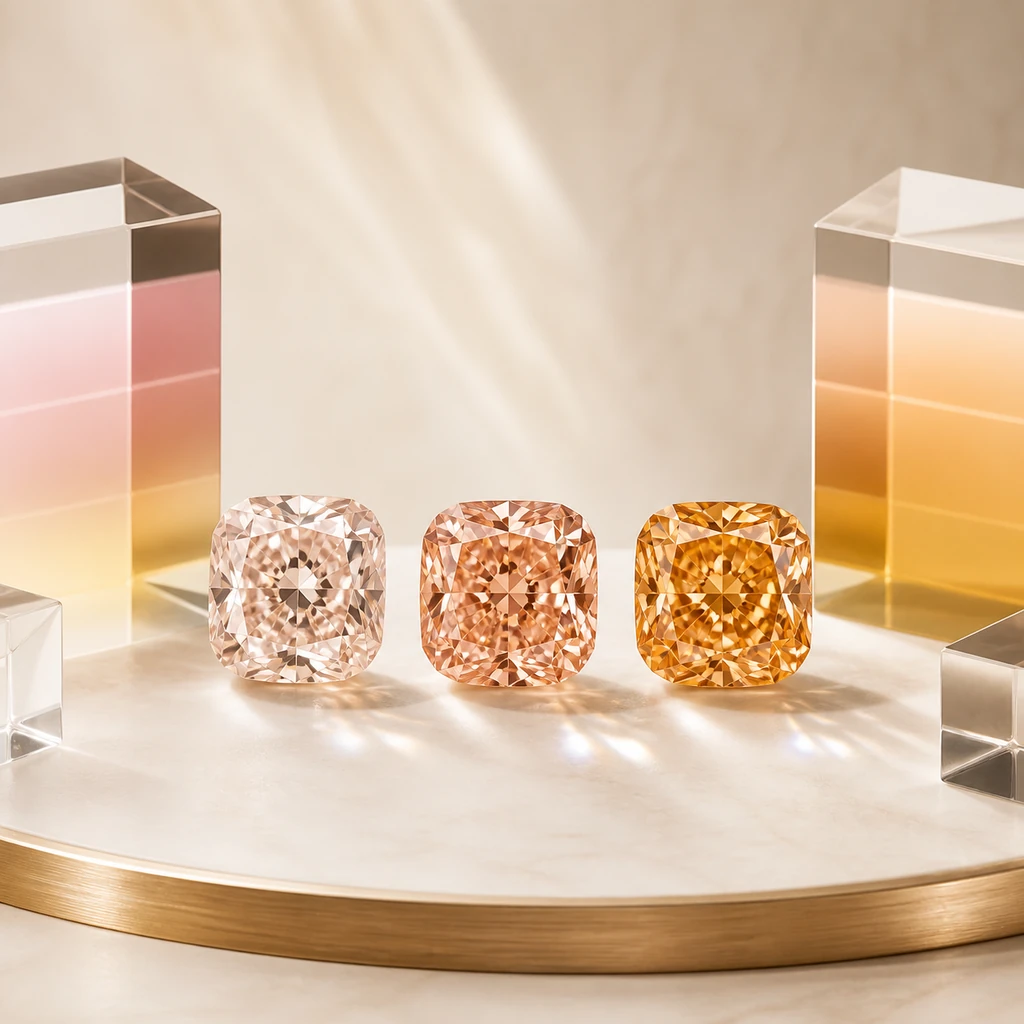
AI-generated educational visual; artistic representation.
The Essential Idea
Diamonds are not limited to colorless. They can appear in yellow, pink, blue, green, orange, brown, gray, purple, red, and combinations in between.
This guide begins with the language of color. It also separates three ideas that should never be confused: whether a diamond is natural or laboratory-grown, whether its color developed during formation or growth, and whether a treatment was used to alter that color.
Hue, tone, and saturation work together to create the face-up appearance.
A report may identify both how the diamond formed and how its color originated.
The most useful comparison is how the finished diamond looks in jewelry and in different lighting.
The Spectrum
Natural diamonds in the D-to-Z range are judged by the relative absence of color. Natural yellow or brown diamonds with color beyond the Z range—and diamonds showing another hue face-up—enter the fancy-color system.
For colored diamonds, more color is not treated as a defect. Laboratories describe the visible hue and the combined effect of tone and saturation. The terminology on a report can vary by laboratory and by whether the diamond is natural or laboratory-grown, so the report itself should always be read carefully.

The Science
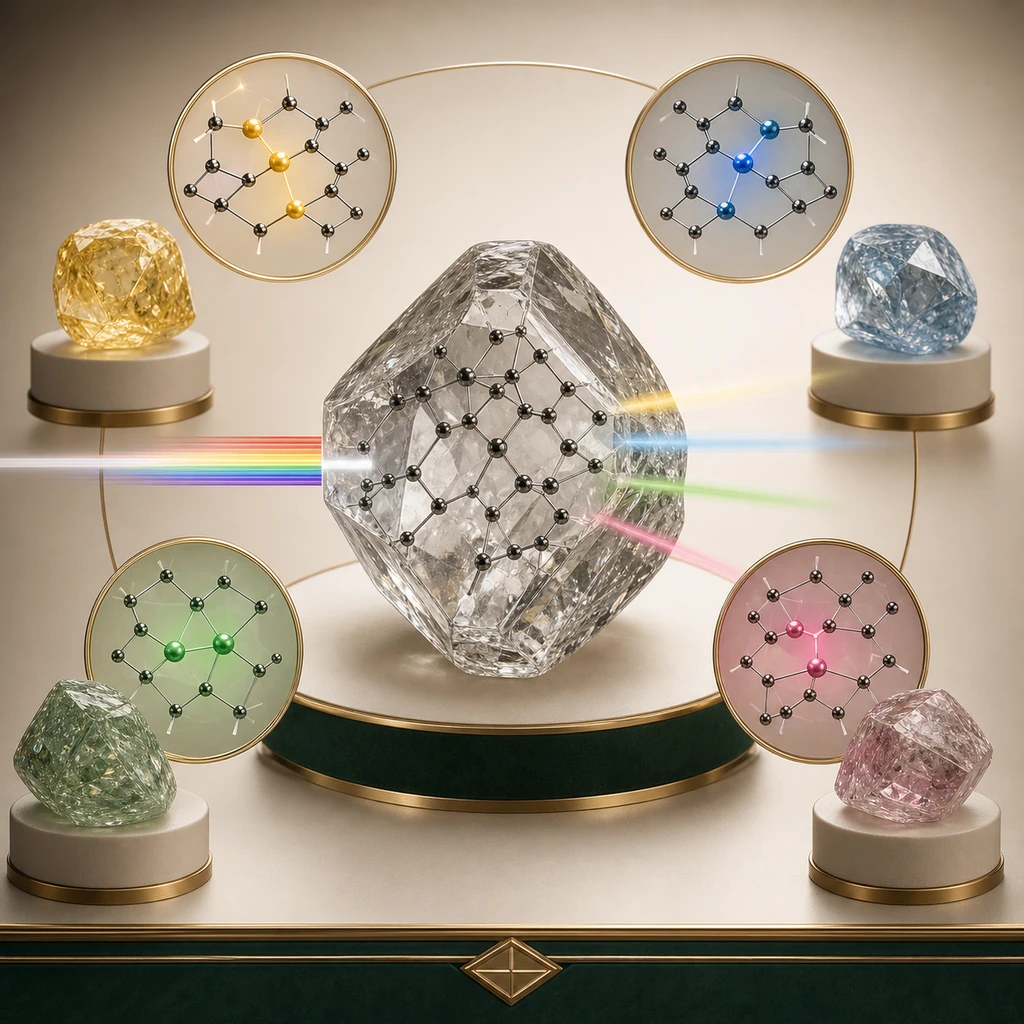
A diamond’s color is connected to the way it absorbs and transmits visible light. Atomic-scale impurities and irregularities in the crystal lattice—often called defects or optical centers—can change which wavelengths reach the eye.
Natural yellow color is commonly associated with nitrogen-related defects. Blue can be associated with boron. Green commonly relates to radiation-related defects, while many pink and red diamonds owe their color to distortion in the crystal lattice. These are useful examples, not a complete formula: a single hue can have more than one cause.
Clear Language
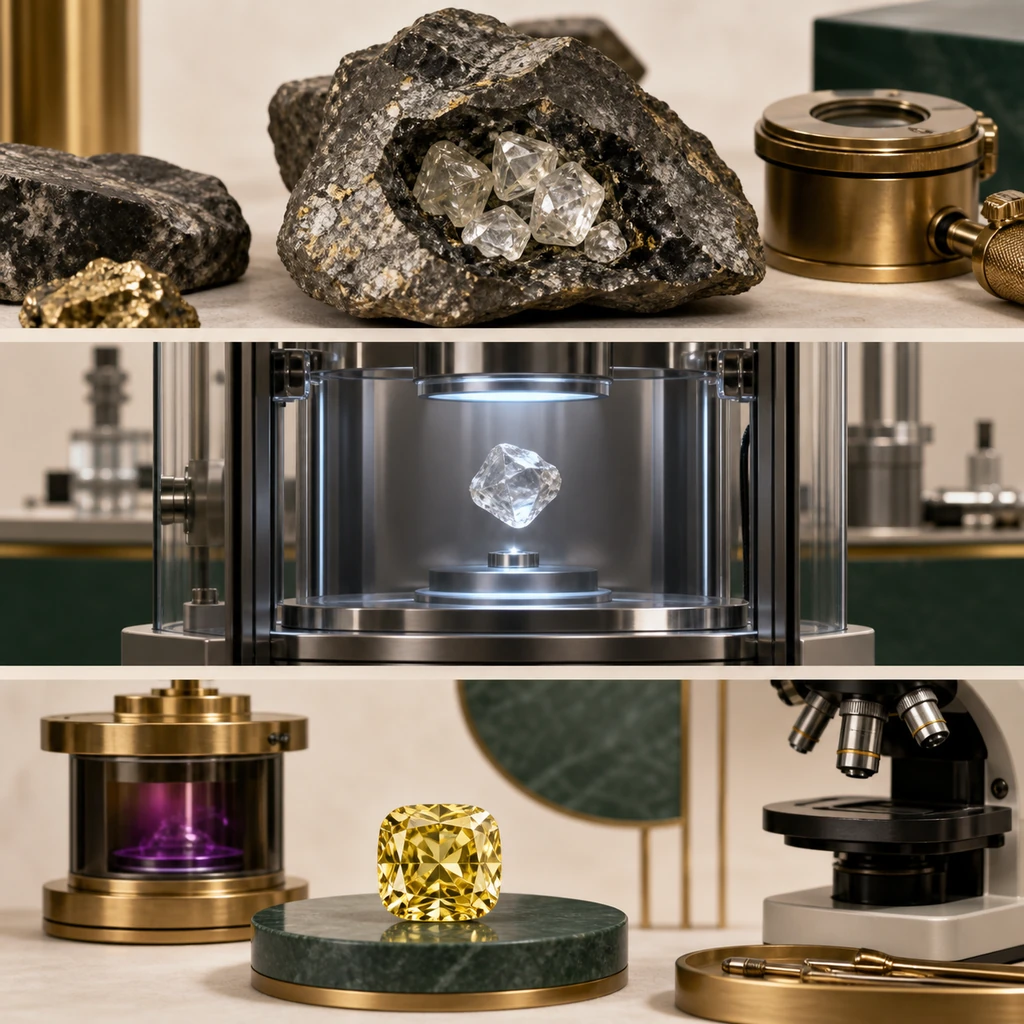
Natural and laboratory-grown describe where a diamond formed. Treated describes an intervention used to alter appearance. A natural diamond can have natural or treated color, and a laboratory-grown diamond can display color as grown or after post-growth treatment.
Lab Diamonds of America specializes in clearly identified laboratory-grown color and white diamond jewelry. We believe the product description and any accompanying report should make origin and known treatment information easy to understand.
Choosing Jewelry
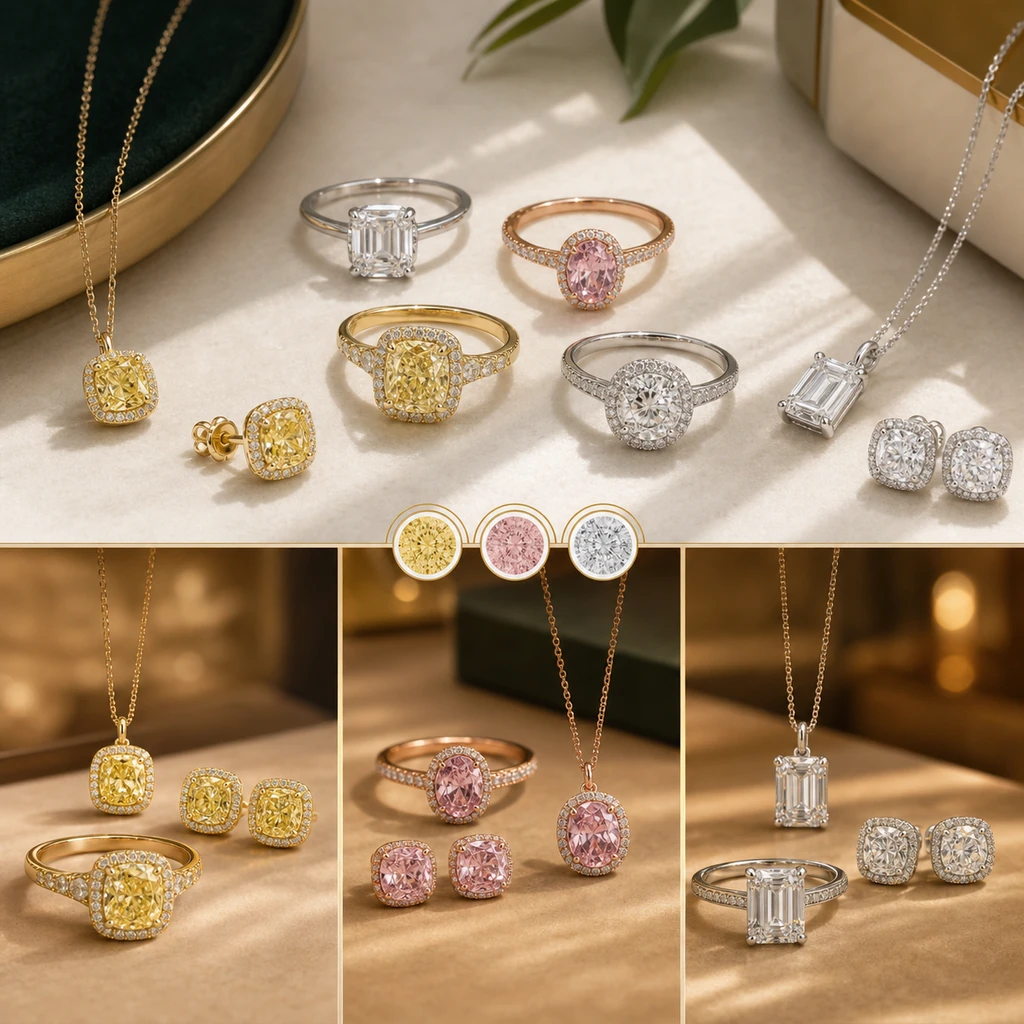
Color is personal. Compare the dominant hue, any secondary color, the depth of tone, and how lively or muted the saturation appears. Then consider how the metal and setting affect the finished look.
Yellow gold can reinforce warmth. White metal can create contrast. White diamond accents may frame the center color and change how intense it appears. The best choice is the combination that remains beautiful to you across everyday lighting.
From Education to Exploration
Continue From Learning to Exploring
Terminology and facts were reviewed against current guidance from independent gemological and U.S. consumer-protection authorities. Report formats and services can change.