Seed
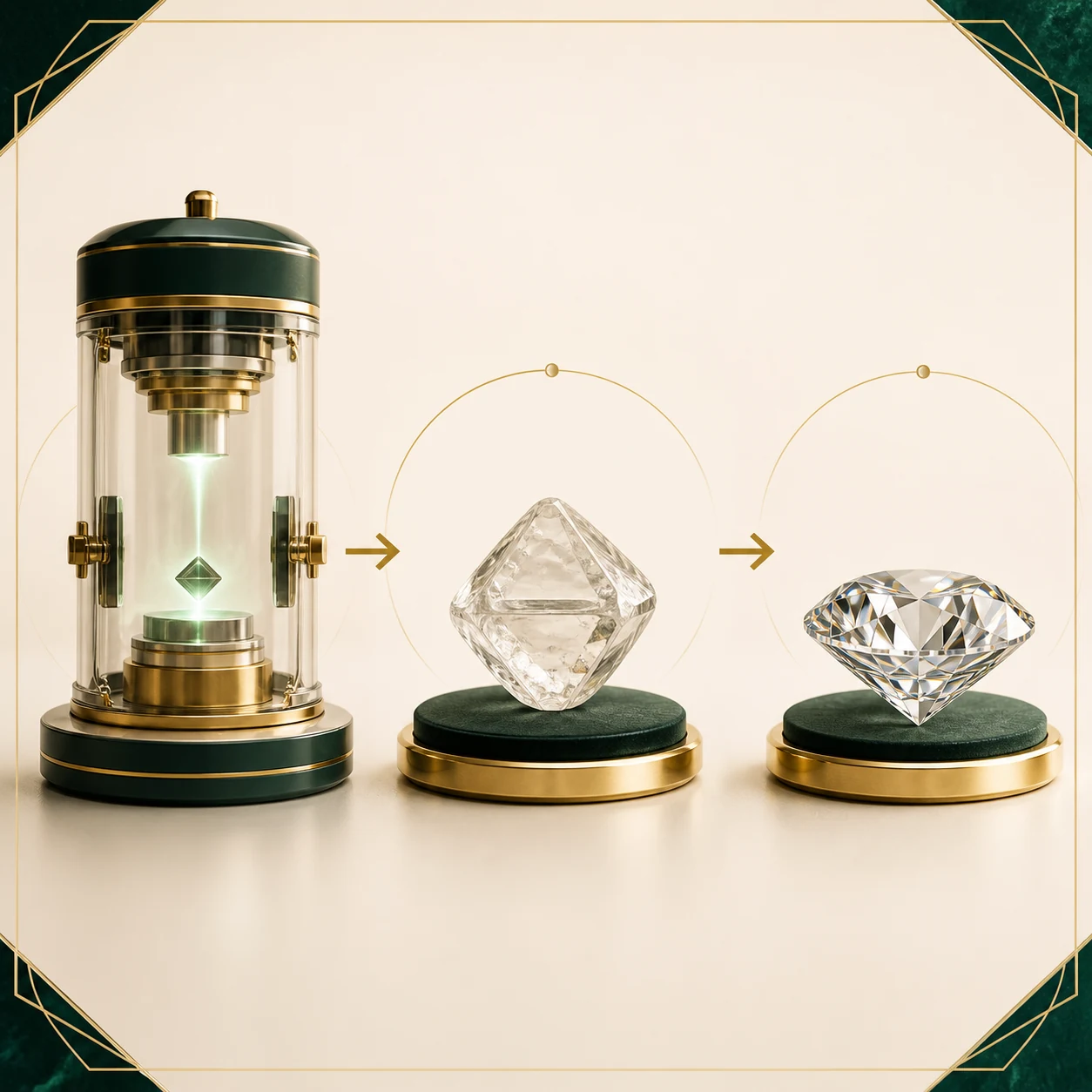
A small diamond crystal provides the foundation for growth.
Growth Science
AI-generated educational visual; artistic representation.
The Essential Idea
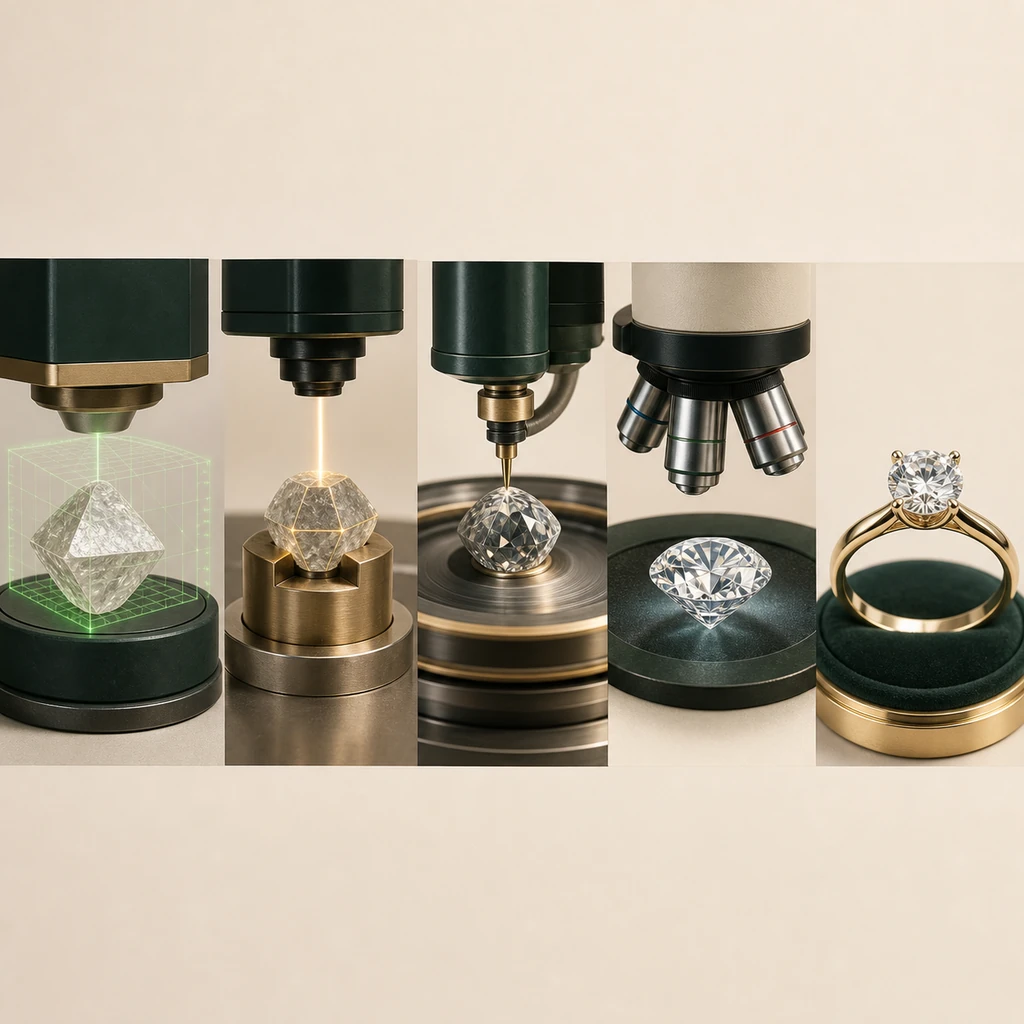
Every lab-grown diamond begins with a small diamond seed and a carbon source. Technology creates the conditions in which carbon atoms join the seed and extend its diamond crystal structure.
The grown crystal is then planned, cut, polished, and tested before it becomes part of a finished piece of jewelry.
A small diamond crystal provides the foundation for growth.
HPHT or CVD technology forms new diamond crystal.
Cutting and polishing reveal the diamond's final beauty.
Step One
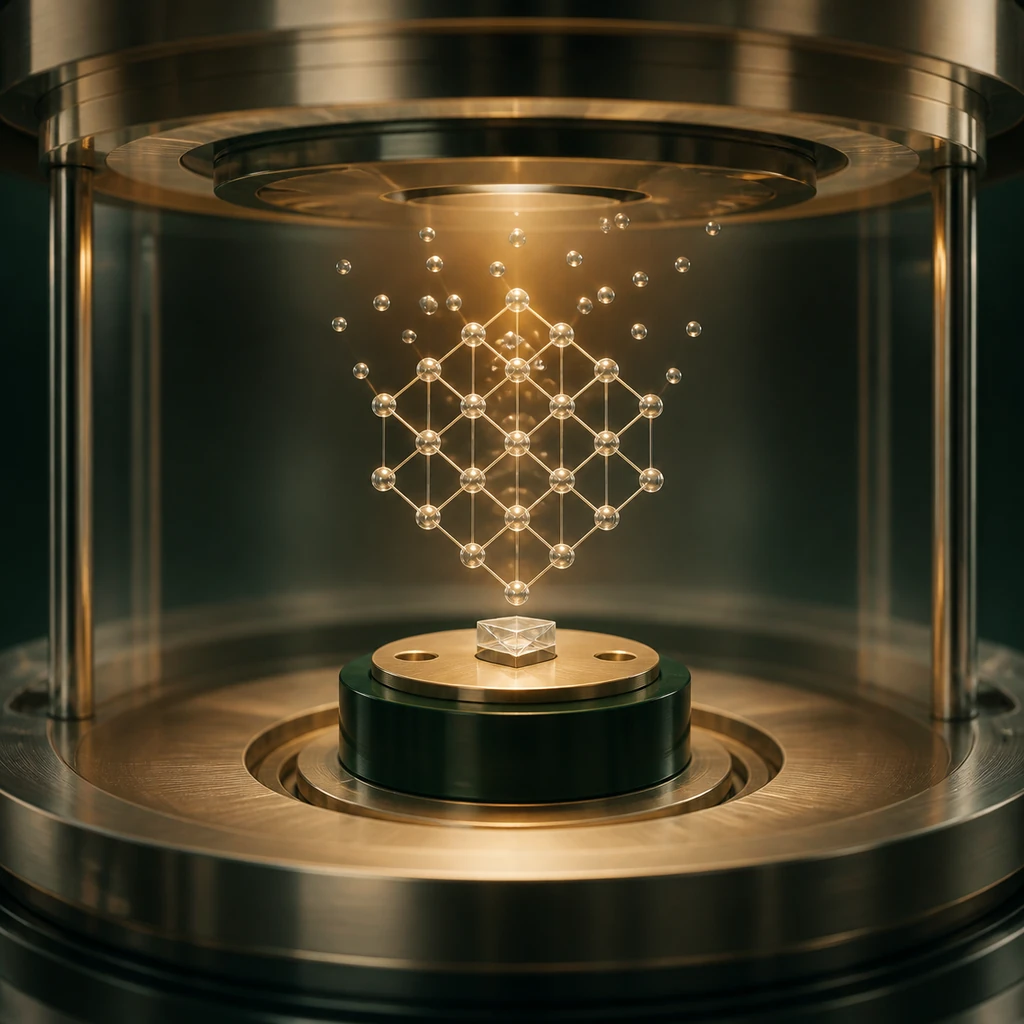
A carefully prepared diamond seed is placed inside specialized equipment. The environment supplies carbon and the conditions needed for that carbon to crystallize as diamond.
Growth is closely monitored, but no two crystals are necessarily identical. Growth features can later help a gemological laboratory identify the process.
Step Two
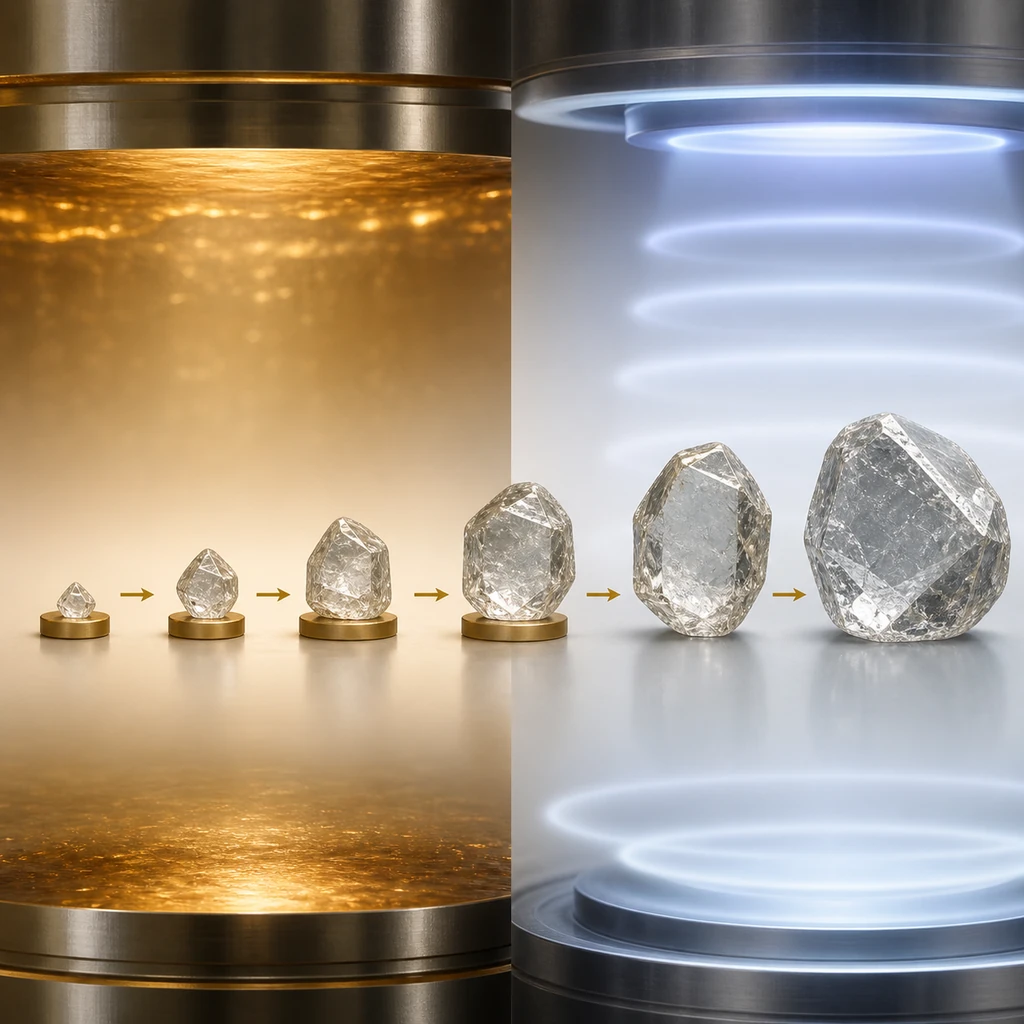
In HPHT growth, carbon dissolves in a metallic flux under very high pressure and temperature, then crystallizes on the seed. In CVD growth, energized carbon-containing gas deposits carbon onto the seed in a vacuum chamber.
The rough crystal may require more than one growth cycle. Depending on the material and desired result, a producer may also use post-growth treatment to adjust color.
Step Three
Specialists study the rough crystal, plan how to divide it, and cut facets that control brilliance, fire, scintillation, outline, and finished weight.
Independent testing may identify laboratory-grown origin, growth method, quality characteristics, and detectable post-growth treatment. The diamond can then be matched with a setting designed for its shape and proportions.
From Education to Exploration
Continue From Learning to Exploring
Terminology and facts were reviewed against current guidance from independent gemological and U.S. consumer-protection authorities. Report formats and services can change.