Methods can be combined
Casting, fabrication, hand assembly, machining, and digital prototyping often work together in one piece.
Responsible Craftsmanship
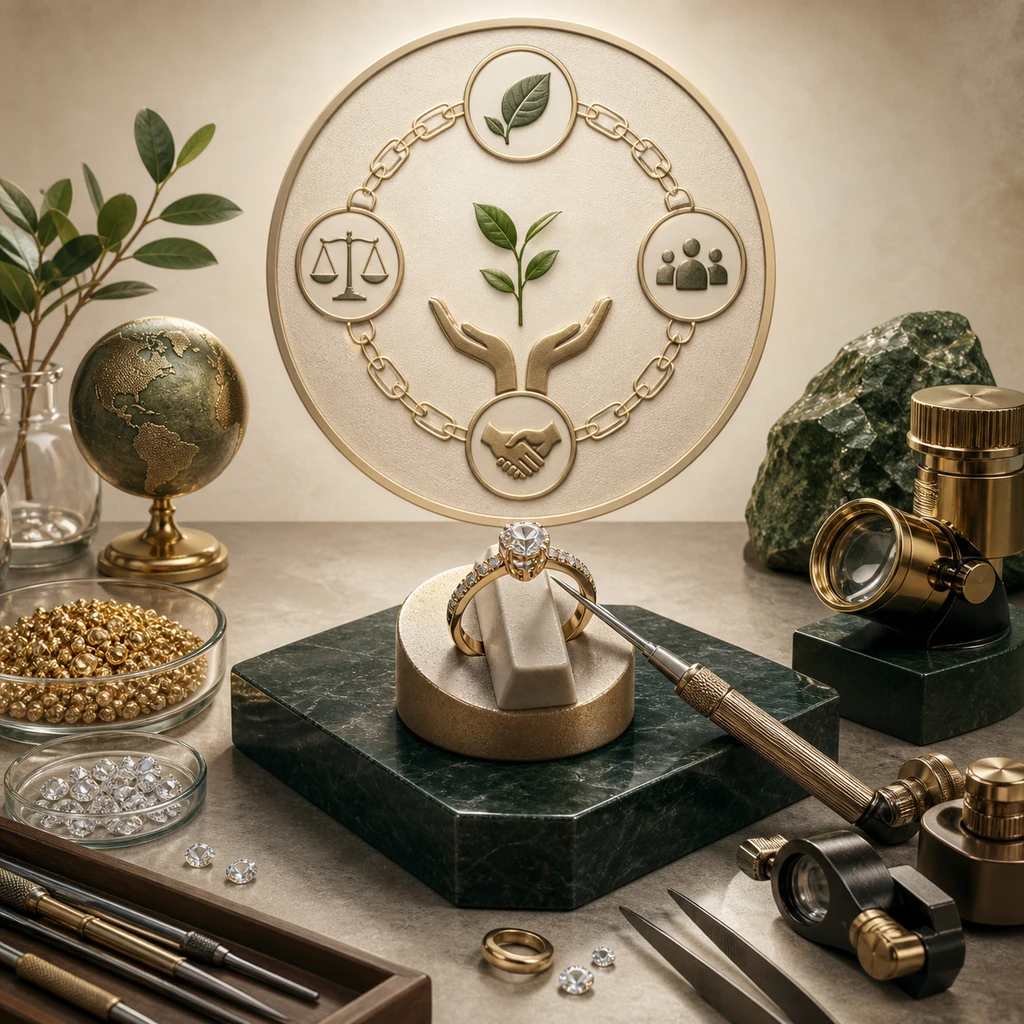
AI-generated educational visual; artistic representation.
The Essential Idea
Fine jewelry is rarely made in a single step. Design, model making, metalwork, diamond setting, finishing, inspection, and documentation may involve several skilled specialists working within one manufacturer or across an established supply chain.
Understanding those stages—and the standards applied to the companies performing them—helps a customer ask better questions about quality, disclosure, working conditions, environmental practices, and product care.
Casting, fabrication, hand assembly, machining, and digital prototyping often work together in one piece.
Metal integrity, settings, clasps, polish, dimensions, and documentation require separate inspections.
RJC certification applies to a company and its audited scope; it is not automatically a certification of every individual product.
From Idea to Model
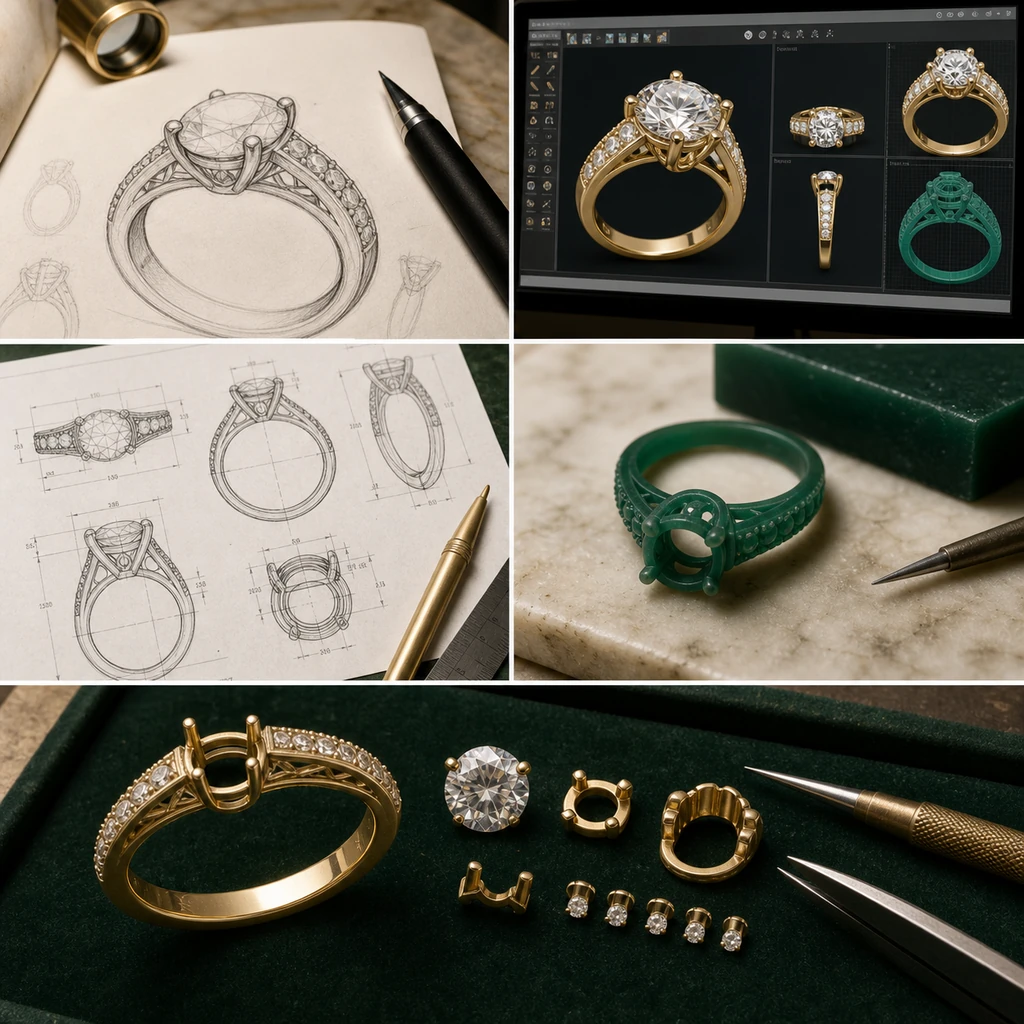
A design may begin with a sketch, a physical model, computer-aided design, or a combination of all three. The model establishes proportions, stone placement, wall thickness, articulation, comfort, and how the piece will be assembled and serviced.
Digital models can be printed in resin or wax to create a casting pattern. Prototypes and production samples allow the team to evaluate scale, movement, clasp operation, setting access, and how the design looks on the body before final production.
How Jewelry Is Made
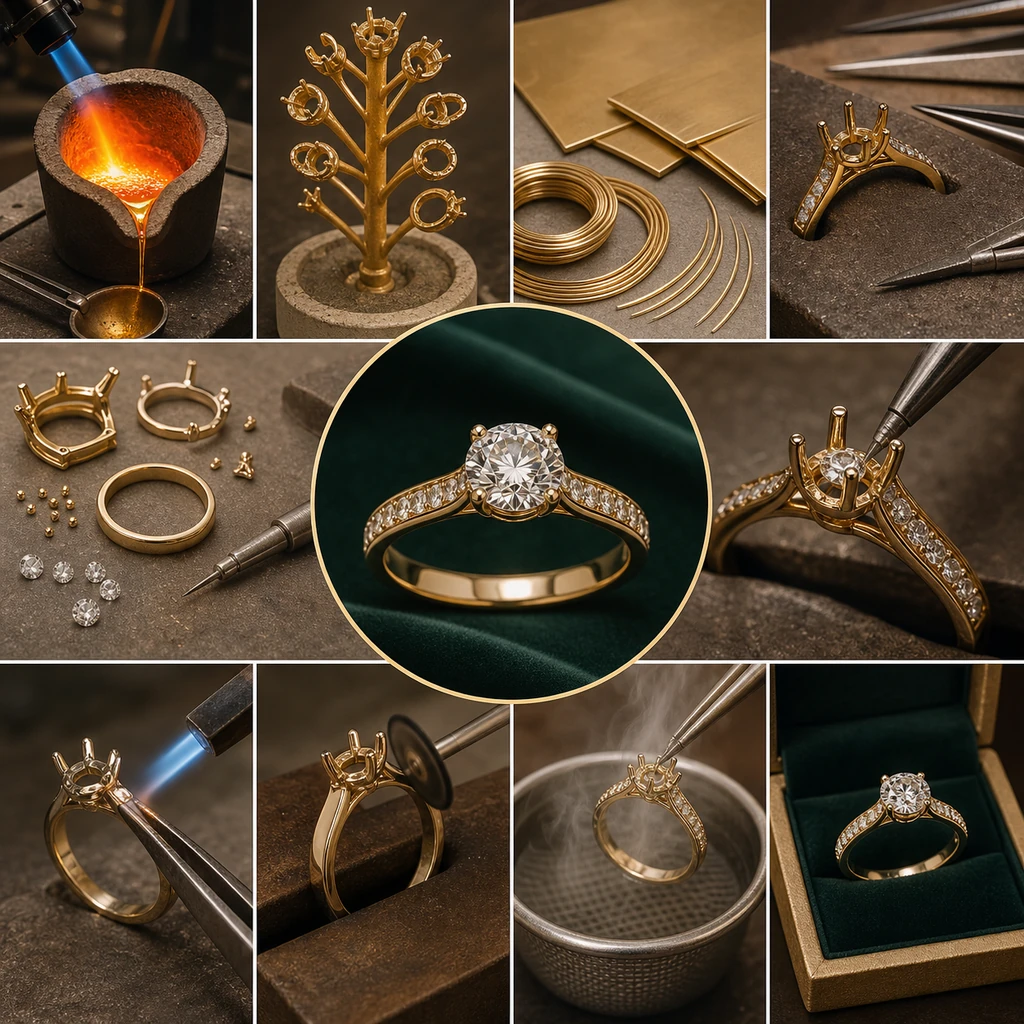
Lost-wax casting forms metal around a disposable pattern and is useful for complex or repeatable forms. Fabrication shapes and joins sheet, wire, tubing, and individual components through techniques such as forming, soldering, welding, and hand assembly. Machining, die striking, and other precision methods may be used when a design benefits from tight tolerances, density, or repeatability.
Many fine-jewelry pieces are hybrids. A cast body may receive fabricated hinges, a precision clasp, hand-finished surfaces, and individually set diamonds. The method alone does not determine quality; engineering, material control, workmanship, finishing, and inspection all matter.
Before Release
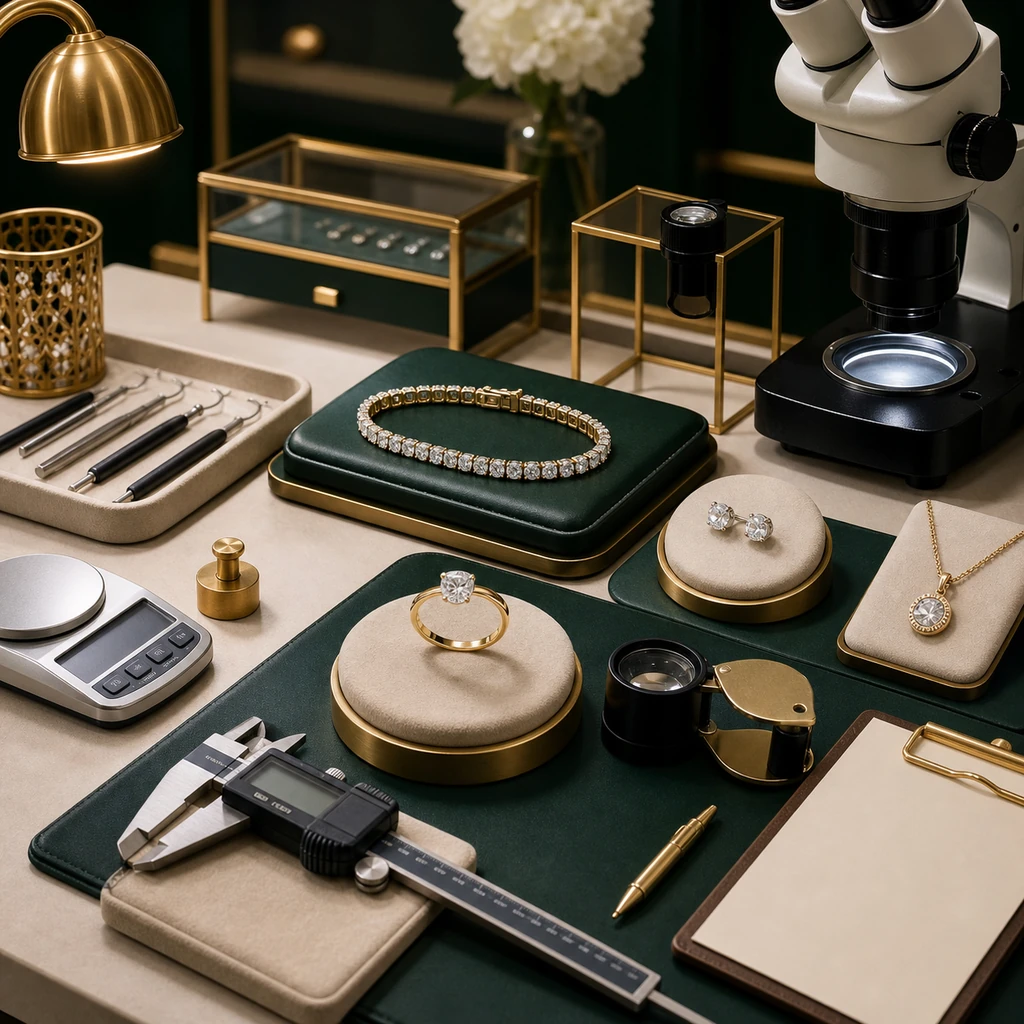
Inspection should confirm metal purity and finish, dimensions, weight, stone count, setting security, clasp operation, articulation, surface condition, symmetry, and any product-specific tolerances. The finished product description should match the piece being sold.
Quality control also considers wear: points that can catch, links that must move freely, settings that require future inspection, and areas that may need professional service over time.
Responsible Business Practices
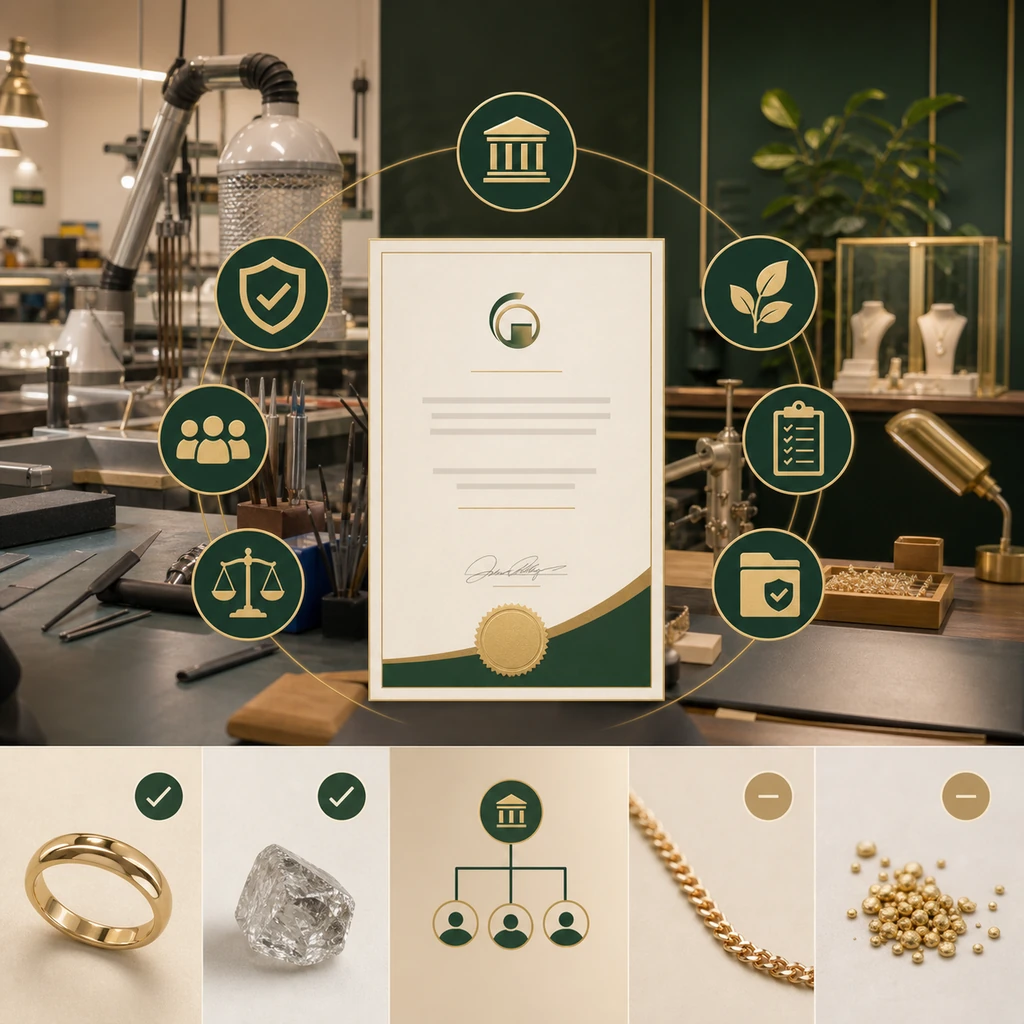
The Responsible Jewellery Council is a standards and membership organization for the jewelry and watch supply chain. Its Code of Practices addresses ethical, social, human-rights, and environmental practices. RJC certification is based on independent third-party auditing against the applicable standard.
For companies handling laboratory-grown diamonds or colored gemstones, the RJC Laboratory Grown Material Standard addresses the specific risk profile of those materials and works alongside the Code of Practices. The separate Chain of Custody standard provides a voluntary framework for traceable, responsibly sourced precious metals.
An RJC-certified manufacturer has been audited as a company within a defined certification scope. That statement should not be presented as though RJC has certified an individual necklace, ring, diamond, or every material in a product. Customers can ask which entity is certified, which standard applies, what facilities and activities are in scope, and whether a current certificate is available.
Your Questions Answered
Is the manufacturer currently RJC certified? Yes. Our manufacturer is currently RJC certified.
Which practices are addressed within its certification? The certification addresses ethical, social, human-rights, and environmental practices relevant to responsible jewelry manufacturing.
Are laboratory-grown origin and any known treatments clearly disclosed? Yes. Every diamond offered by Lab Diamonds of America is a lab-grown diamond. Known treatment information will be disclosed in the product specifications and supporting documentation.
Do the visible specifications match the finished piece? Lab Diamonds of America carefully describes each piece in as much accurate detail as possible. Final weights, measurements, diamond details, and other product specifications are confirmed for the finished jewelry before sale.
From Education to Exploration
Continue From Learning to Exploring
Terminology and facts were reviewed against current guidance from independent gemological and U.S. consumer-protection authorities. Report formats and services can change.