Planning comes first
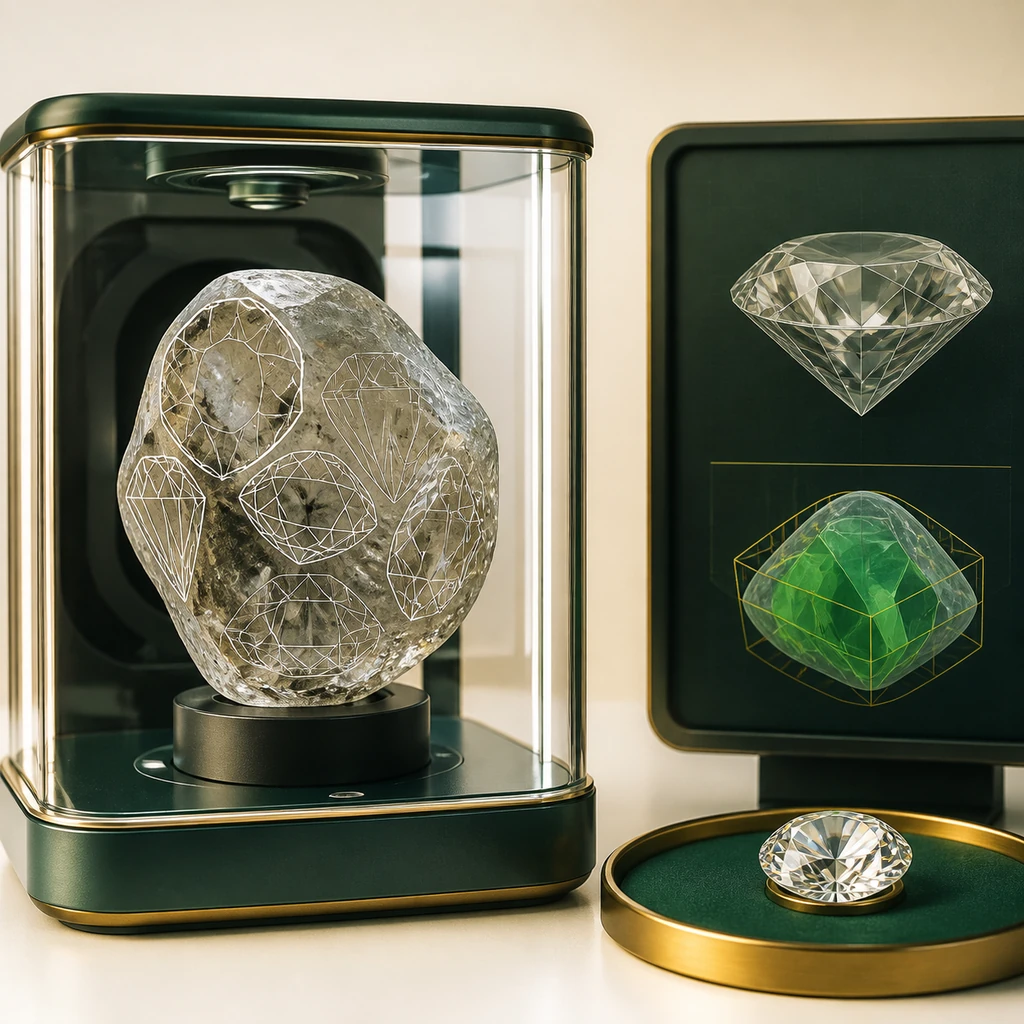
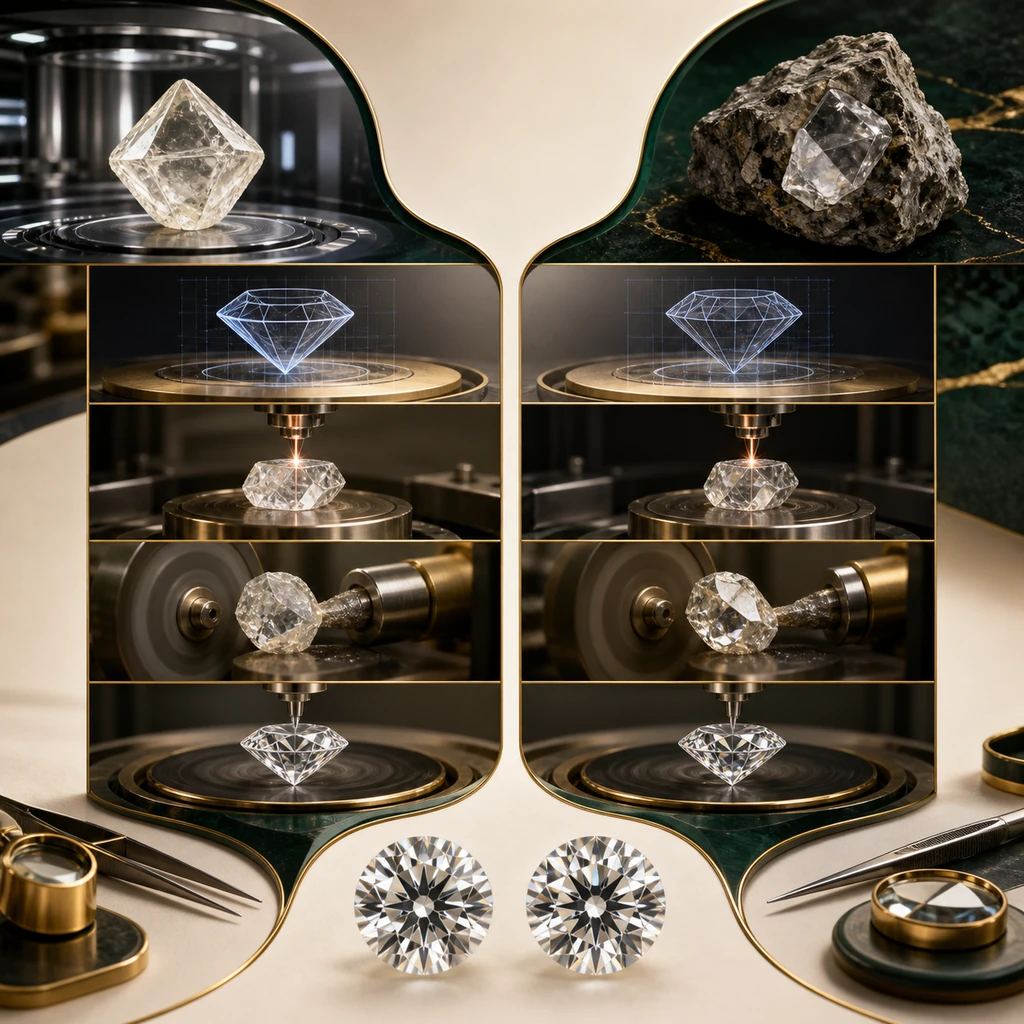
A three-dimensional map helps the planner position potential diamonds inside the rough.
From Rough to Brilliance
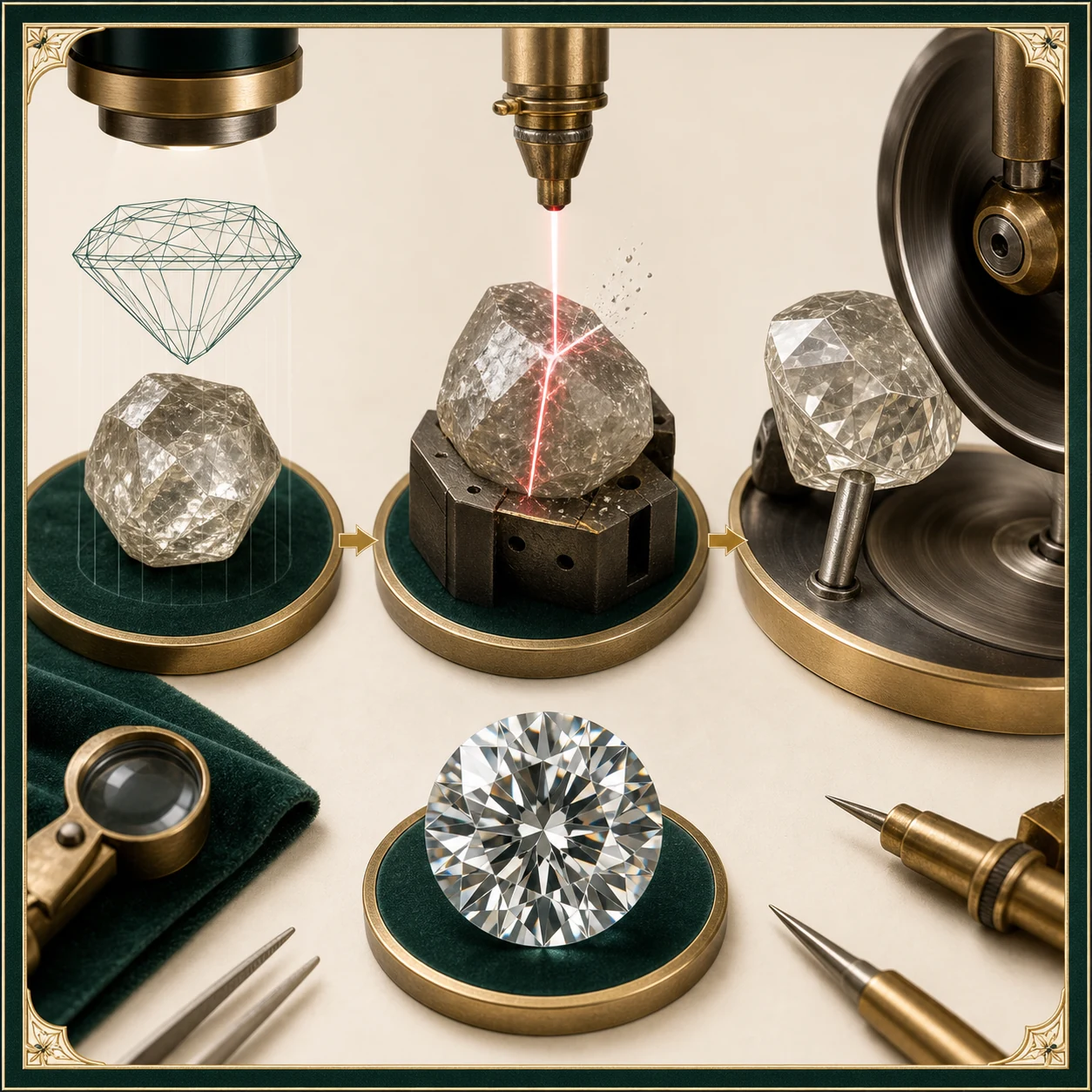
AI-generated educational visual; artistic representation.
The Essential Idea
Diamond cutting is where science, technology, and human judgment meet. Before the first cut is made, specialists study the rough crystal and decide how its shape, color, inclusions, growth features, durability, and potential yield can become the most beautiful finished diamond.
Natural and lab-grown diamond rough may have different growth histories, but both are diamond. Once planning begins, they can be shaped and polished with the same fundamental diamond-cutting equipment, techniques, and standards of craftsmanship.
A three-dimensional map helps the planner position potential diamonds inside the rough.
Lasers can divide and shape rough; diamond-charged wheels create and polish facets.
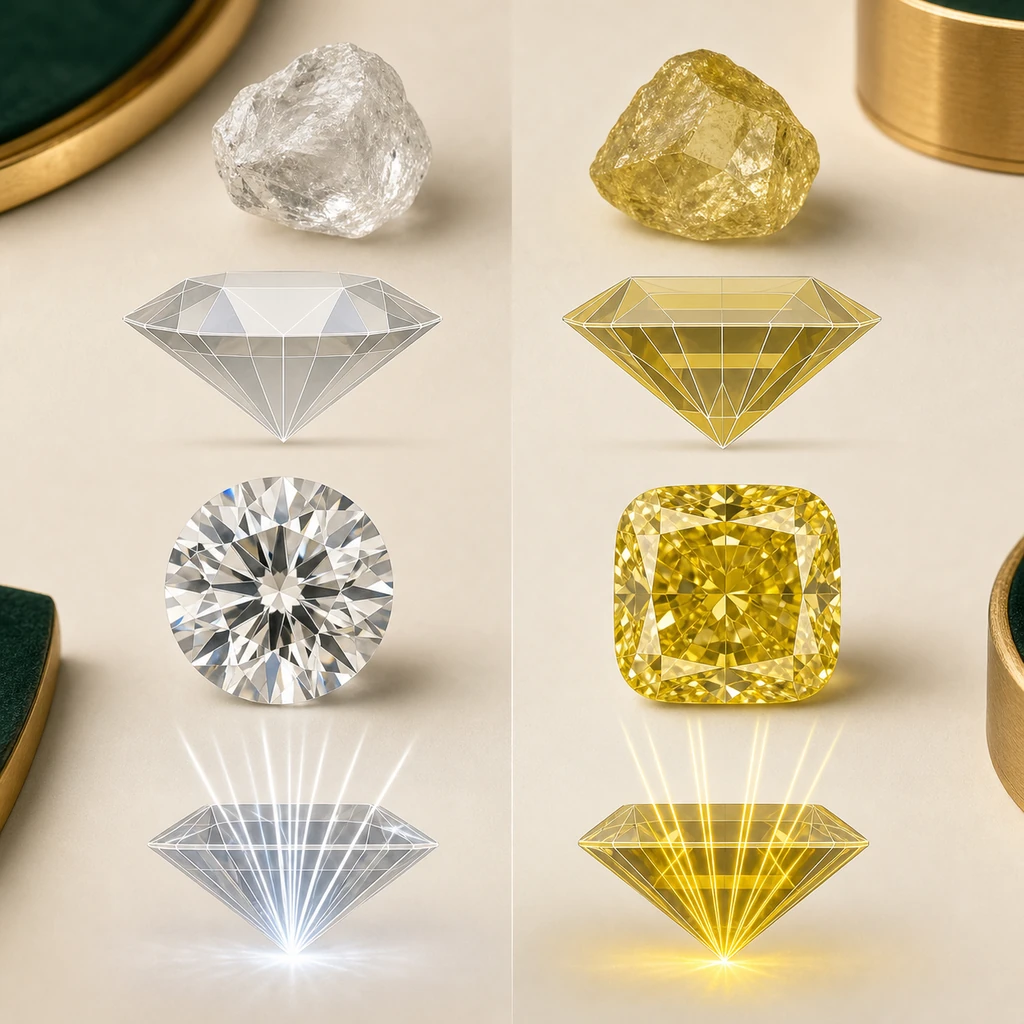
White-diamond cutting often minimizes visible color, while color-diamond cutting may concentrate it face-up.
The Planning Stage
Modern planners scan a rough diamond to create a three-dimensional model. They evaluate the external crystal shape and map inclusions, fractures, strain, color zoning, and other features that could influence beauty or durability.
Specialized software can propose many possible polished diamonds, but the final decision still requires judgment. The planner balances outline, proportions, clarity, color, carat retention, market demand, and risk. The largest possible result is not always the most beautiful or valuable result.
A planned shape may position an inclusion where it can be removed, hidden beneath a facet, or kept away from a vulnerable corner. The orientation of the rough can also affect how color and light travel through the finished stone.
Dividing the Rough
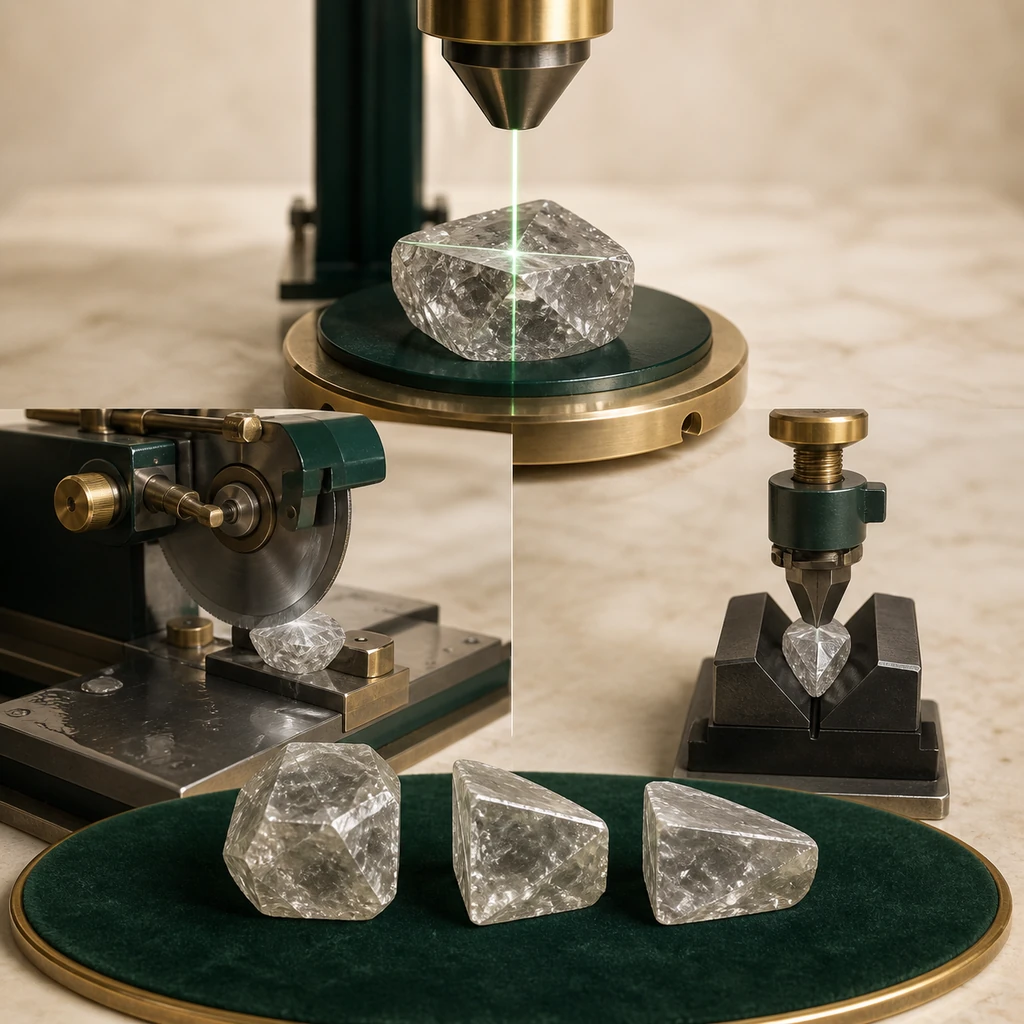
A laser can cut through rough diamond with exceptional precision and along directions that would be difficult for a mechanical saw. It may divide one crystal into several pieces, remove unwanted material, or outline complex shapes before further work.
Traditional mechanical sawing uses a thin blade charged with diamond abrasive. Cleaving separates rough along particular crystal planes. The selected method depends on crystal orientation, the plan, the equipment, and the risks within the individual rough.
Creating the Facets
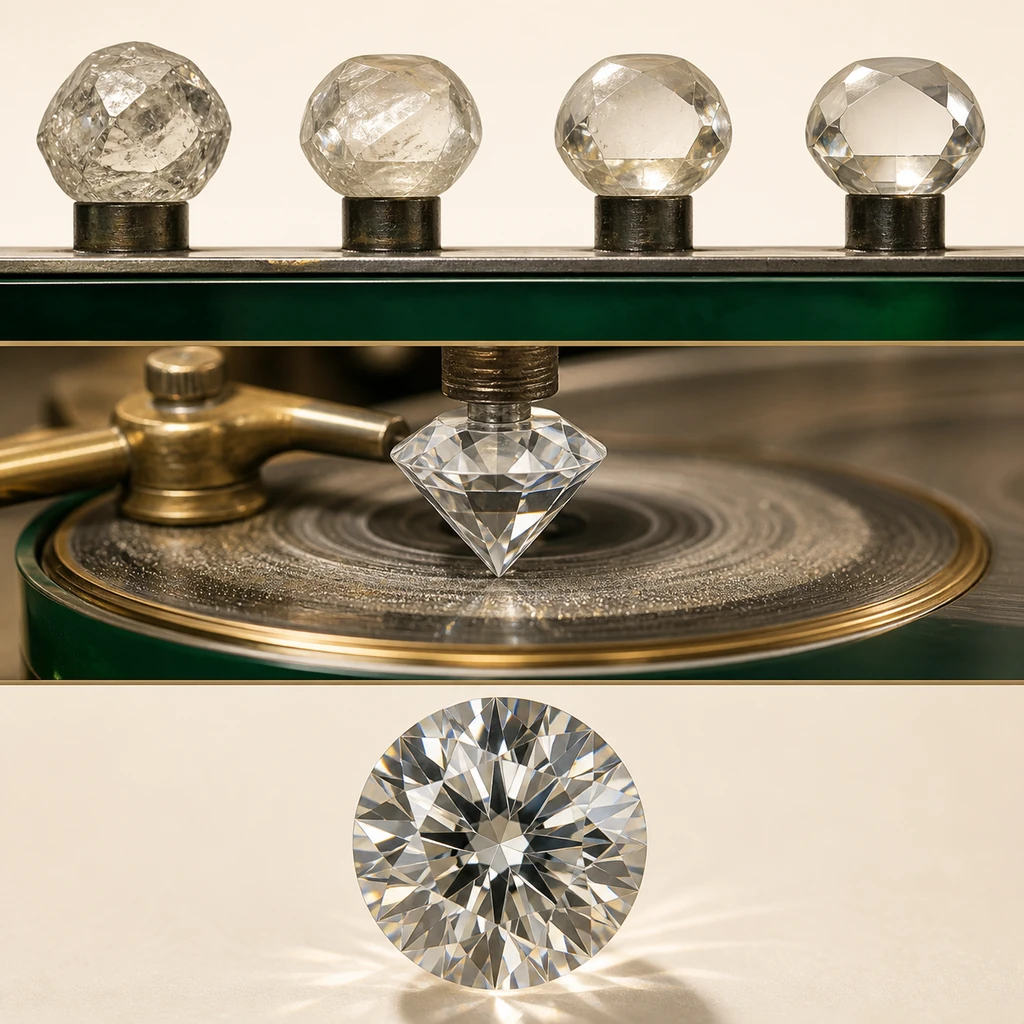
Bruting creates or refines the girdle and face-up outline. In traditional bruting, one diamond turns against another; modern systems may also use lasers or computer-controlled equipment to establish the shape.
During blocking and faceting, the cutter presses the diamond against a rotating polishing wheel, traditionally called a scaife, charged with diamond powder. Diamond abrasive is used because only diamond can efficiently polish diamond. The main facets are established first, followed by the smaller facets and final polish.
Microscopic adjustments to angle, alignment, meet points, symmetry, and polish influence brightness, fire, scintillation, pattern, durability, and the overall visual character of the stone.
Different Optical Goals
For a white diamond in the D-to-Z range, the cutter generally seeks lively light return while avoiding or minimizing visible body color. Proportions and facet relationships are chosen to support brightness, fire, scintillation, symmetry, and a pleasing face-up outline.
For a color diamond, color is often the leading design objective. A deeper pavilion, particular orientation, or mixed brilliant-style faceting can increase the distance light travels within the diamond and concentrate color face-up. Radiant and cushion-style arrangements are often useful, although any shape must be judged individually.
The phrase 'cutting color out' is a helpful shorthand for reducing visible tint in a white diamond, but cutting does not remove the atomic causes of color. It changes how light travels through the stone and how much color the viewer perceives. Conversely, color-diamond cutting concentrates or distributes existing color; it does not create a laboratory color grade by itself.
A Global Craft
GIA notes that any cut possible for a natural diamond is also possible for a lab-grown diamond. Both materials require diamond-specific planning, cutting, faceting, and polishing because they share essentially the same physical and optical properties.
Diamond expertise is practiced around the world. Rough may be planned, cut, polished, graded, and set by different specialists and in different countries. Technology has made measurement and repeatability more precise, but exceptional results still depend on experienced people who can read the individual crystal and understand the design goal.
The best finished diamond is therefore a collaboration: the grower or miner provides the rough, the planner finds its potential, the cutter and polisher reveal the optical design, the laboratory describes the diamond, and the jeweler protects and presents it in the finished piece.
A Broader Design Laboratory
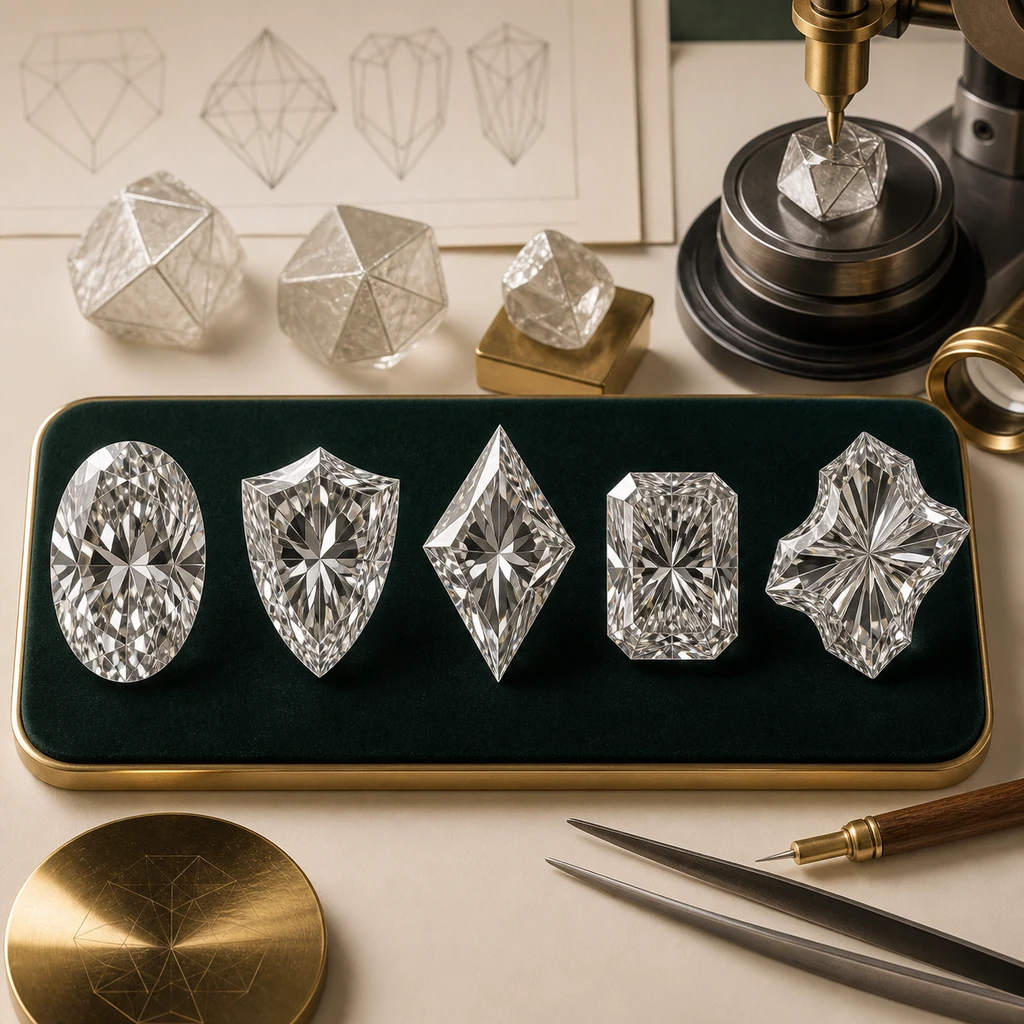
One of the most exciting advantages of lab-grown diamonds is the creative freedom they can offer cutters and designers. Lab-grown rough generally has a different—and often lower—cost structure than comparable natural rough. That can make it more practical to test unconventional ideas, accept a lower cutting yield, or refine a new design through multiple prototypes.
The experiment might begin with a new outline, an unexpected length-to-width ratio, asymmetry, a sculptural profile, or a completely original arrangement of facets. Facet placement controls the network of reflections inside a diamond. By changing that geometry, a cutter can create broad flashes, crisp geometric contrast, a kaleidoscopic pattern, a soft crushed-ice effect, or another distinctive internal look.
This freedom does not make an experimental cut automatically beautiful or well made. Novel designs still demand optical modeling, precise execution, sufficient durability, attractive face-up appearance, and honest description. Some custom facet arrangements also fall outside the scope of familiar cut grades, so the eye, measurements, symmetry, polish, and available documentation must be considered together.
GIA has documented unconventional lab-grown products and notes that readily available, comparatively inexpensive lab-grown material can support experimental prototypes. For a design-led jewelry company, that creates an opportunity to treat the diamond itself as part of the design—not only the material placed into it.
From Education to Exploration
Continue From Learning to Exploring
Terminology and facts were reviewed against current guidance from independent gemological and U.S. consumer-protection authorities. Report formats and services can change.