
Hue
The characteristic color, such as yellow, pink, blue, or a combination.
Reading Color
The visible color family
How light or dark the color appears
The strength of the color
AI-generated educational visual; artistic representation.
The Essential Idea
Color descriptions can look complicated, but they answer three simple questions: What color is it? How light or dark is it? How strong is the color?
Understanding those dimensions makes it easier to compare diamonds with similar report descriptions and to notice the differences your eye prefers.
The characteristic color, such as yellow, pink, blue, or a combination.
The relative lightness or darkness of the color.
The strength, depth, or purity of the color.
Three Dimensions
Hue names the visible color. Tone describes where that color sits from light to dark. Saturation describes how weak or strong the color appears.
A diamond can share a hue with another diamond and still look very different because its tone changes. That is why a color name by itself never tells the whole story.
The visible color family
How light or dark the color appears
The strength of the color
Color Strength
For natural colored diamonds, GIA uses a sequence of grade terms to describe increasing color strength: Faint, Very Light, Light, Fancy Light, Fancy, Fancy Intense, Fancy Vivid, Fancy Dark, and Fancy Deep.
These terms are not a simple ladder from least beautiful to most beautiful. Fancy Dark and Fancy Deep involve different tone-and-saturation combinations from Fancy Vivid. Personal preference, hue, distribution, and the finished design all matter.
Deeper tone
Secondary Color
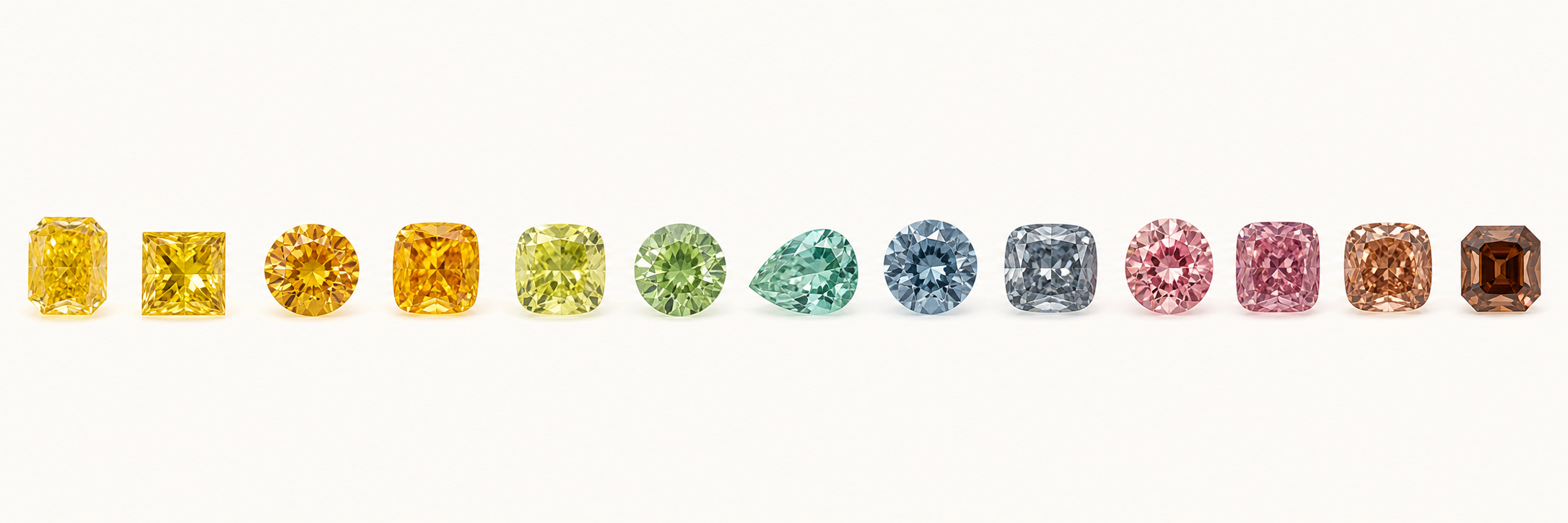
Many colored diamonds show more than one hue. A secondary hue is often described as a modifier. In a description such as “greenish yellow,” yellow is the dominant color and green is the modifying influence.
Even a subtle modifier can change the personality of a diamond. Brownish pink may feel earthy and warm; purplish pink may feel cooler and more saturated. Neither is automatically better—the description helps you understand what you are seeing.
Real-World Viewing
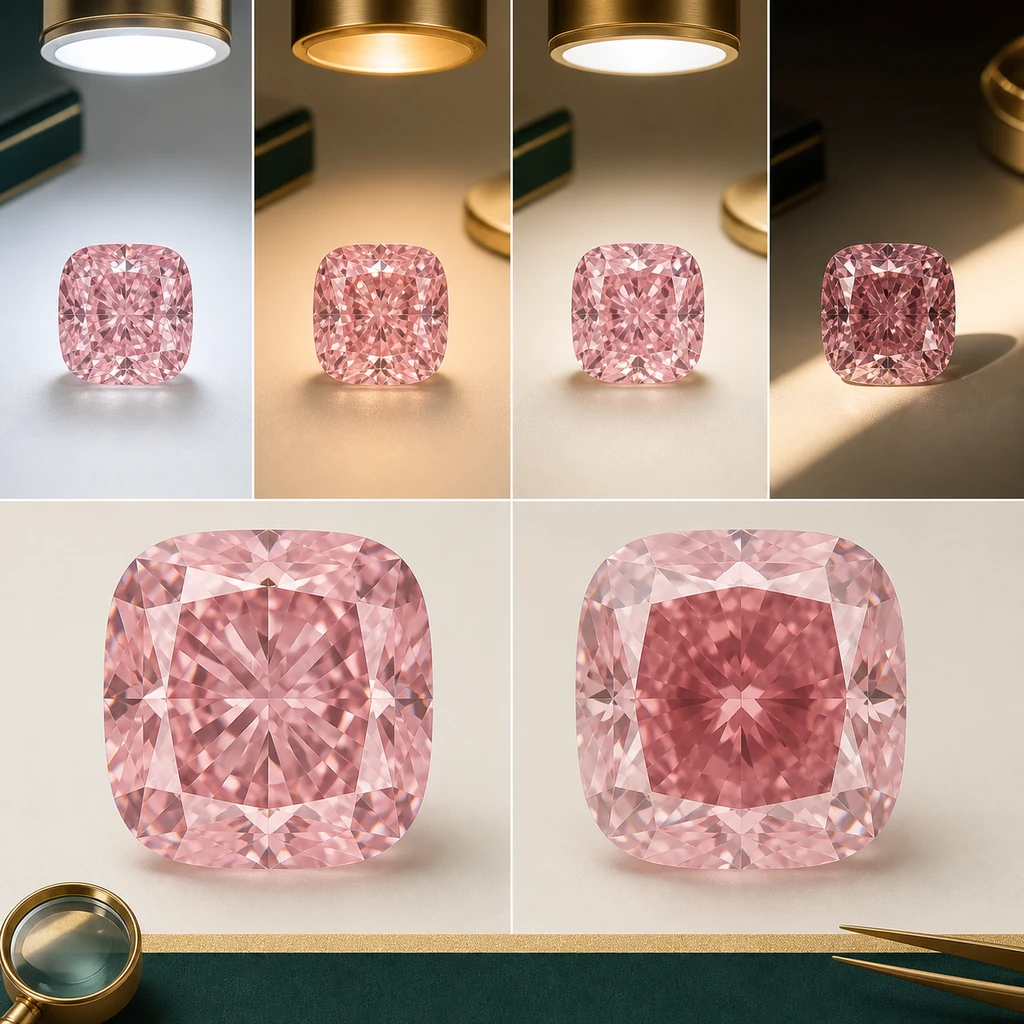
Warm indoor light, cool daylight, shadows, and reflections from nearby metal can all influence perceived color. A grading laboratory uses controlled viewing conditions; everyday jewelry does not live in a laboratory.
Also notice whether color appears evenly distributed across the face of the diamond or forms lighter and darker zones. Attractive distribution supports a pleasing face-up appearance, but the final judgment is visual and personal.
From Education to Exploration
Continue From Learning to Exploring
Terminology and facts were reviewed against current guidance from independent gemological and U.S. consumer-protection authorities. Report formats and services can change.