HPHT
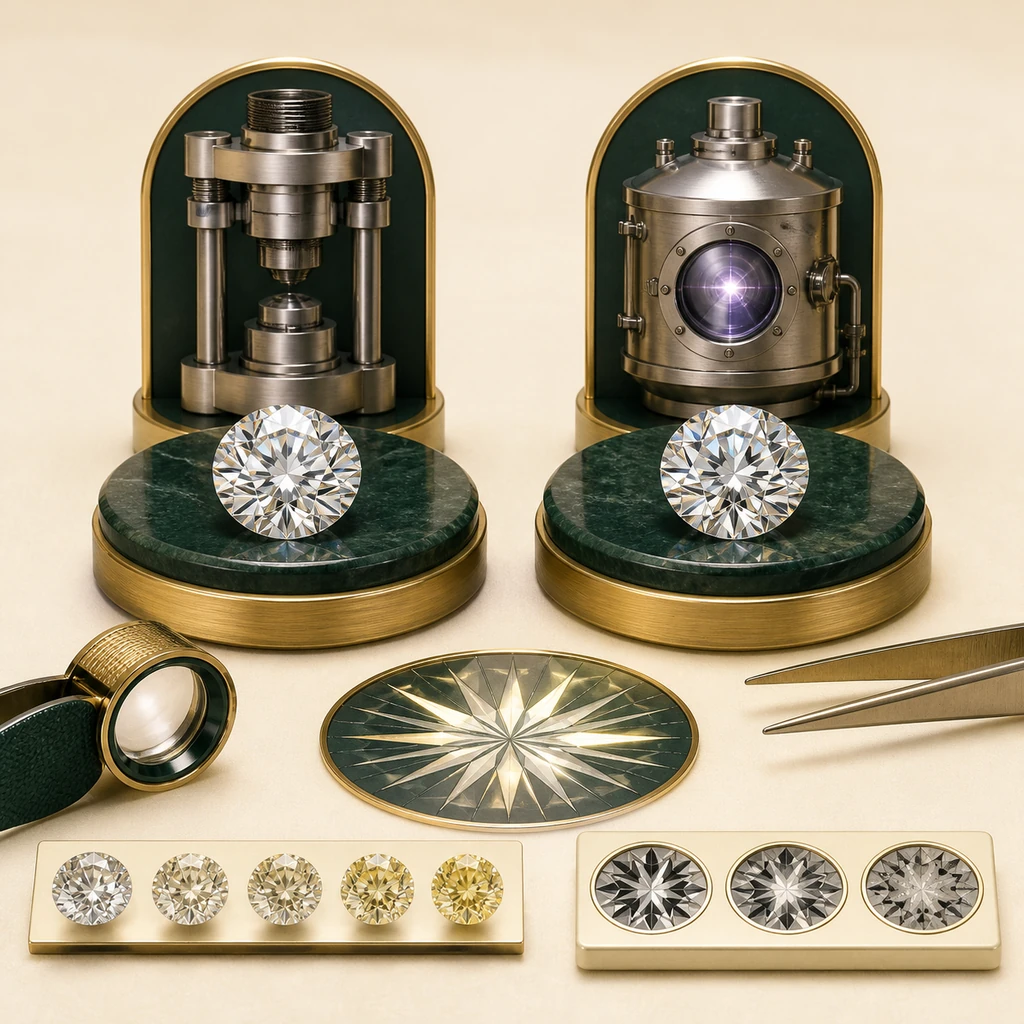
Uses high pressure, high temperature, carbon, and a diamond seed.
Growth Methods
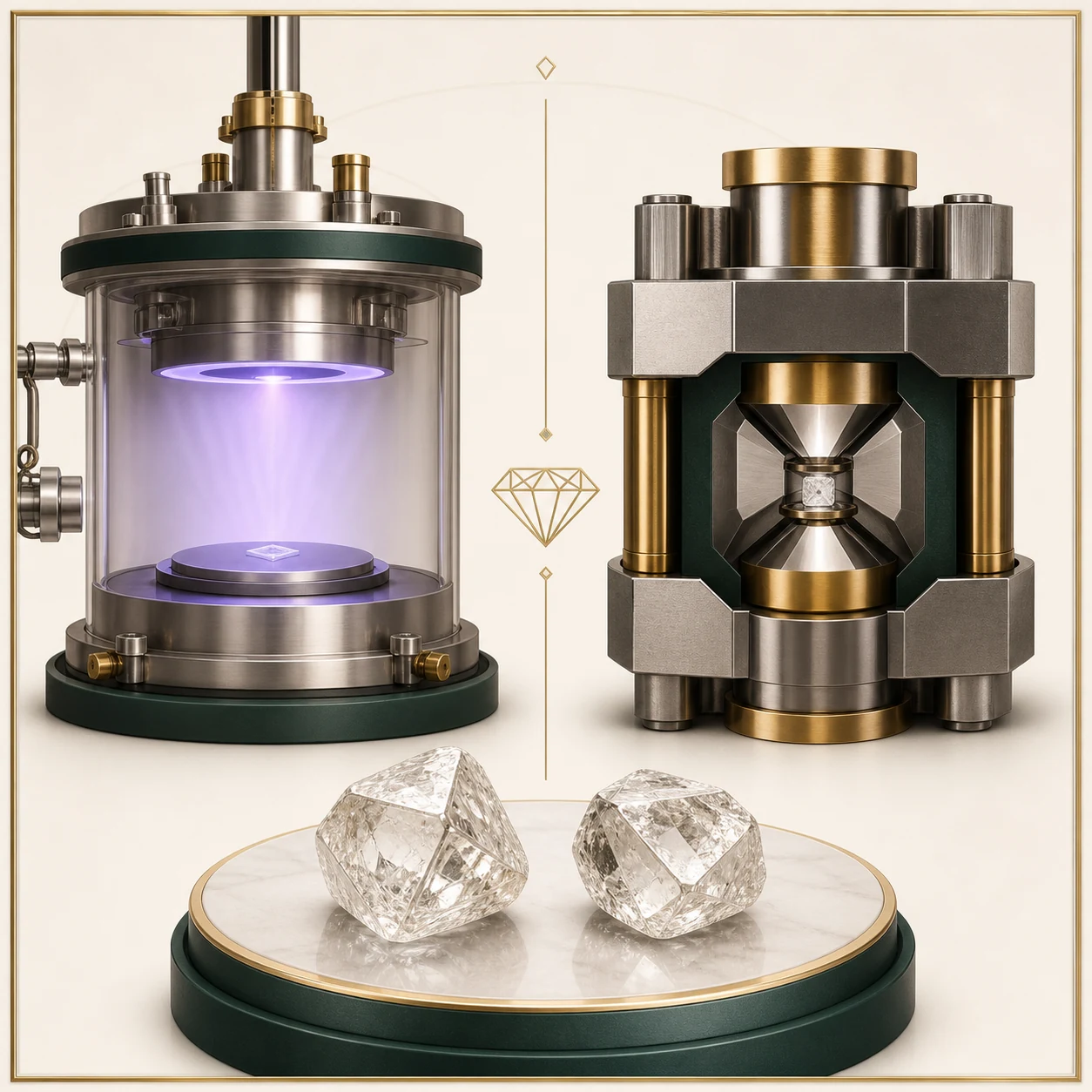
AI-generated educational visual; artistic representation.
The Essential Idea
CVD and HPHT describe how a diamond crystal was grown. Both methods can produce gem-quality diamonds in colorless and colored ranges.
A method name is useful identification information, but it is not a beauty grade. Evaluate the individual diamond and the complete piece of jewelry.
Uses high pressure, high temperature, carbon, and a diamond seed.
Builds diamond from carbon-containing gas on a seed in a chamber.
Either method can produce beautiful gem-quality material.
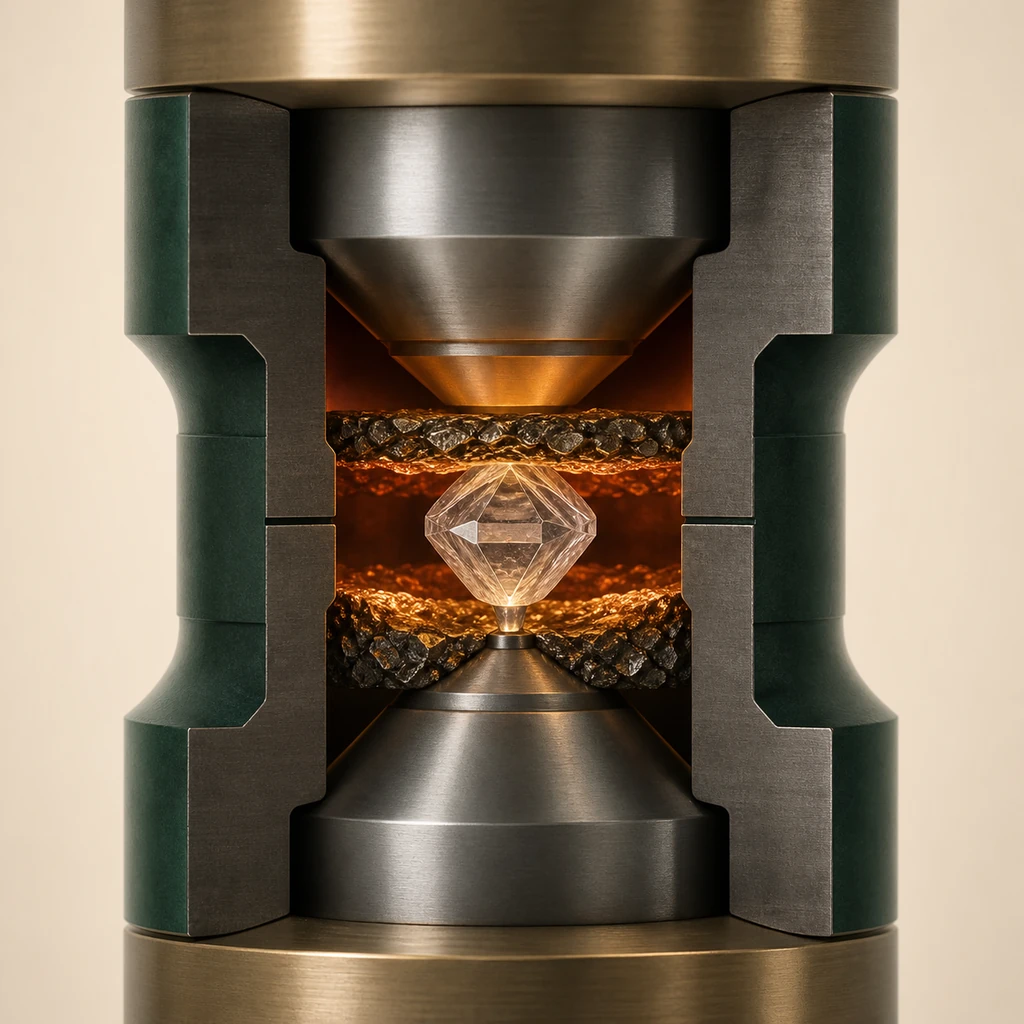
High Pressure High Temperature
HPHT equipment recreates the pressure-and-temperature conditions that allow carbon to crystallize as diamond around a seed. A metallic growth medium helps transport carbon within the chamber.
HPHT-grown diamonds may show characteristic growth patterns or trace features detectable with specialized instruments.
Chemical Vapor Deposition
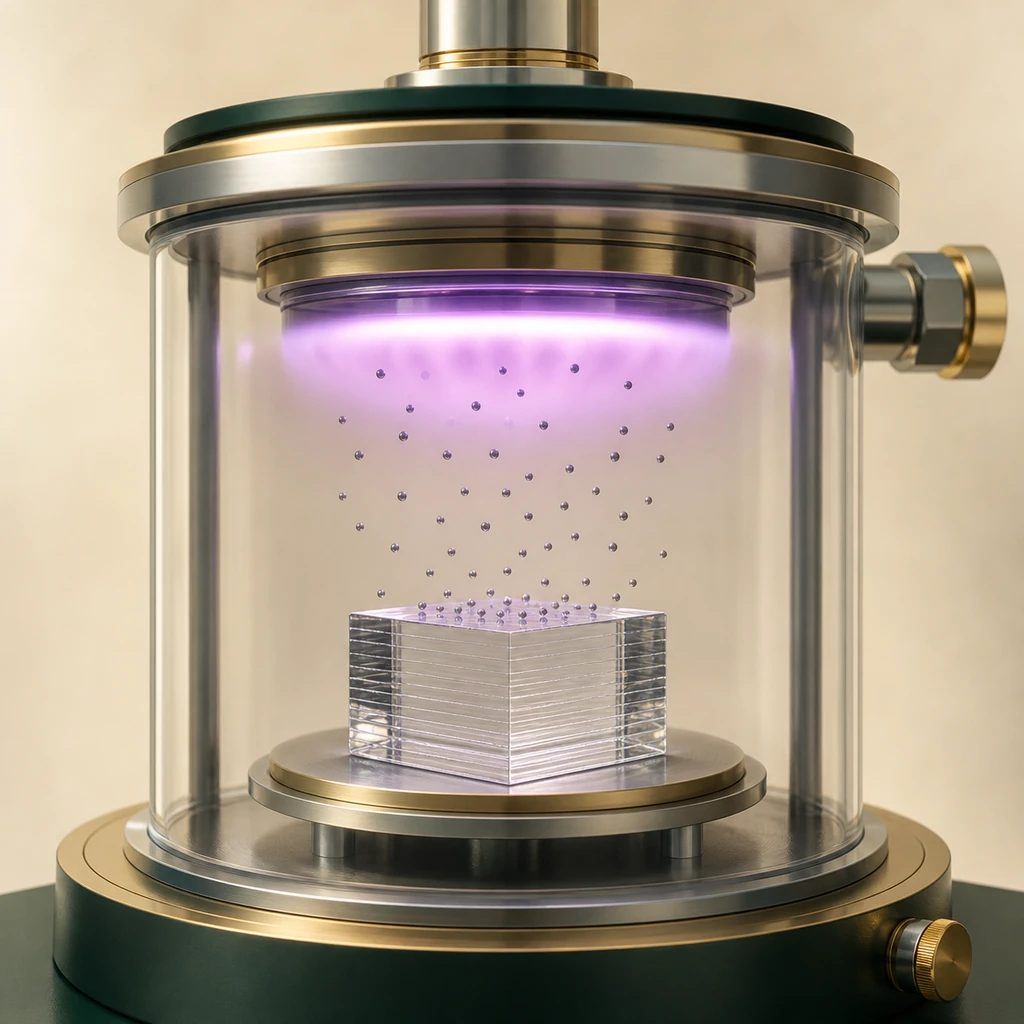
CVD uses a low-pressure chamber filled with carbon-containing gas. Energy separates the gas molecules, and carbon deposits layer by layer on a diamond seed.
CVD-grown material can show layered growth features. Some CVD diamonds undergo post-growth treatment to modify color; when known or detected, that treatment should be disclosed.
The Practical Answer
Growth method alone does not determine cut quality, transparency, color, clarity, or visual appeal. Beautiful and less-attractive diamonds can be produced by either process.
Compare the individual stone's appearance and documentation. Let growth method inform your understanding without allowing it to replace a complete quality evaluation.
From Education to Exploration
Continue From Learning to Exploring
Terminology and facts were reviewed against current guidance from independent gemological and U.S. consumer-protection authorities. Report formats and services can change.