Purity is measurable
Karat or parts-per-thousand marks describe precious-metal content, not overall craftsmanship.
Metal Education
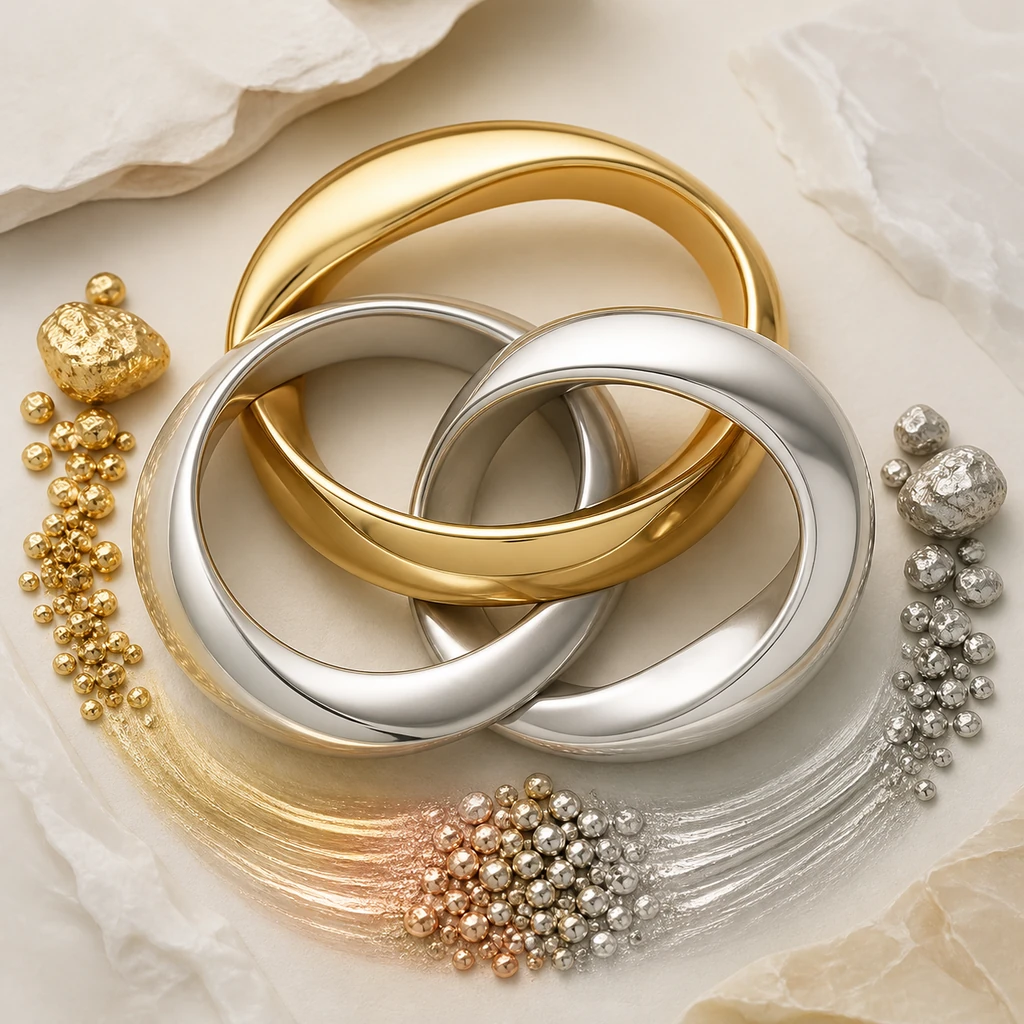
AI-generated educational visual; artistic representation.
The Essential Idea
The metal in a piece of jewelry does more than provide color. It holds stones securely, affects weight and wear, responds differently to scratches and chemicals, and shapes how a diamond appears.
Most jewelry metals are alloys: carefully engineered mixtures that combine a precious metal with other elements. Purity, alloy recipe, construction, finish, and maintenance all matter, so the name of a metal is only the beginning of the story.
Karat or parts-per-thousand marks describe precious-metal content, not overall craftsmanship.
Other metals influence color, hardness, workability, and possible skin sensitivity.
Rhodium plating and gold vermeil describe layered constructions that can wear over time.
The Metal Families
Gold is naturally yellow and is usually alloyed for jewelry. Platinum is a naturally white, dense precious metal, also used as an alloy. Silver is naturally white-gray; sterling silver combines at least 92.5% silver with other metals for greater strength.
No metal is best for every design. The right choice depends on the piece, setting method, desired color and weight, lifestyle, budget, maintenance expectations, and any known metal sensitivity.
Karat purity • yellow, white, or rose
Naturally white • dense • substantial
92.5% silver • bright • approachable
Rhodium, gold plate, and vermeil
Reading Purity
Gold purity is commonly expressed in karats out of 24 parts: 14K is 14 parts gold and 10 parts alloying metals. Fineness expresses precious-metal content in parts per thousand, so 18K may be marked 750 and sterling silver is commonly marked 925.
A purity mark does not identify every alloying metal, whether a piece is hollow, whether it is plated, or how well it was made. Read the complete product description and look for the responsible maker or seller mark where applicable.
Why Metals Are Mixed
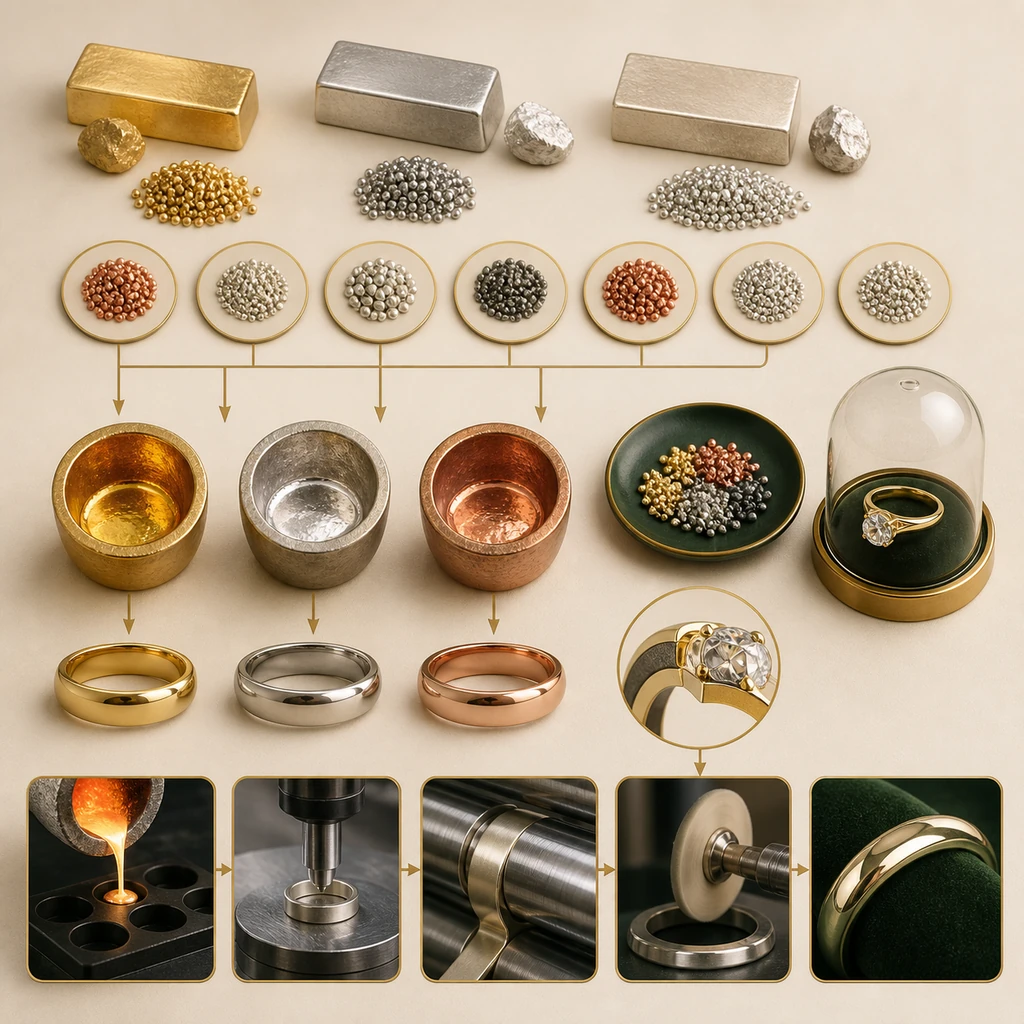
Pure precious metals can be too soft or impractical for many jewelry applications. Alloying can increase hardness, change color, improve casting or fabrication behavior, and influence how a piece takes a polish.
Twenty-four-karat gold is essentially pure gold and is not commonly selected for most jewelry structures because it is very soft and easily deformed. Twenty-two-karat gold is also soft but can be used selectively, including in carefully designed bezels or protected mounting elements where its malleability helps the jeweler move metal securely around a stone. Such high-karat components still require thoughtful construction and protection from repeated knocks, abrasion, and bending.
Recipes vary by manufacturer. Copper, silver, zinc, nickel, palladium, cobalt, ruthenium, iridium, and other metals may appear in different gold, platinum, or silver alloys. A karat number alone cannot reveal the exact recipe.
Solid Alloy vs. Surface Layer
Rhodium plating is a thin white surface layer often applied to white gold and sometimes sterling silver. Gold vermeil is a gold surface over a sterling-silver base that must meet specific U.S. standards to use the name.
Every coating experiences wear. How quickly depends on thickness, chemistry, friction, body chemistry, cleaning, and how often the piece is worn. Replating is maintenance, not evidence that the underlying jewelry is defective.
White surface over a disclosed precious-metal alloy
Qualifying gold surface over sterling silver
Everyday Care
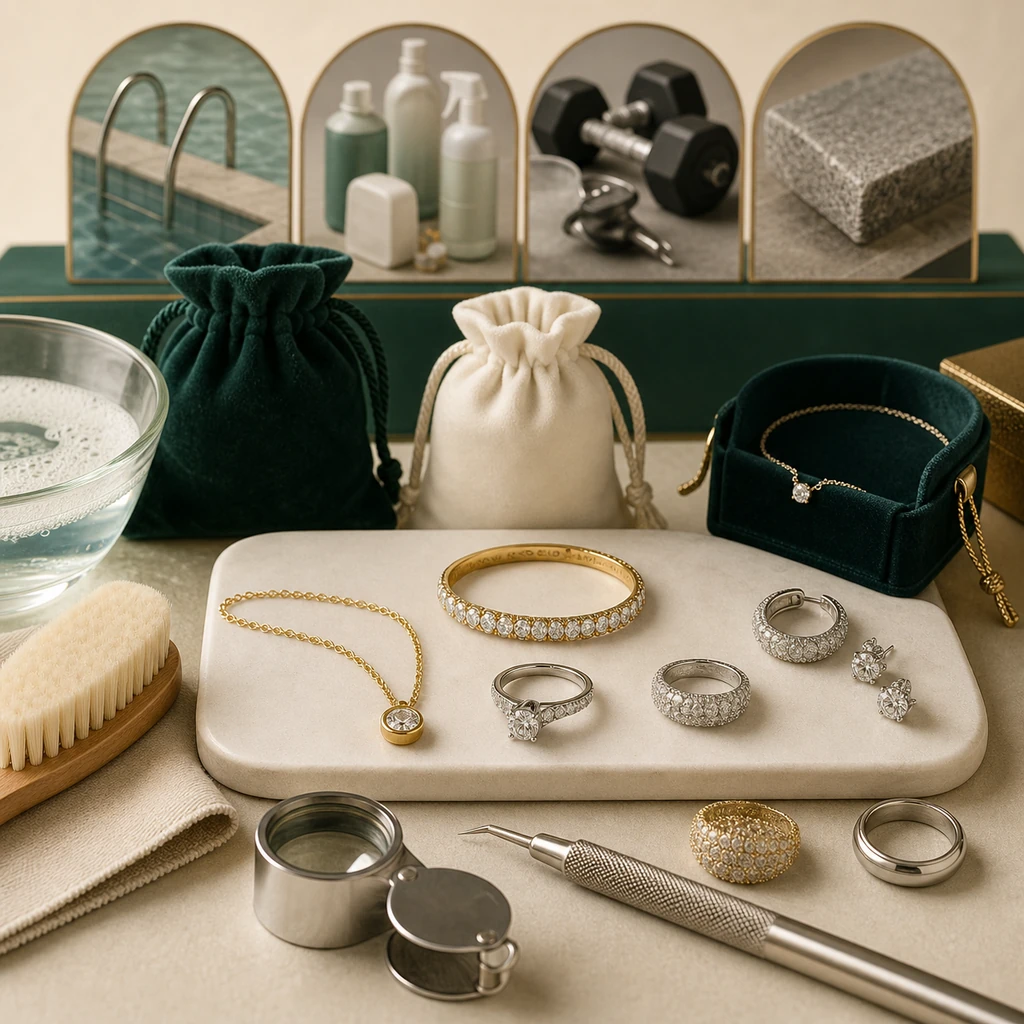
Remove fine jewelry before swimming, heavy exercise, household cleaning, and work that can bend, strike, or abrade the piece. Chlorine and strong chemicals can affect some alloys and finishes, while creams and soaps can dull surfaces and diamonds.
Use gentle cleaning appropriate to the entire piece, not only the metal. Pearls, enamel, treated gems, glued components, and delicate pavé can require different care from plain metal or diamond jewelry. Have frequently worn pieces inspected periodically for loose stones, worn prongs, stretched links, and thinning plating.
From Education to Exploration
Continue From Learning to Exploring
Terminology and facts were reviewed against current guidance from independent gemological and U.S. consumer-protection authorities. Report formats and services can change.