Silver is the family
Sterling silver is the familiar 925 alloy within that family.
Silver & Surface Finishes
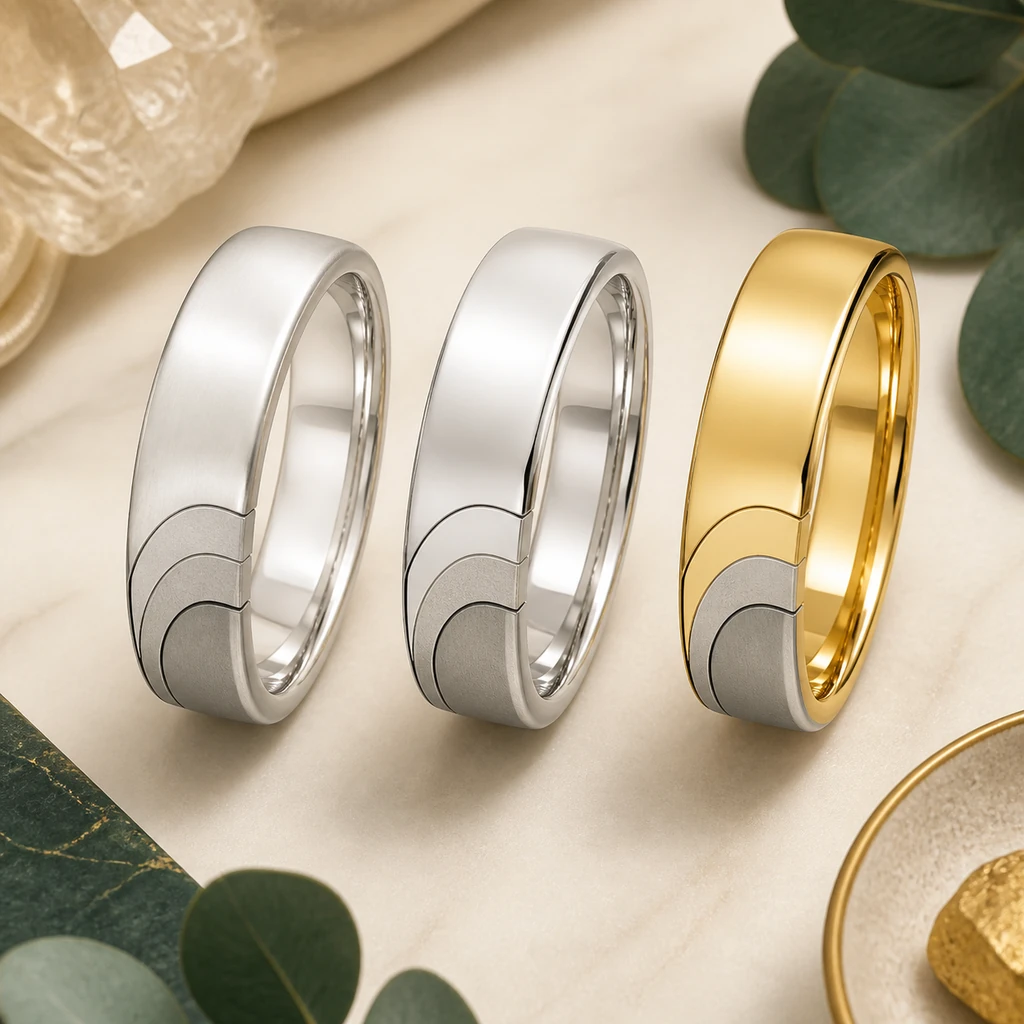
AI-generated educational visual; artistic representation.
The Essential Idea
Silver is the precious metal; sterling silver is a specific silver alloy. Fine silver is usually 99.9% pure and comparatively soft, while sterling silver is at least 92.5% silver and is strengthened with other metals for jewelry.
Rhodium plating and gold vermeil are not competing names for the same finish. Rhodium is a white platinum-group metal applied as a surface layer. Vermeil is a regulated gold-over-sterling-silver construction.
Sterling silver is the familiar 925 alloy within that family.
It adds a bright white surface and can reduce tarnish while it remains intact.
In the U.S., the gold layer must meet fineness, coverage, and thickness criteria.
The Short Answer
Silver is an element and a broad material description. Fine silver marked 999 is approximately 99.9% silver. Sterling silver, commonly marked 925, Sterling, or Ster., contains at least 92.5% silver and up to 7.5% other metals, often primarily copper.
Pure or fine silver is softer and less common in structures that need to resist bending. Sterling's added alloy content improves practicality, but the alloy can tarnish and may contain a metal that affects a sensitive wearer.
Why Silver Darkens
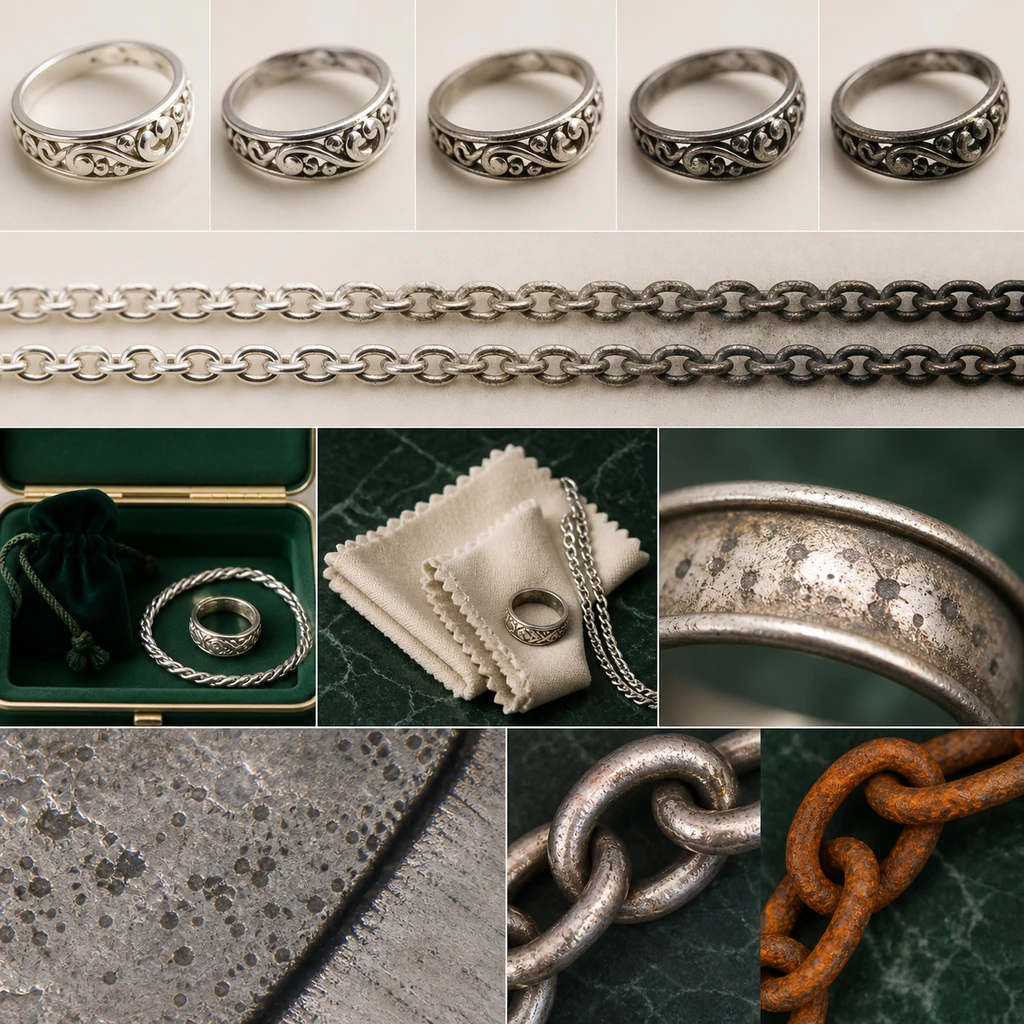
Sterling silver can darken as its surface reacts with sulfur-containing substances in air, cosmetics, perspiration, storage materials, and the environment. Humidity and individual body chemistry can affect the rate.
Gentle polishing can remove tarnish, but abrasive polishing also removes a minute amount of metal. Store silver clean and dry in a suitable anti-tarnish environment, and avoid aggressive dips on plated, oxidized, gemstone-set, or intentionally patinated jewelry unless specifically approved.
A Bright White Surface
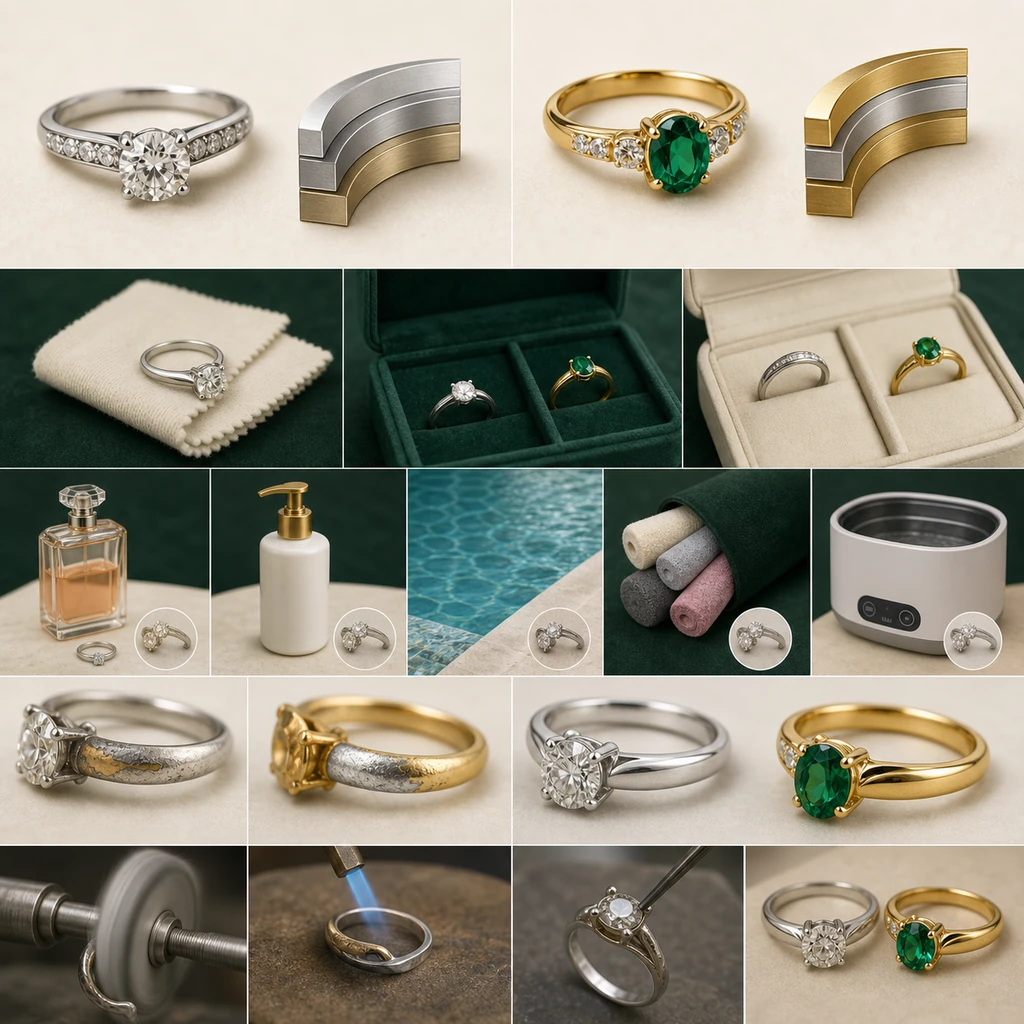
Rhodium is a platinum-group metal. A thin electroplated layer can give white gold or sterling silver a bright, reflective white finish and may help limit tarnish or direct skin contact with the base alloy while the layer remains intact.
Rhodium plating is not permanent. Rings and bracelet surfaces usually experience more friction than earrings or pendants, so maintenance intervals vary. U.S. guidance requires disclosure when rhodium is applied as a surface layer to a product described as precious metal.
Bright white plating
White gold or disclosed silver/alloy
Gold Over Sterling Silver
Under current U.S. Jewelry Guides, vermeil uses a sterling-silver base coated on all significant surfaces with gold or a gold alloy of at least 10K fineness. The layer must be of reasonable durability and have a minimum thickness equivalent to 2.5 microns of fine gold.
Vermeil is therefore different from ordinary gold plate over an unspecified base metal. It is also different from solid karat gold: once the surface layer wears, the sterling-silver core remains.
At least 10K and qualifying thickness
At least 925 silver
Rhodium vs. Vermeil
Rhodium plating identifies the surface metal, which is bright white, but it does not identify the underlying precious metal. It may cover white gold, sterling silver, or another disclosed base.
Gold vermeil identifies a fuller construction: gold of qualifying fineness and thickness over sterling silver. Rhodium-plated sterling remains silver-colored; vermeil appears gold-colored. Both finishes can wear and both should be described with the underlying metal and care expectations.
White surface over a disclosed precious-metal alloy
Qualifying gold surface over sterling silver
Care for Coated Jewelry
Avoid abrasive cloths, polishing compounds, ultrasonic cleaning unless approved, pools, perfumes, lotions, and repeated friction on plated pieces. Wipe gently with a soft, non-abrasive cloth and store separately.
When color changes or the underlying metal becomes visible, ask a qualified jeweler whether cleaning, refinishing, or replating is appropriate. Replating frequency cannot be promised from the metal name alone.
From Education to Exploration
Continue From Learning to Exploring
Terminology and facts were reviewed against current guidance from independent gemological and U.S. consumer-protection authorities. Report formats and services can change.