
Anatomy explains function
Shanks, galleries, bails, posts, hinges, links, and clasps each perform a different job.
How Jewelry Is Built & Worn
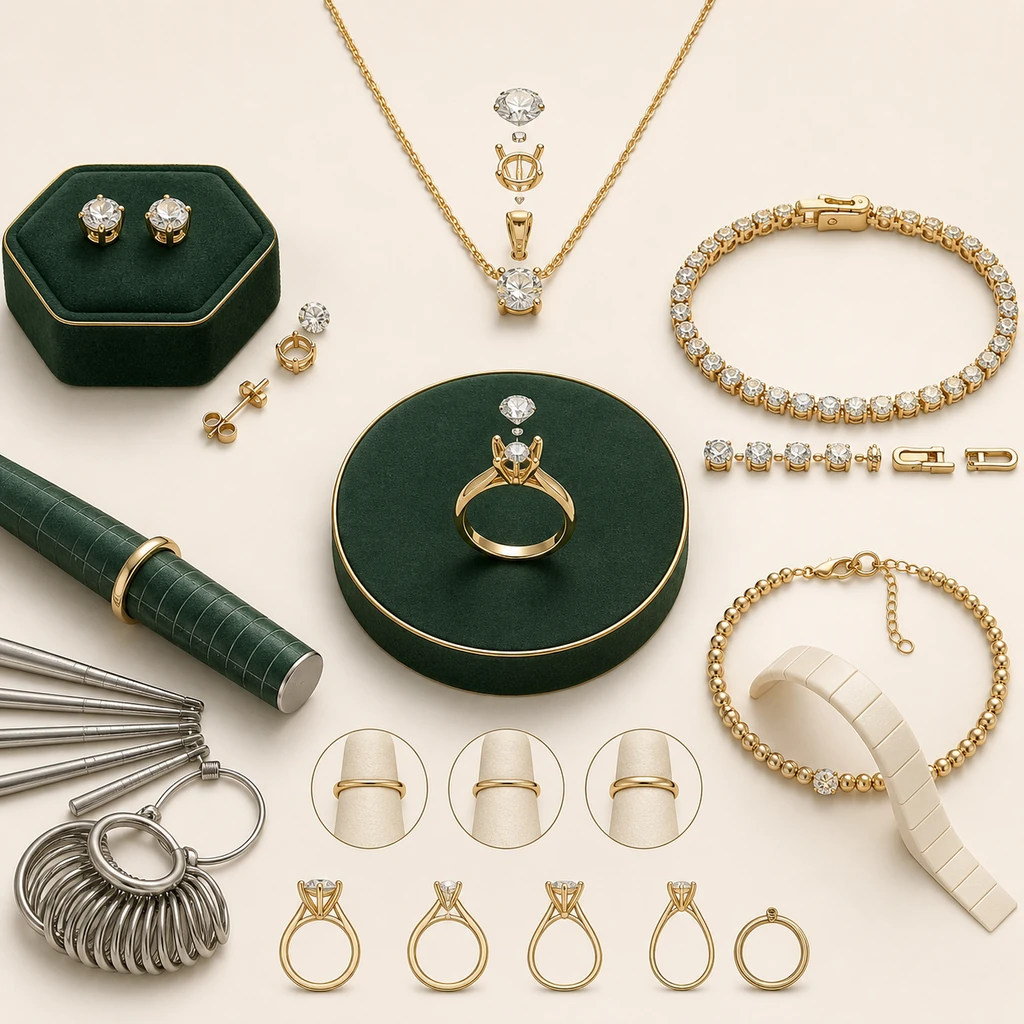
AI-generated educational visual; artistic representation.
The Essential Idea
Knowing the parts of a piece makes product descriptions easier to understand and questions easier to ask. Anatomy also explains why two designs that look similar in a photograph can fit, move, and require care differently.
Measurements should be read together: ring width affects fit, necklace length changes placement, earring dimensions influence movement, and bracelet style determines the amount of ease needed.
Shanks, galleries, bails, posts, hinges, links, and clasps each perform a different job.
Width, profile, articulation, and personal comfort influence fit alongside the stated size.
Layering and stacking work best when lengths, widths, textures, and movement are balanced.
Ring Anatomy
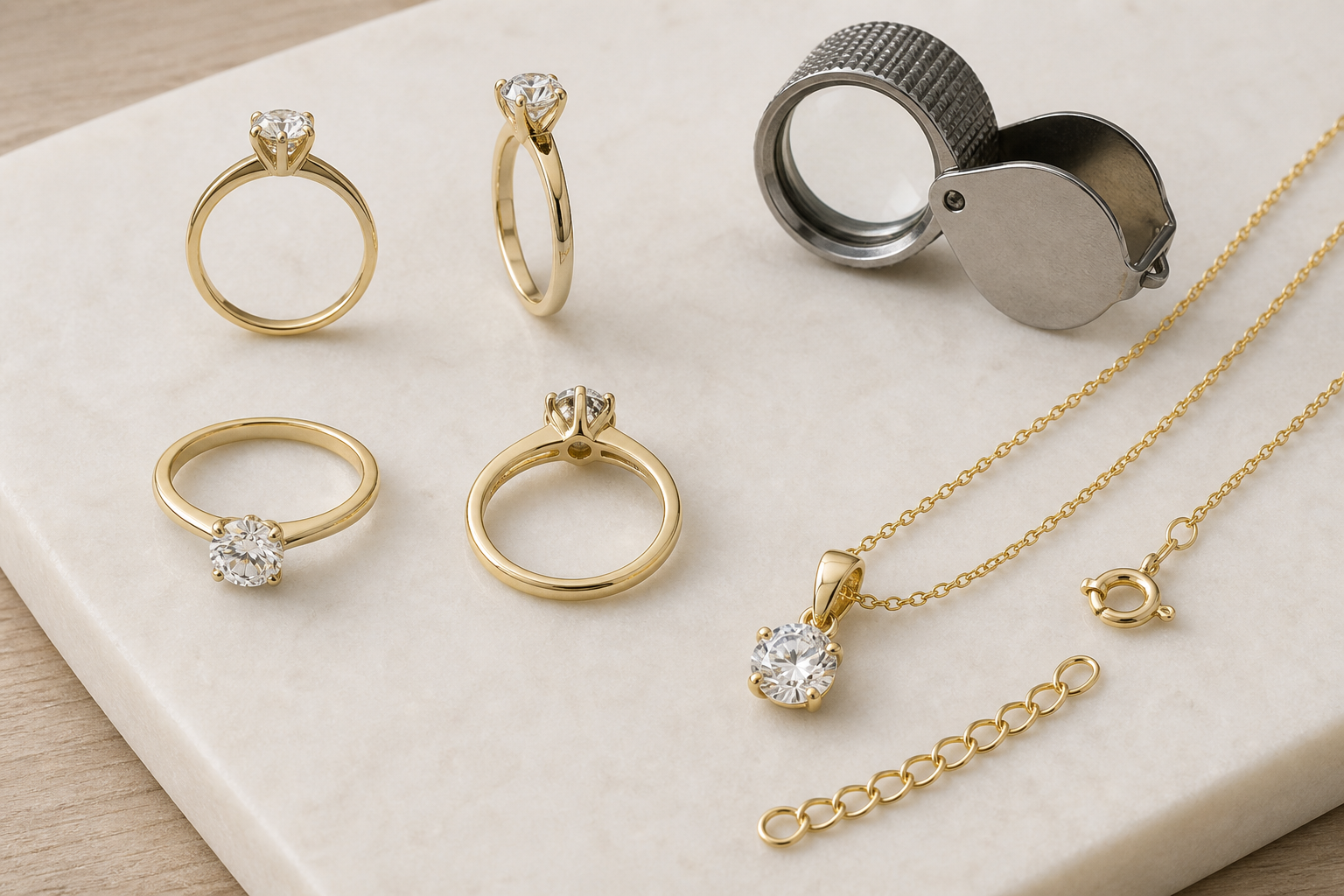
The shank circles the finger. Its shoulders rise toward the center design, while the head or setting holds the main diamond. The gallery is the structure visible from the side beneath or around the center; a gallery rail can connect and reinforce prongs. The bridge is the lower area beneath the head where a wedding band may meet the ring.
The inside lower shank often serves as the sizing area. Eternity diamonds, intricate engraving, mixed metals, and hollow construction can limit resizing. Wider bands commonly feel tighter than narrow bands at the same marked size.
Necklace Anatomy
The chain carries the design; the bail connects a pendant to the chain. A fixed bail stays aligned, while a sliding pendant moves directly on the chain. Jump rings connect components, an extender offers adjustable length, and end tags or rings provide the clasp’s connection point.
Common necklace lengths include collar, choker, princess, matinee, opera, and rope ranges, but actual placement depends on neck size, body proportions, pendant weight, and clothing neckline. Always use the listed inch measurement rather than the style name alone.
Earring Styles
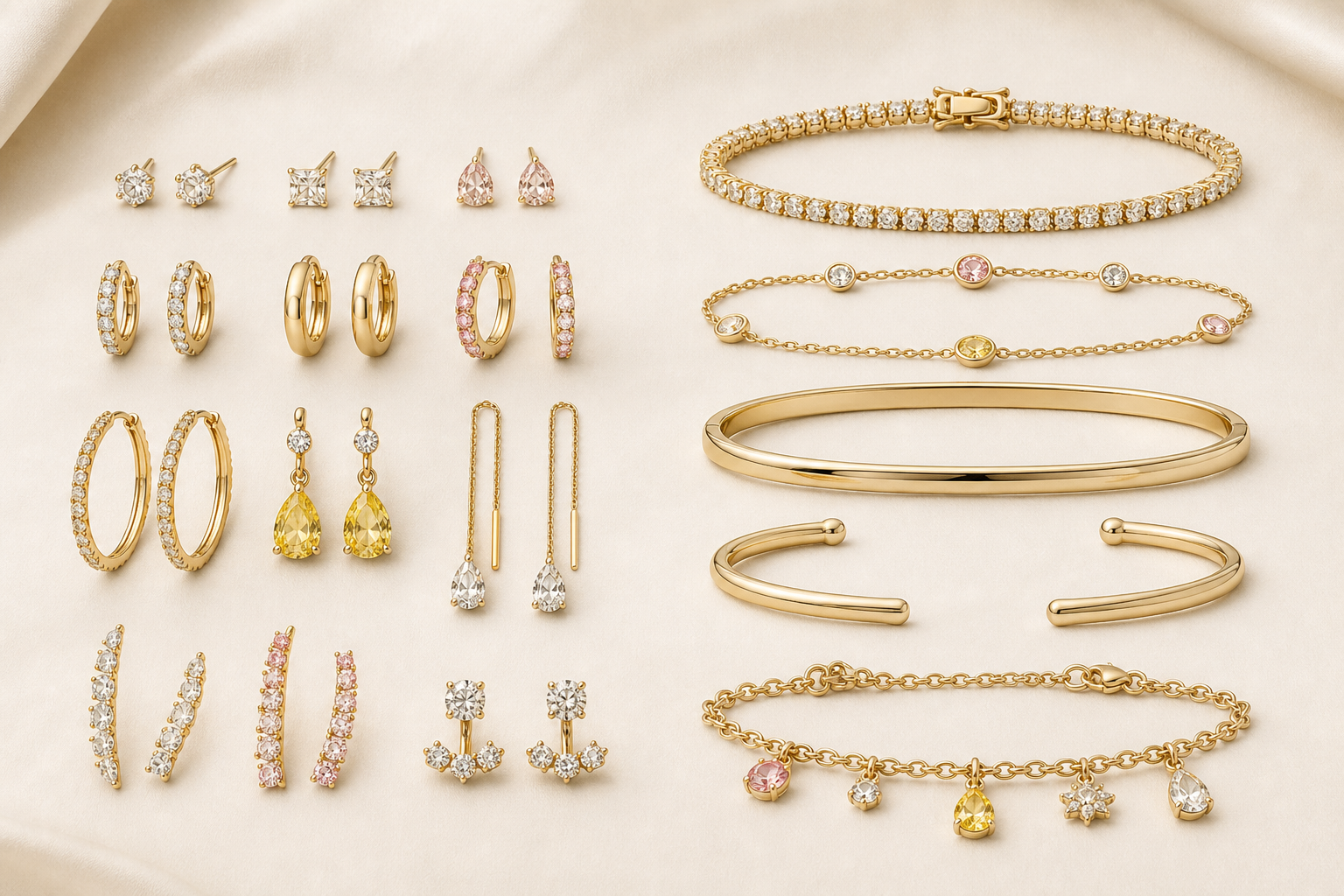
Studs sit close to the ear and commonly use posts with friction or threaded backs. Hoops circle from front to back; huggies are compact hoops that sit close to the lobe. Drops suspend a design below a fixed top, while dangles move more freely from hooks, posts, or hinged findings.
Climbers follow the contour of the ear, and jackets add a decorative element behind or around a stud. Consider total length, weight, post thickness, closure type, balance, and whether styles are sold as a pair or single earring.
Bracelet Styles
A tennis bracelet uses a flexible line of individually set diamonds. Chain and station bracelets articulate through links, with station styles spacing diamonds or motifs along the chain. Bangles form a rigid or hinged circle; cuffs have an intentional opening and are usually more structured.
Bracelet fit requires enough ease for movement without allowing the piece to turn excessively, catch, or slide over the hand. Hinges, box clasps, tongues, and safety catches should align cleanly and close completely.
Personal Styling
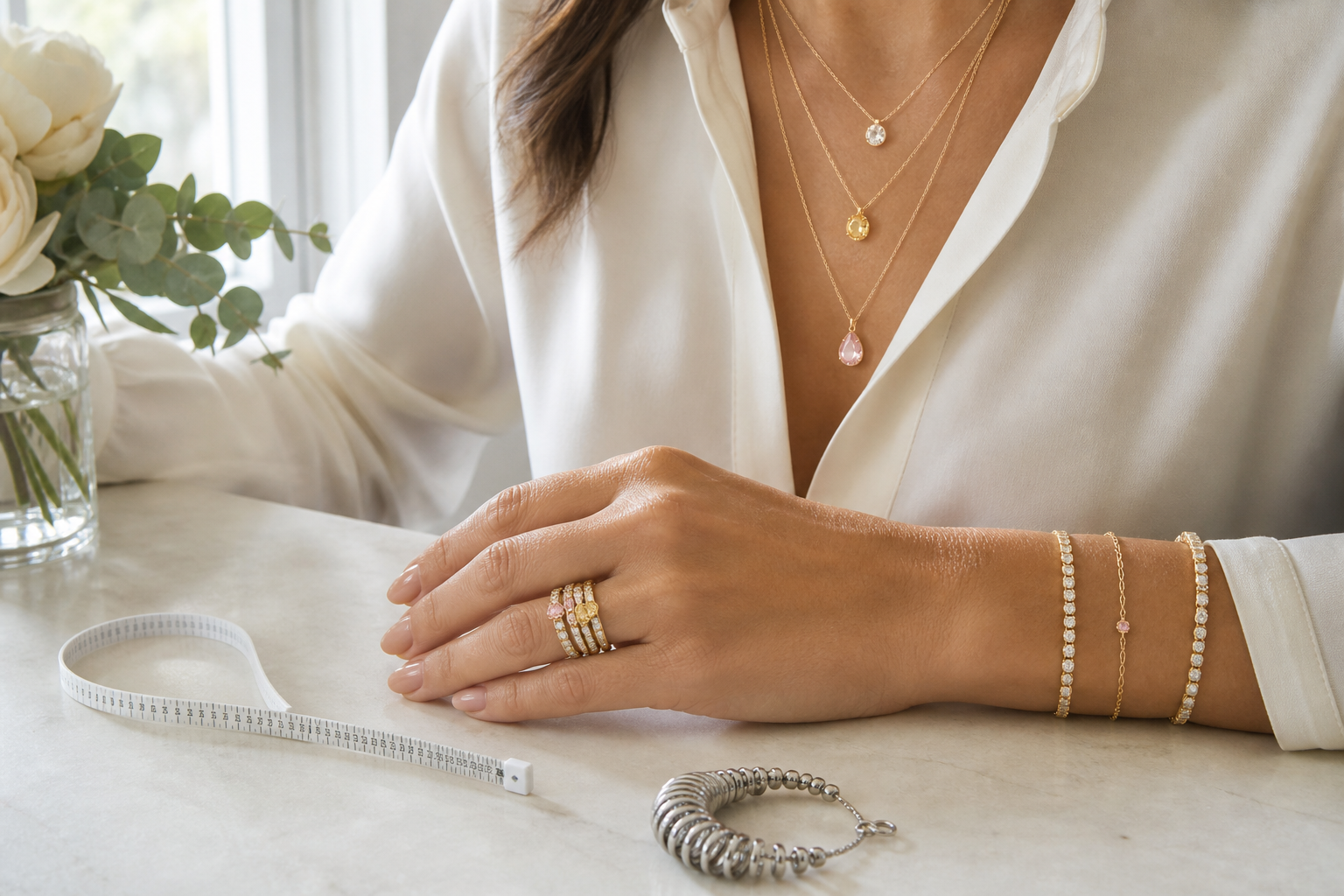
For necklaces, begin with different lengths so pendants occupy separate visual levels. Vary chain texture and weight, but avoid placing very delicate chains against heavy or highly textured pieces that can abrade or tangle them.
For rings and bracelets, combine widths and profiles while checking where diamonds, prongs, and edges touch. Diamond girdles can scratch neighboring precious metal or gemstones. A spacer band can reduce contact, and highly articulated bracelets should not be compressed by rigid cuffs.
Fit With Confidence
Finger size changes with temperature, time of day, travel, and swelling. Measure more than once and use the intended finger. Wide rings, tall settings, stacking combinations, and knuckle size may require adjustments beyond a basic ring-size reading.
For necklaces and bracelets, measure a piece you already enjoy or use a flexible tape, then add the desired ease. Record both the wearable length and the dimensions of fixed pendants, clasps, or end components.
From Education to Exploration
Continue From Learning to Exploring
Terminology and facts were reviewed against current guidance from independent gemological and U.S. consumer-protection authorities. Report formats and services can change.