Shared properties
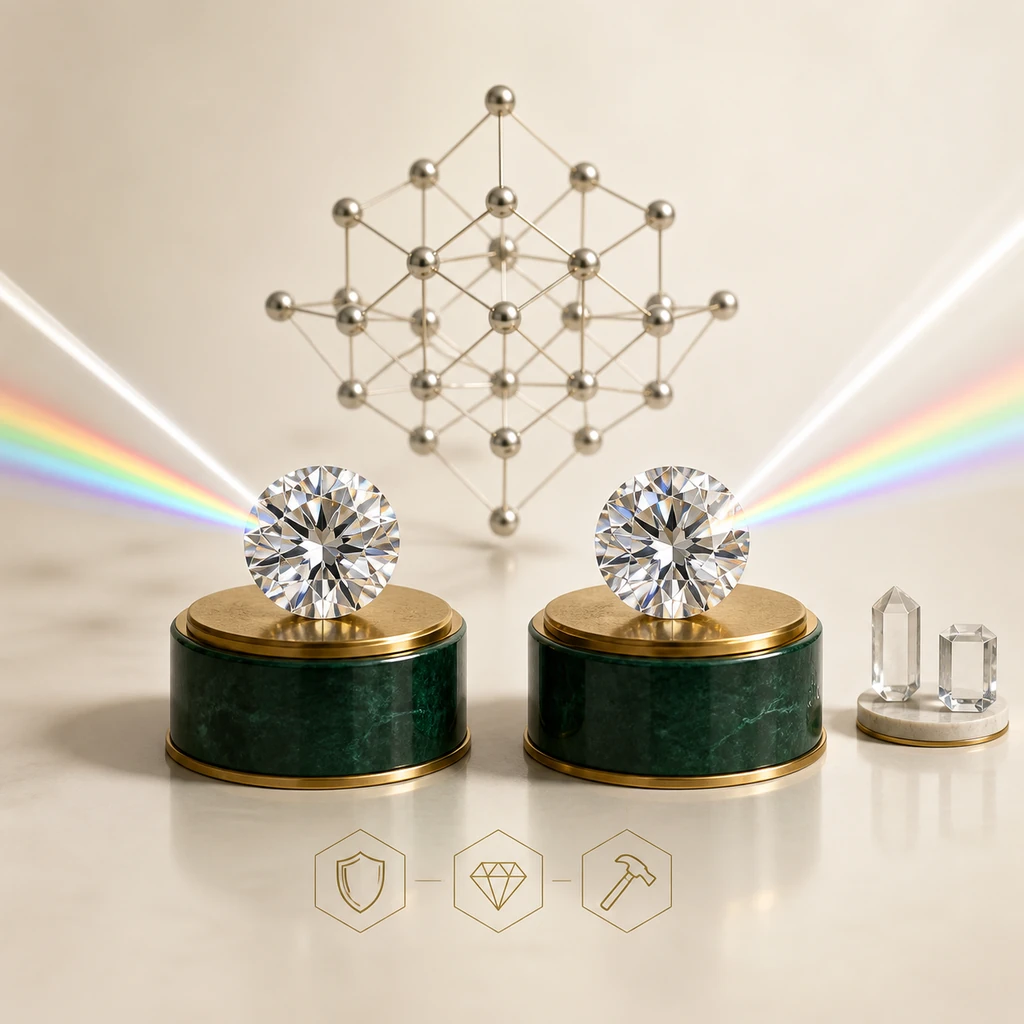
Both are diamond rather than diamond simulants.
Origin Explained
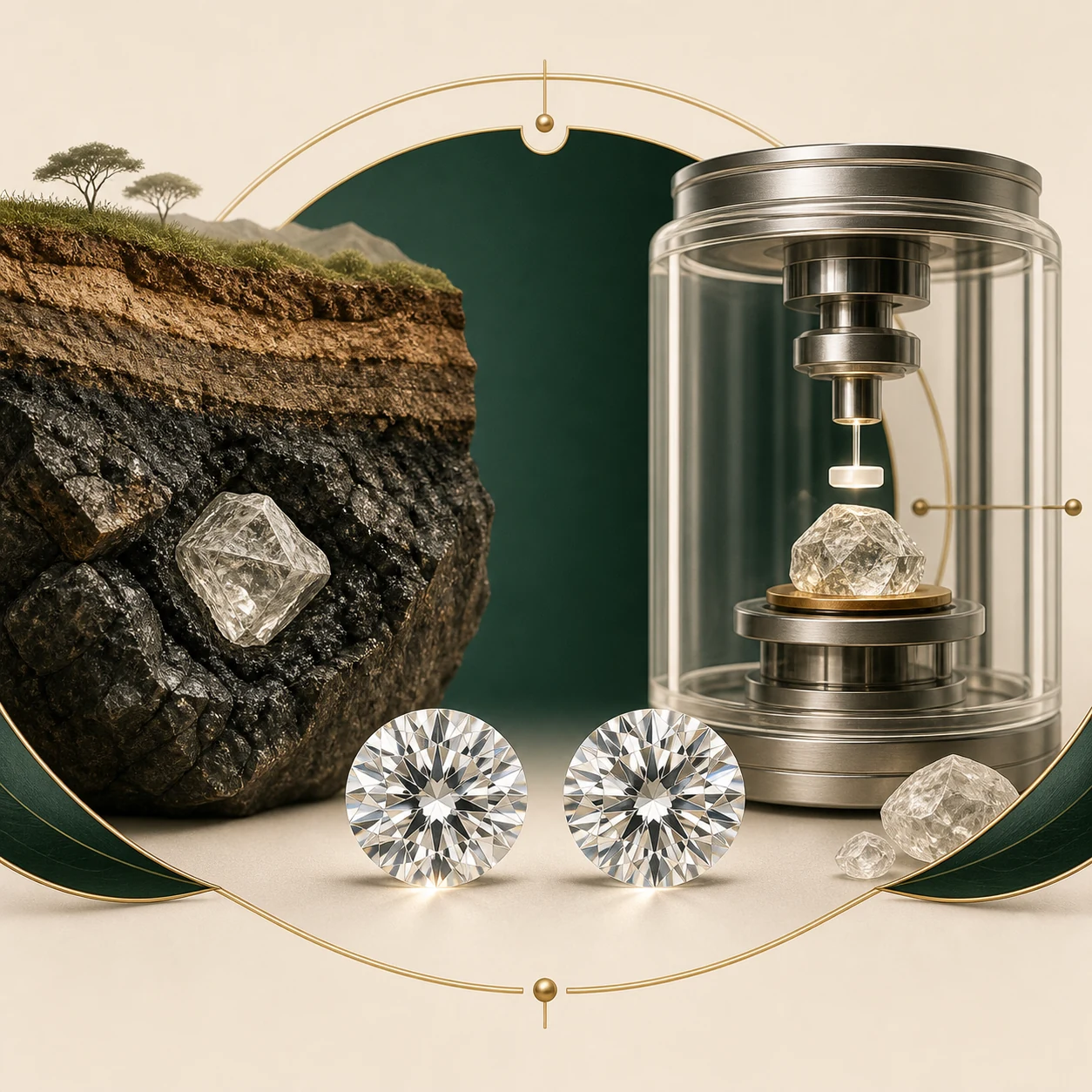
AI-generated educational visual; artistic representation.
The Essential Idea
Natural and lab-grown diamonds share the diamond crystal structure and essentially the same optical, physical, and chemical properties. Their fundamental difference is origin.
Natural diamonds formed within the earth over geological time. Lab-grown diamonds are created using technology in a controlled environment.
Both are diamond rather than diamond simulants.
One forms in the earth; the other grows in specialized equipment.
Gemological laboratories use advanced instruments to distinguish them.
The Same Material Category
Both consist primarily of carbon arranged in the diamond crystal structure. Both can be transparent, durable, brilliantly cut, and available in a range of colors and clarities.
Moissanite and cubic zirconia are simulants: they may resemble diamond, but their composition and properties differ.
The Essential Difference
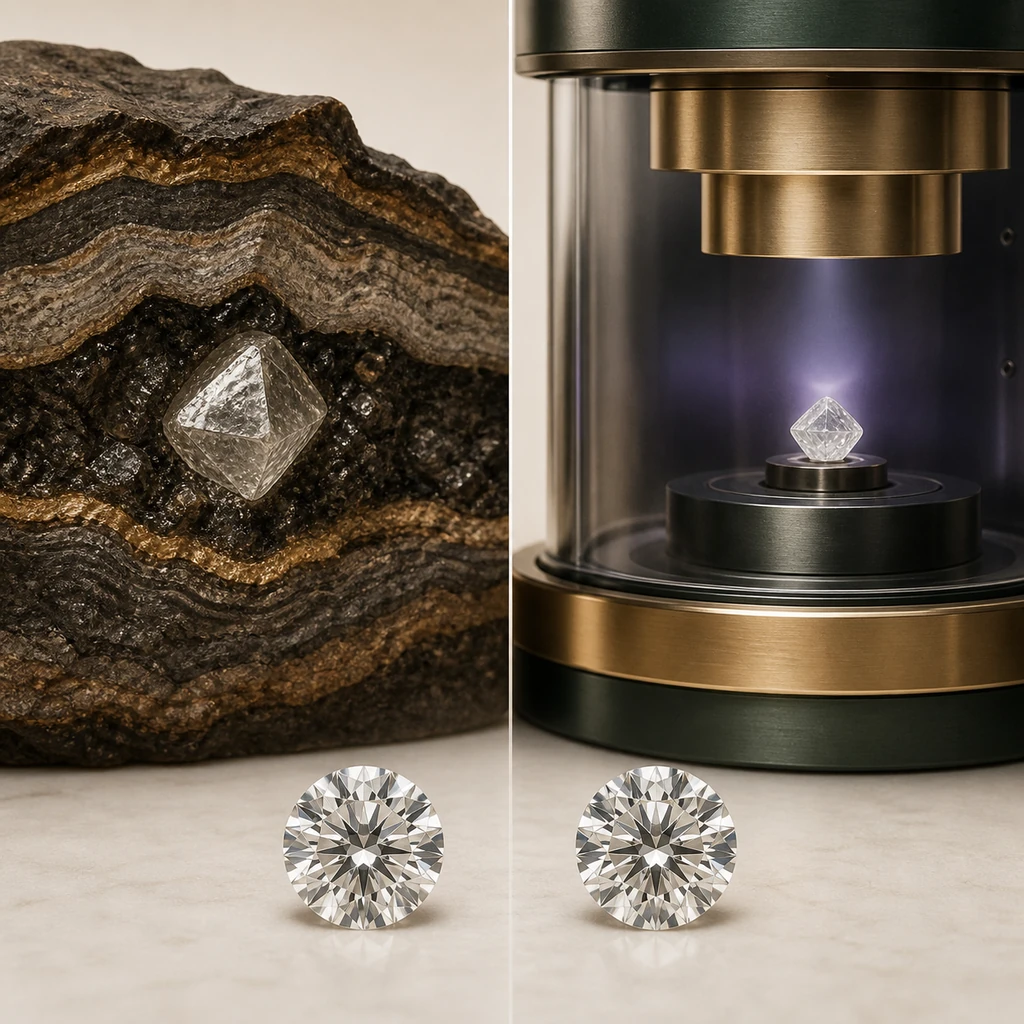
Natural diamonds form in the earth and reach the surface through geological processes. Lab-grown diamonds form on a diamond seed using HPHT or CVD technology.
Origin can influence supply, pricing, rarity narratives, and personal preference. Neither origin statement replaces the need to examine quality, design, disclosure, and value in the specific piece.
Your Priorities
Some customers value geological rarity; others value the design possibilities and price relationship offered by lab-grown diamonds. The right decision depends on your priorities.
Lab Diamonds of America specializes in lab-grown diamond jewelry and identifies that origin clearly. We encourage customers to compare the complete piece, not rely on assumptions about either category.

From Education to Exploration
Continue From Learning to Exploring
Terminology and facts were reviewed against current guidance from independent gemological and U.S. consumer-protection authorities. Report formats and services can change.