Same material category
Both are diamonds, not look-alike simulants such as cubic zirconia.
Origin, Clearly Explained
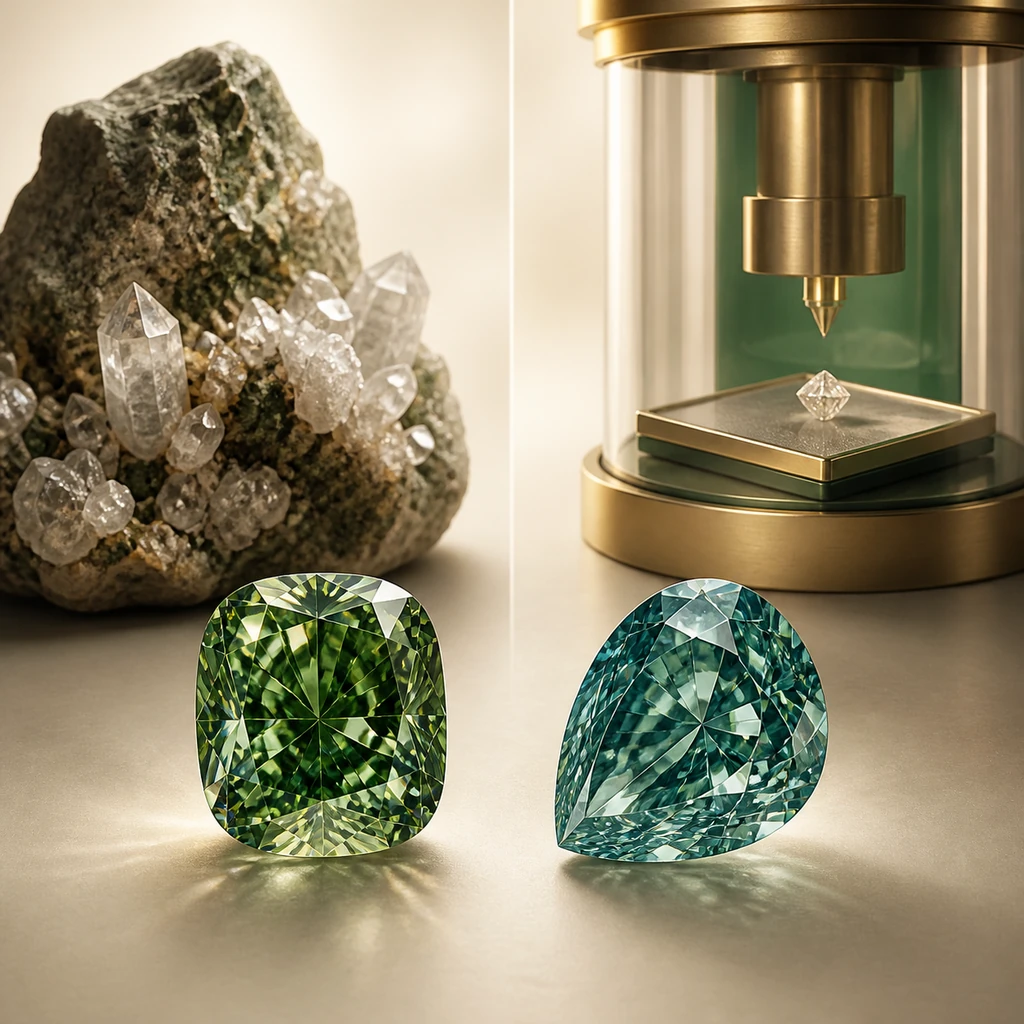
AI-generated educational visual; artistic representation.
The Essential Idea
Natural and laboratory-grown diamonds are both diamonds. They share essentially the same crystal structure and chemical, optical, and physical properties. Their difference is origin: one forms in the earth, while the other is grown with technology in a controlled environment.
That origin should never be hidden in vague language. The words laboratory-grown or laboratory-created should appear clearly wherever a product is described.
Both are diamonds, not look-alike simulants such as cubic zirconia.
Natural diamonds form geologically; laboratory-grown diamonds are produced with technology.
Origin and detectable treatments should be presented clearly before purchase.
What They Share
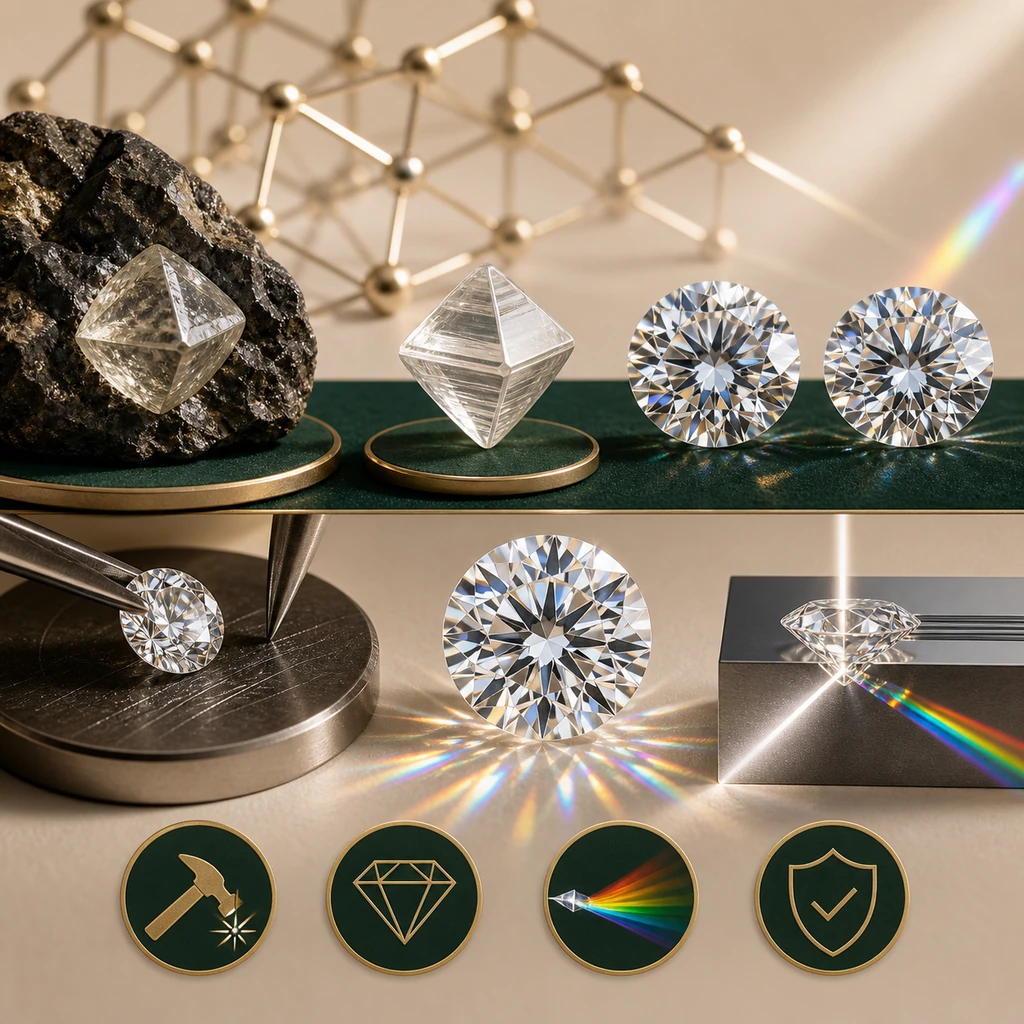
Both natural and laboratory-grown diamonds are crystalline carbon and share the hardness, brilliance, fire, and durability associated with diamond. A laboratory-grown diamond is not the same as a diamond simulant, which only resembles diamond visually.
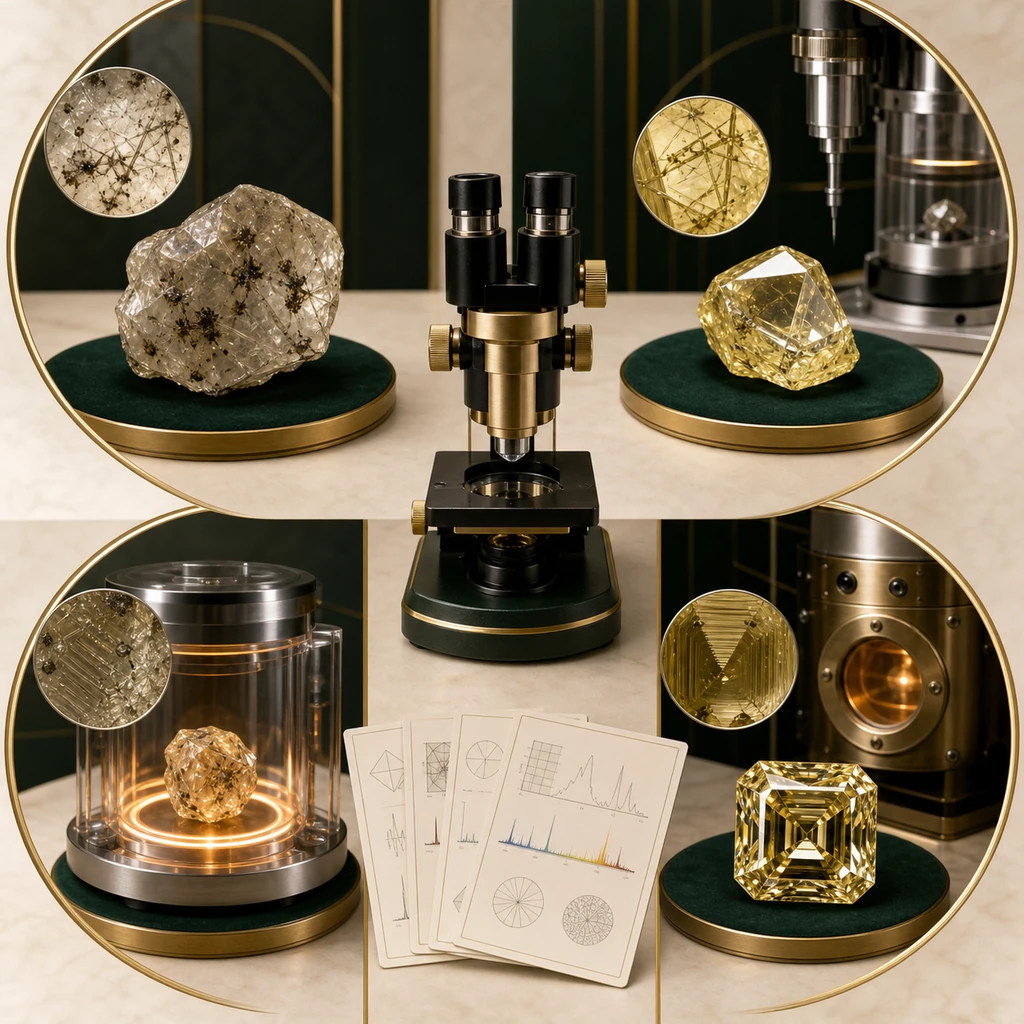
Standard observation is not always enough to separate origin. Gemological laboratories use specialized equipment and trained analysis to identify growth features and other evidence.
What Differs
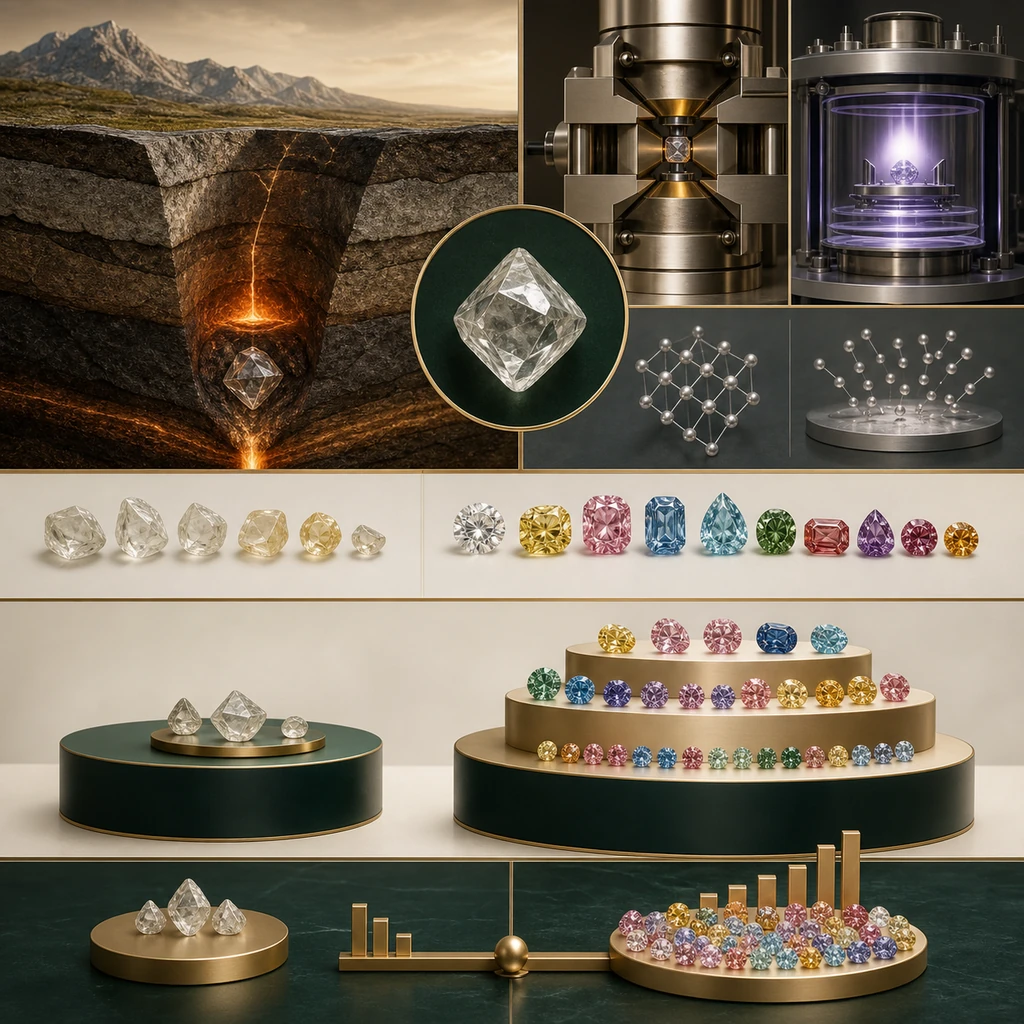
Natural diamonds formed through geological processes over immense spans of time. Laboratory-grown diamonds are produced by methods that recreate the conditions needed for diamond crystal growth, most commonly High Pressure High Temperature (HPHT) or Chemical Vapor Deposition (CVD).
Laboratory growth makes a broader range of color more available for jewelry design. Natural and laboratory-grown diamonds also have different supply, pricing, and resale markets. Jewelry should be chosen for enjoyment—not presented as a guaranteed investment.
Color Origin
In natural diamonds, color may arise from impurities or lattice defects created during geological formation. Treatments can also alter the color of a natural diamond.
In laboratory-grown diamonds, color may develop during growth or through post-growth processes. A reputable report should identify laboratory-grown origin and disclose detectable treatment or growth information according to that laboratory’s terminology.
Our Perspective
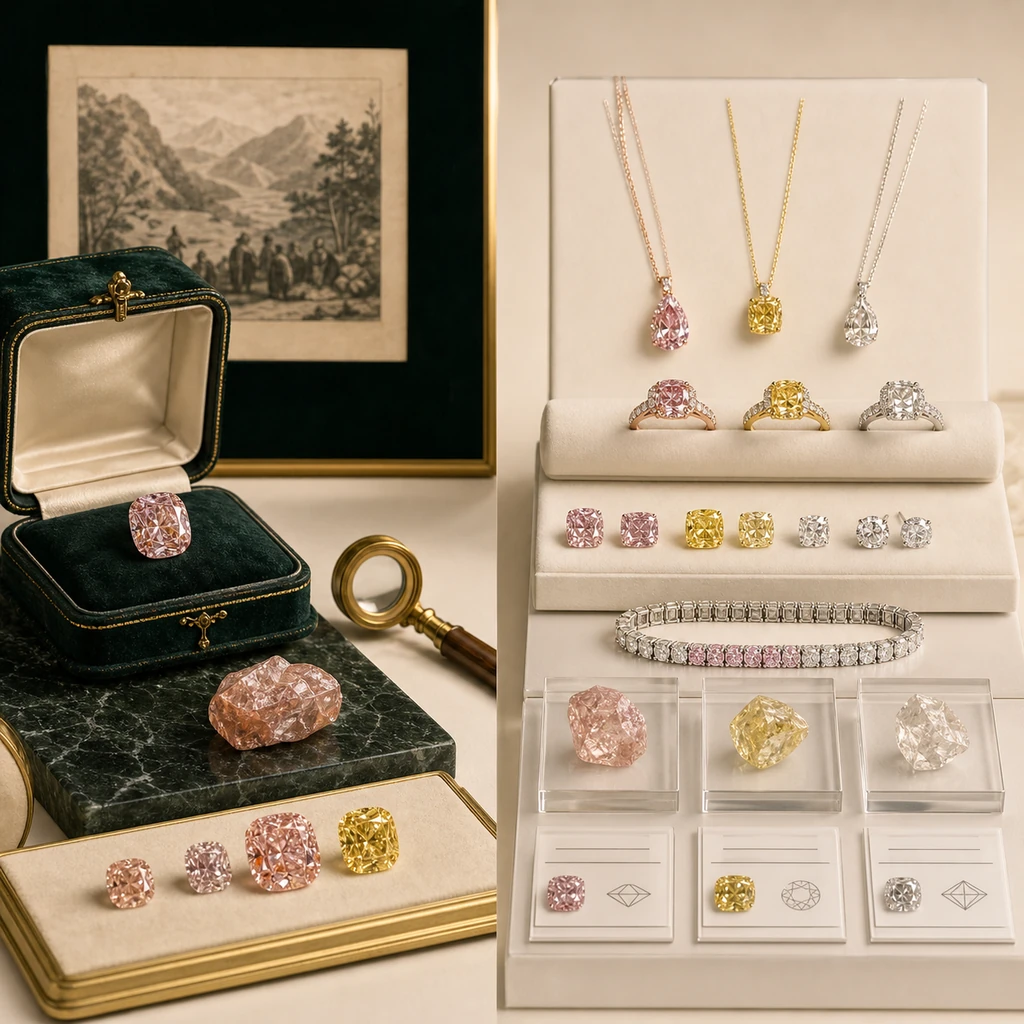
Our passion for color began in the world of natural fancy-color diamonds. Laboratory-grown color diamonds do not replace that history; they open a different path to expressive fine jewelry.
Lab Diamonds of America focuses on laboratory-grown color and white diamond jewelry with transparent product descriptions. We avoid blanket environmental or ethical claims unless a specific claim can be supported by evidence from the relevant supplier and product.
From Education to Exploration
Continue From Learning to Exploring
Terminology and facts were reviewed against current guidance from independent gemological and U.S. consumer-protection authorities. Report formats and services can change.