Quality is individual
Growth method alone does not determine the finished result.
Quality & Documentation
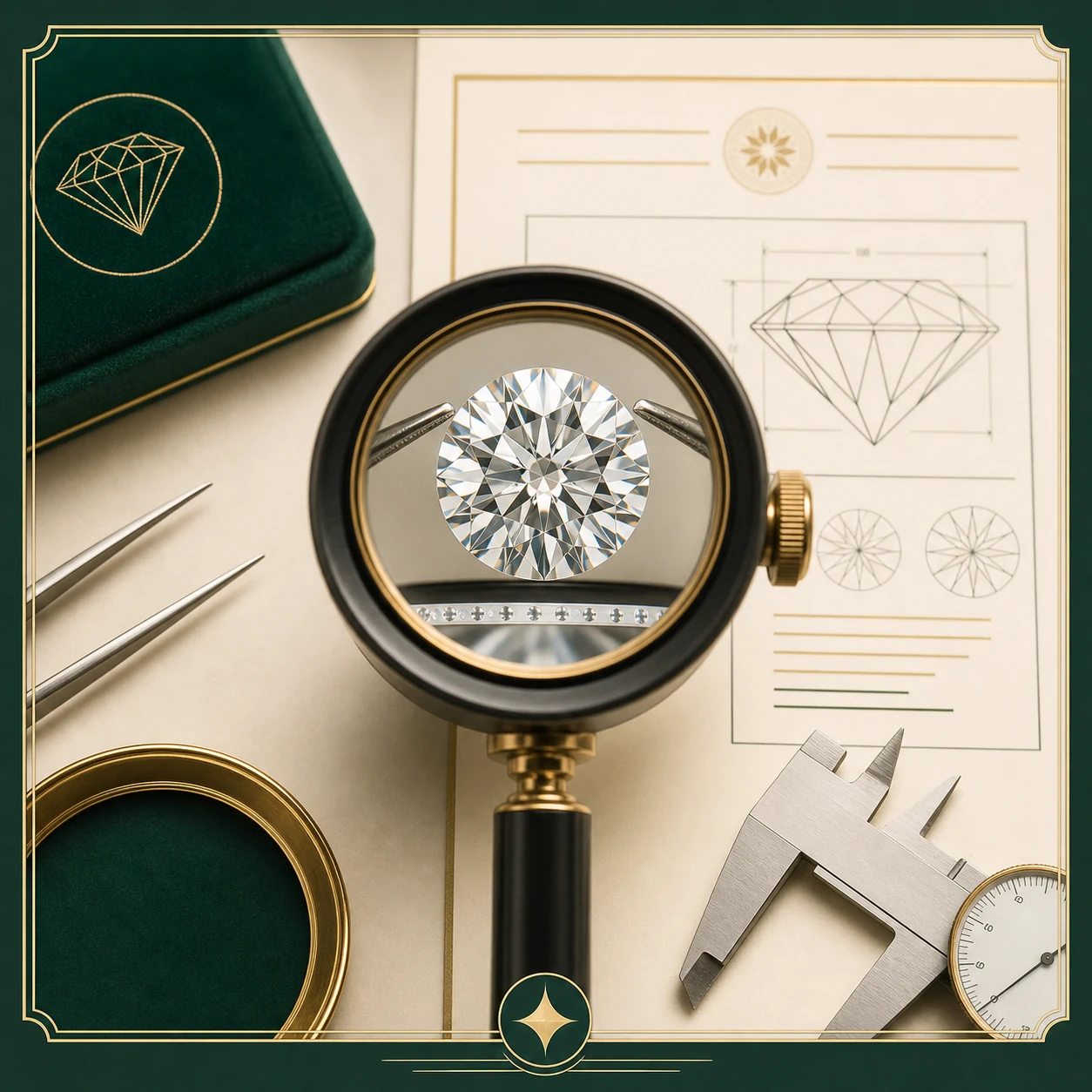
AI-generated educational visual; artistic representation.
The Essential Idea
Lab-grown diamonds vary in quality just as individual natural diamonds do. Cut, color, clarity, carat weight, transparency, fluorescence, and craftsmanship all contribute to the complete result.
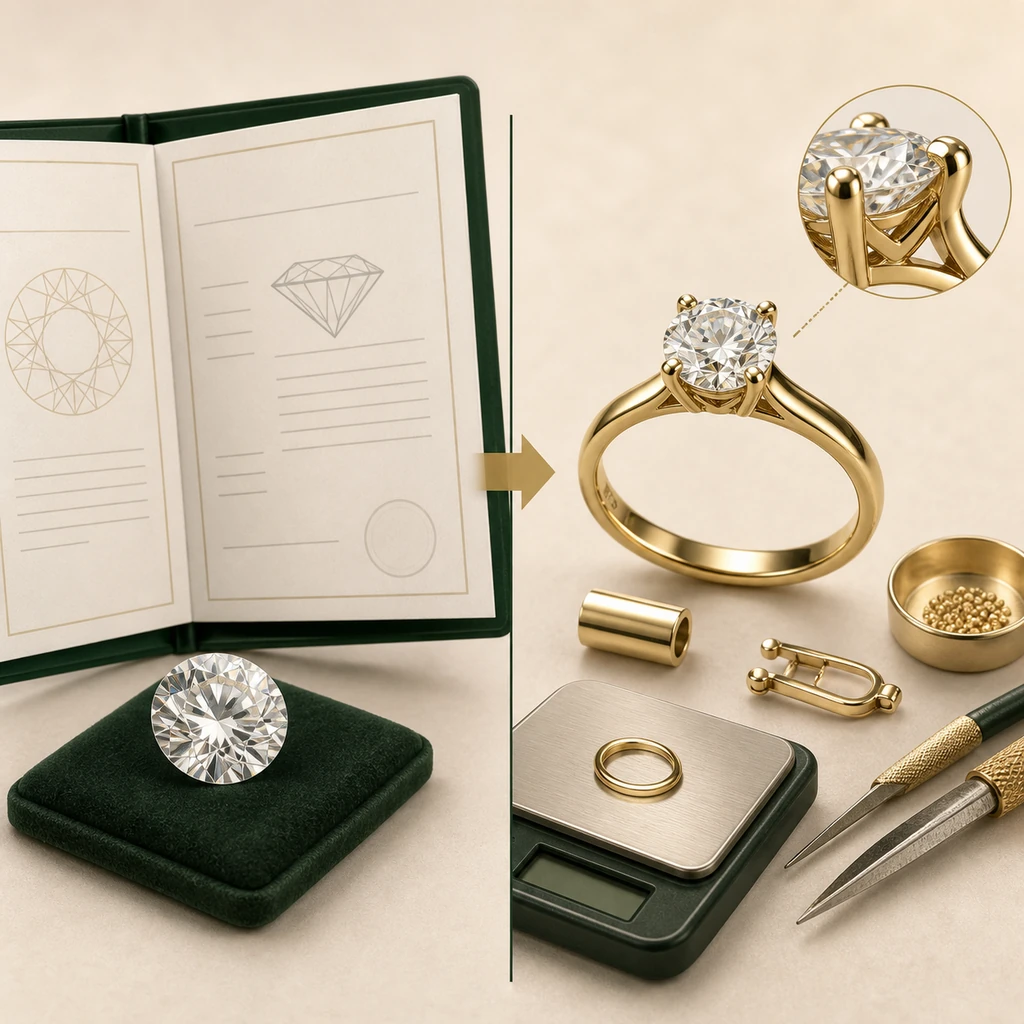
A laboratory document identifies or assesses a loose diamond under the issuing laboratory's current service. It is not the same as a warranty, appraisal, or jewelry-manufacturer certification.
Growth method alone does not determine the finished result.
Confirm the laboratory, service, number, and exact terminology.
The report does not grade the setting or finished construction.
Beyond a Label
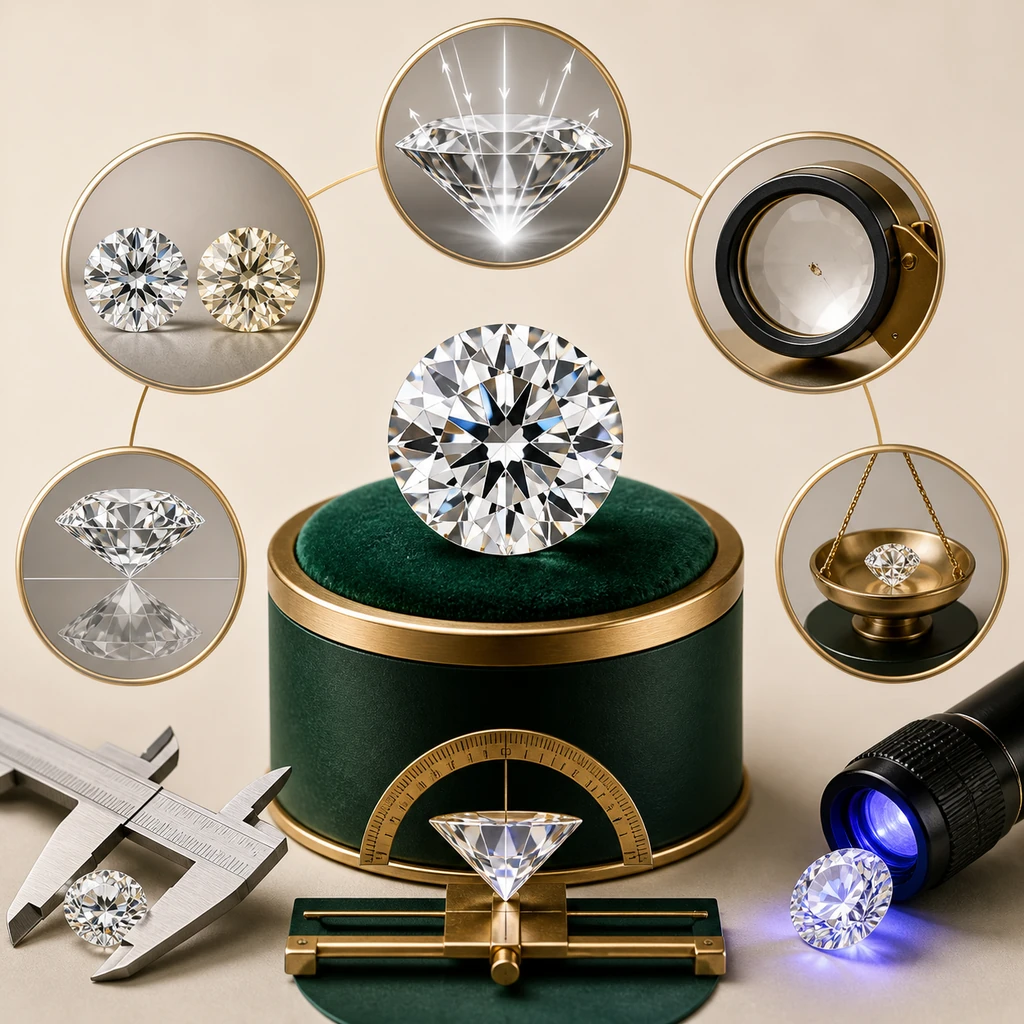
Cut controls how effectively a polished diamond handles light. Color and clarity describe different aspects of appearance, while carat measures weight rather than visible size.
Also consider transparency, proportions, polish, symmetry, fluorescence, measurements, and how the setting affects the face-up appearance.
Current Laboratory Services
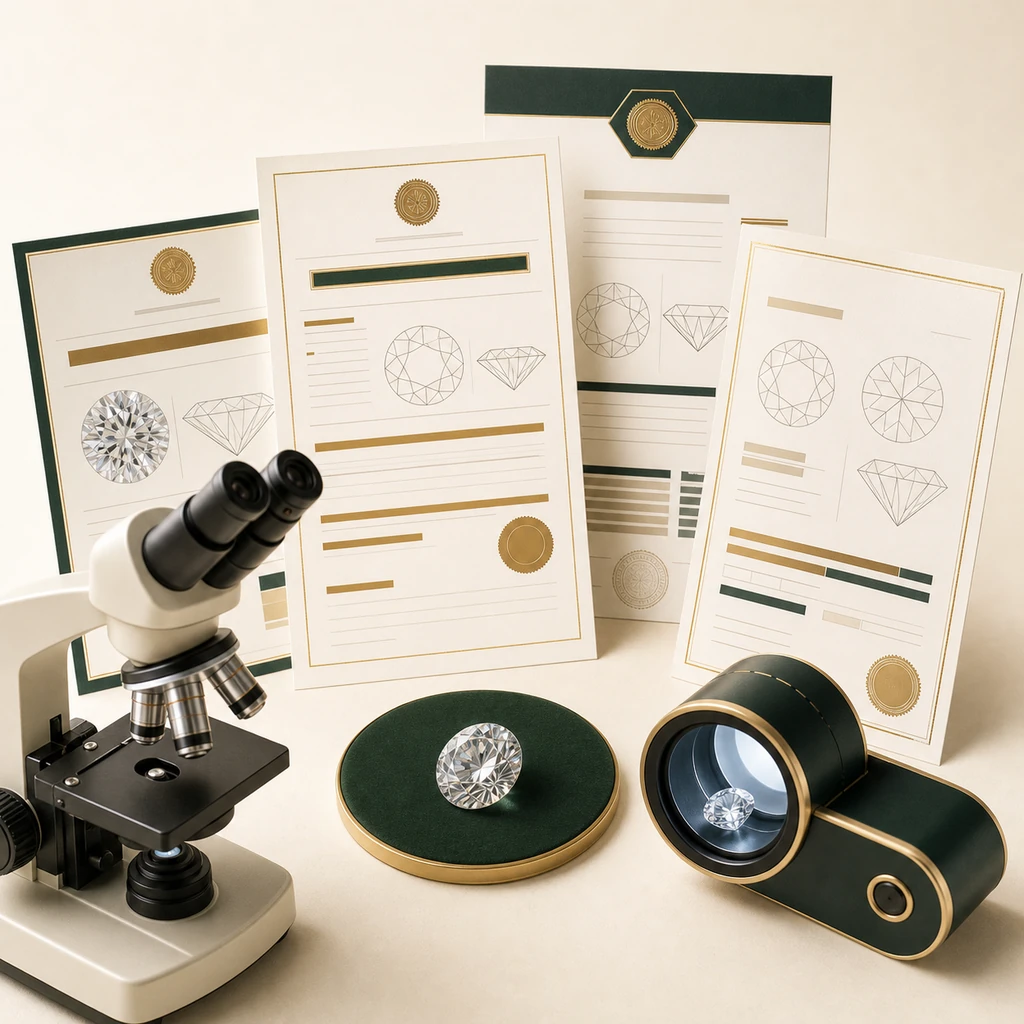
Independent laboratories offer different services and may update their terminology. Since October 2025, GIA's qualifying D-to-Z lab-grown diamond service uses Premium and Standard overall assessments; its laboratory-grown colored diamond service follows a different format.
Other laboratories may use familiar color and clarity scales. Read the exact document rather than assuming every report uses the same system.
Diamond Plus Craftsmanship
A report usually addresses the loose diamond at the time of examination. It does not automatically evaluate metal purity, setting security, clasp function, total jewelry weight, or the quality of assembly and finishing.
A trustworthy product page connects diamond information with accurate finished-piece specifications, care guidance, and clear seller policies.
From Education to Exploration
Continue From Learning to Exploring
Terminology and facts were reviewed against current guidance from independent gemological and U.S. consumer-protection authorities. Report formats and services can change.