
Security is structural
The number, placement, thickness, and condition of supports matter more than a setting name alone.
Jewelry Construction
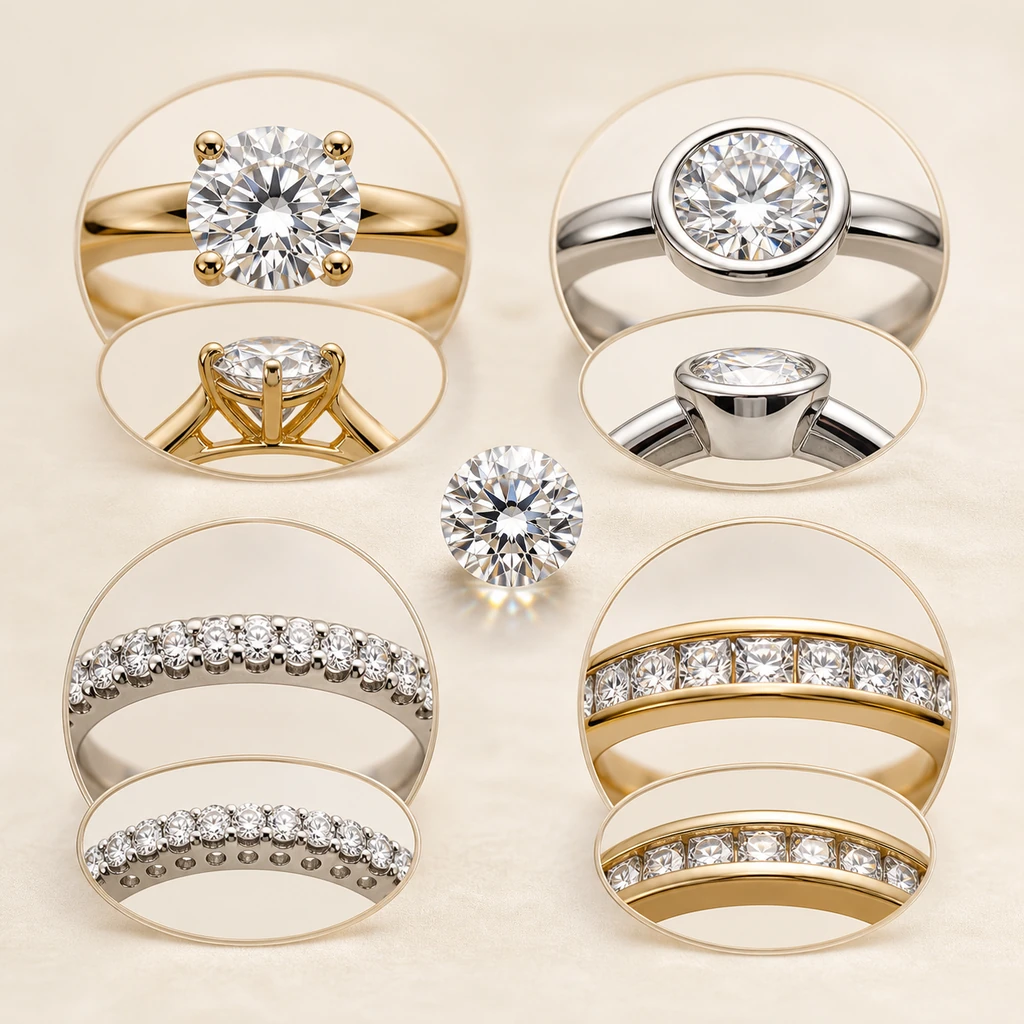
AI-generated educational visual; artistic representation.
The Essential Idea
A setting is the metal structure that holds a diamond and integrates it into the jewelry design. It influences security, profile, maintenance, visible outline, cleaning access, and how the diamond interacts with surrounding metal.
No setting is universally best. The right choice depends on diamond shape and size, the wearer’s routine, the desired amount of exposed stone, and the quality of the engineering and workmanship.
The number, placement, thickness, and condition of supports matter more than a setting name alone.
Points and corners often benefit from V-prongs, bezels, or another protective construction.
Prongs, beads, channels, and pavé should be inspected as the jewelry experiences wear.
Open Settings
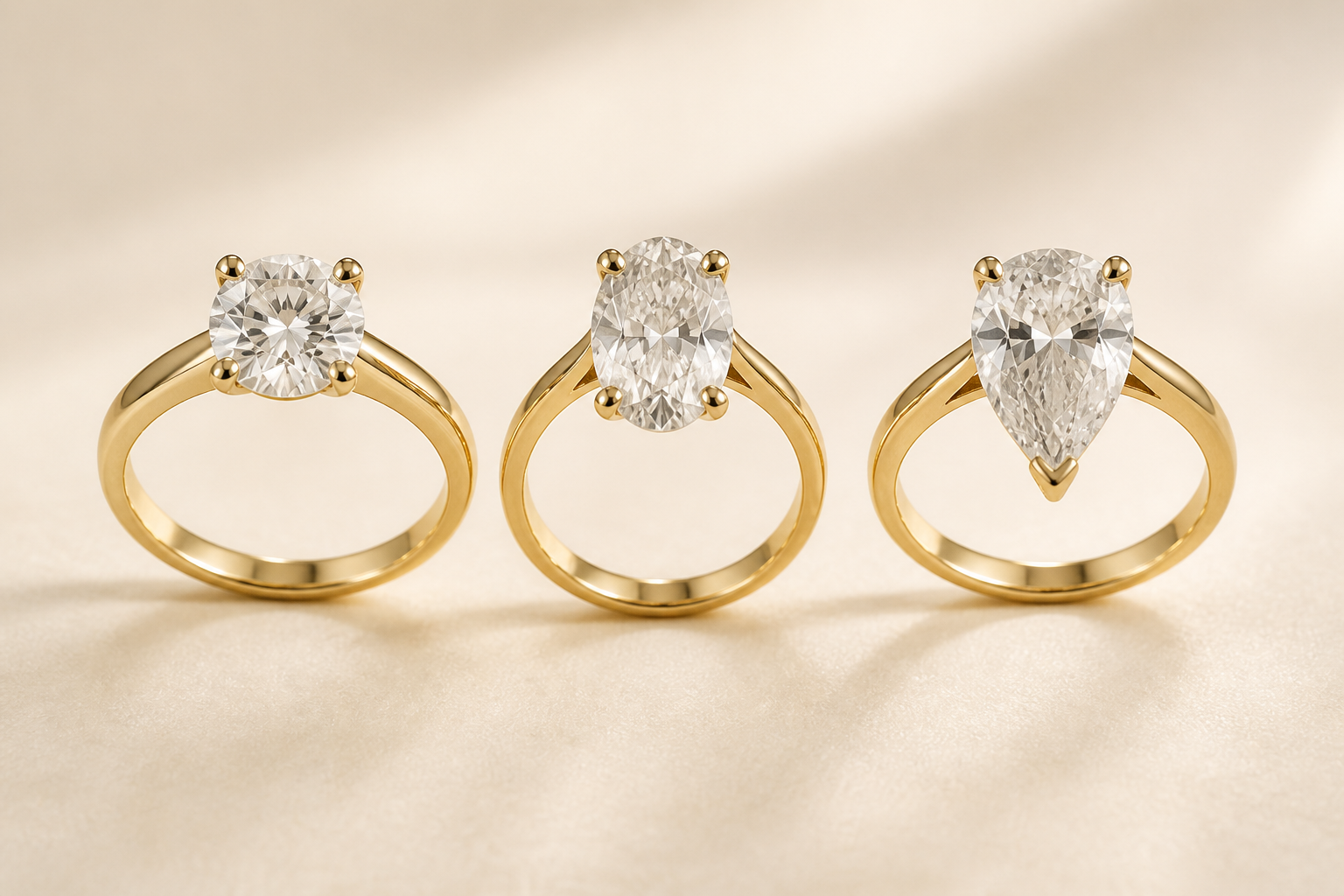
Prongs are narrow metal supports bent over the crown of a diamond. Four-prong designs show more of a center stone; six-prong designs add redundancy and can emphasize a round outline. A claw prong narrows to a more tapered or pointed finish, creating a refined visual line while still requiring sufficient metal for security.
V-prongs wrap around vulnerable points and corners, making them especially useful for princess, pear, marquise, and heart shapes. The prong must contact the stone securely without being so thin that normal wear quickly weakens it or so bulky that it obscures the diamond.
Metal Around the Edge
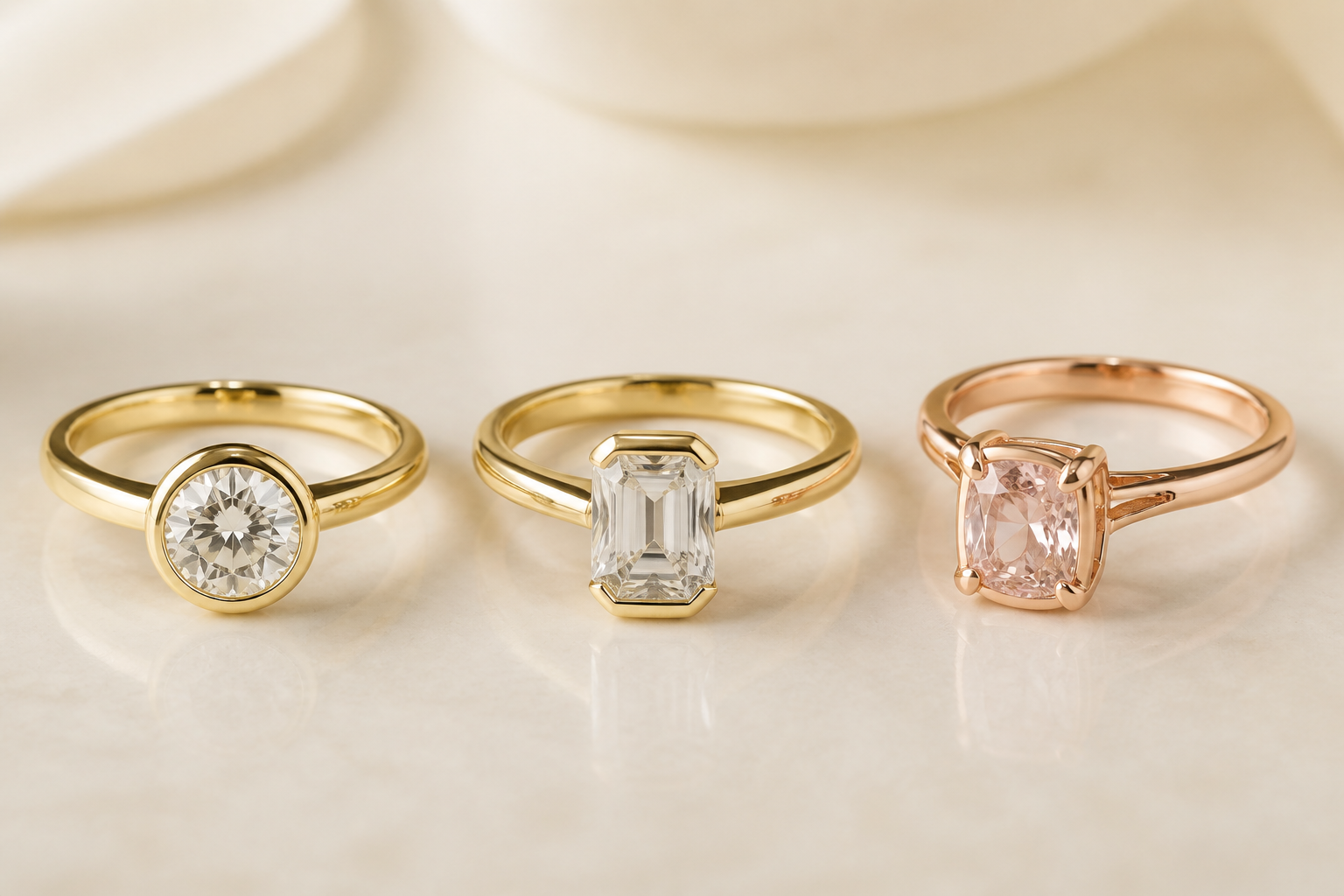
A full bezel surrounds all or nearly all of the diamond’s girdle with a rim of metal. It offers a smooth profile and substantial edge protection, which can suit active wear and shapes with exposed points. It can also make the outline feel more graphic and intentional.
A half-bezel—or partial bezel—holds opposing sections of the diamond while leaving other edges open. It balances visibility with protection, but the exact security depends on how much metal engages the stone and how the piece is engineered.
Fields of Small Diamonds
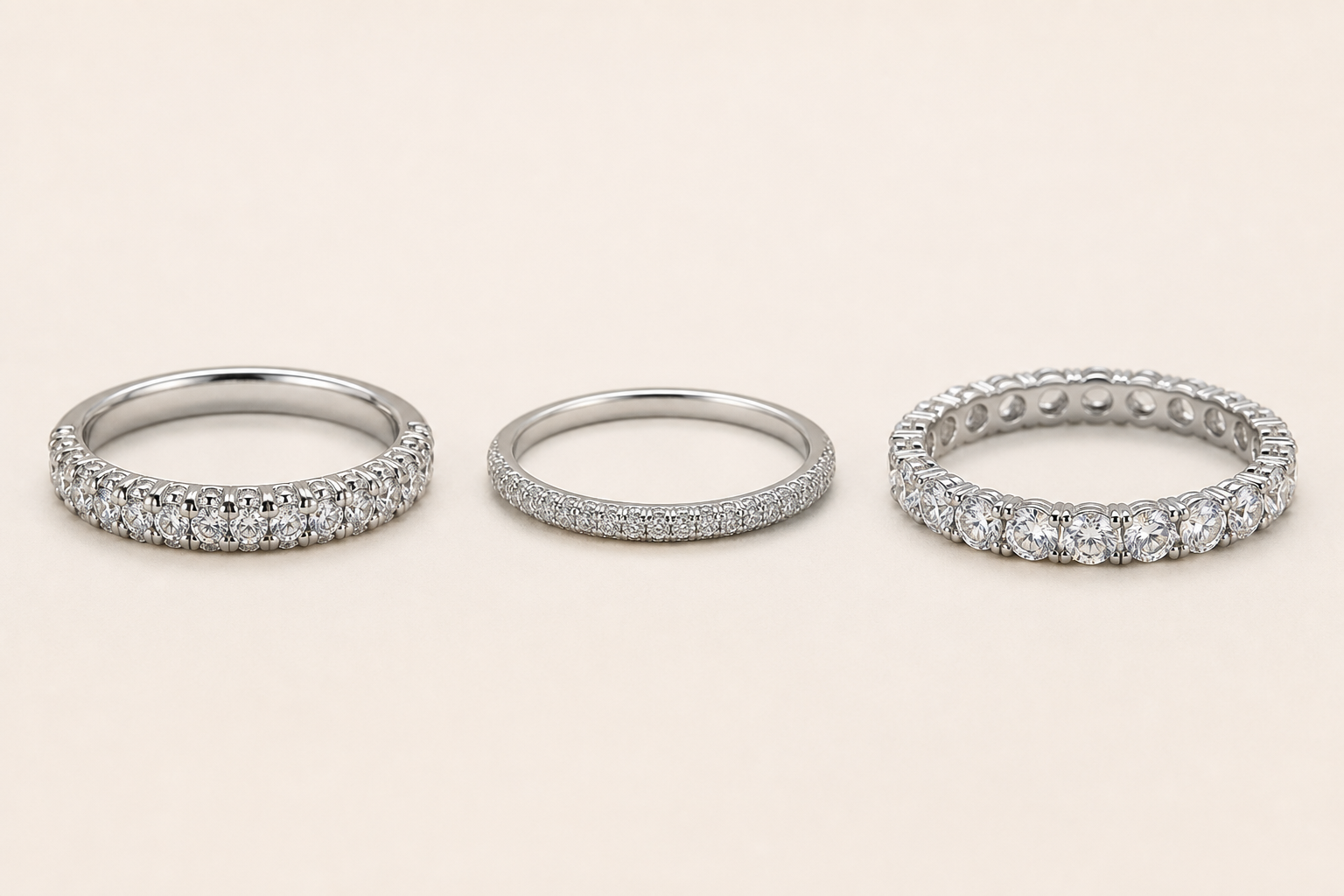
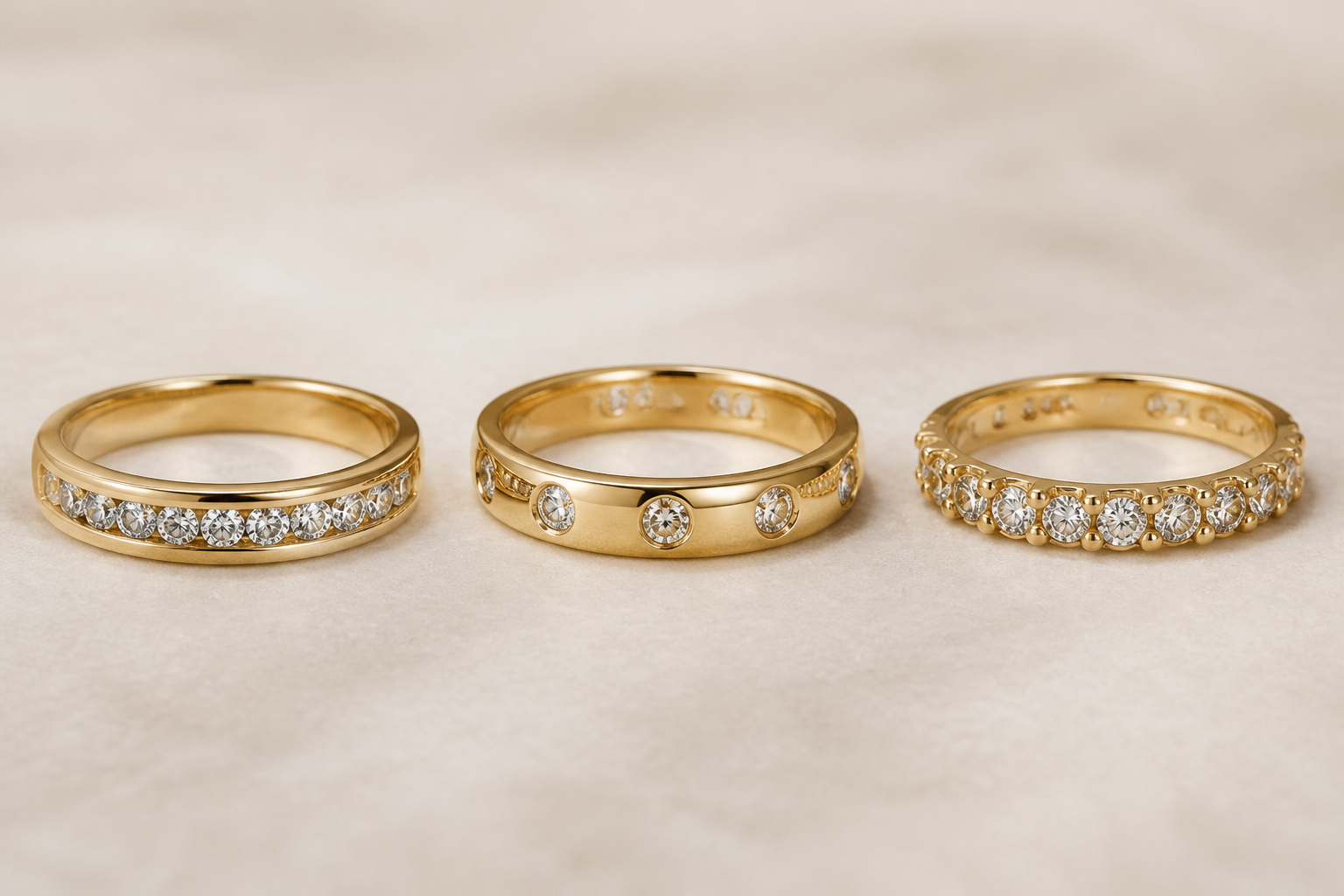
Pavé uses small beads or prongs of metal to secure closely spaced diamonds, creating a continuous surface of sparkle. Micro-pavé generally refers to very small diamonds set under magnification with correspondingly fine metalwork; usage of the term can vary, so dimensions and workmanship matter more than the label.
A shared-prong row uses a prong between neighboring diamonds so one support helps secure stones on both sides. It minimizes visible metal and is common in eternity bands and tennis-style jewelry, but damage to a shared support can affect more than one diamond.
Low-Profile Construction
Channel-set diamonds sit between two continuous walls of metal, usually without individual prongs. The style creates a smooth row and protects many diamond edges, but a bent channel can loosen multiple stones and repair or resizing may be more involved.
In a flush setting, a diamond is seated into the metal and secured with a burnished rim at or near the surface. It creates a sleek, low profile for rings, pendants, and bracelets, though the stone’s visible outline and light exposure are more limited.
Framing & Engineering
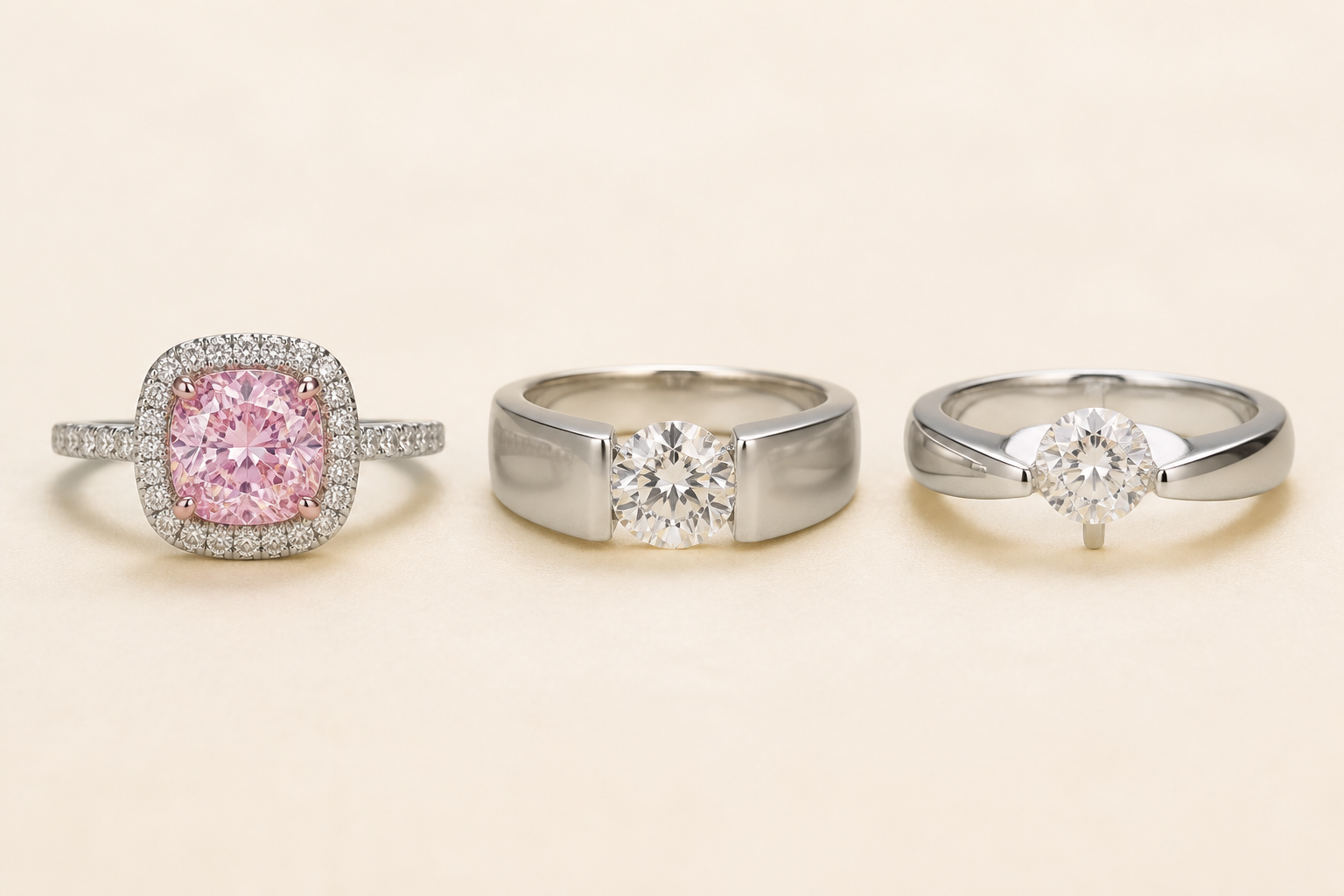
A halo surrounds a center diamond with smaller stones. It can increase visual presence, introduce color contrast, or repeat the center outline. Examine spacing, symmetry, shared supports, and whether the halo sits at a practical height for everyday wear.
A true tension setting uses precisely engineered opposing pressure and grooves at the girdle to hold the diamond. It leaves much of the stone exposed and requires a suitable diamond, specialized manufacturing, and an experienced jeweler. Tension-style designs may create a similar open look while using a concealed support for added practicality.
A Practical Decision
Consider how often the piece will be worn, whether it will catch on clothing, how easily it can be cleaned, and how exposed the diamond’s girdle, corners, and point will remain. A lower profile may suit everyday wear; a higher gallery can make room for a wedding band or create a more elevated look.
Ask how the setting will be inspected, repaired, resized, or refinished. Construction quality is visible in even spacing, smooth finishing, secure contact, balanced alignment, and enough metal to withstand expected wear.

From Education to Exploration
Continue From Learning to Exploring
Terminology and facts were reviewed against current guidance from independent gemological and U.S. consumer-protection authorities. Report formats and services can change.