Clarity
Inclusions are evaluated by their size, number, position, nature, and visibility.
Beyond the Color Grade
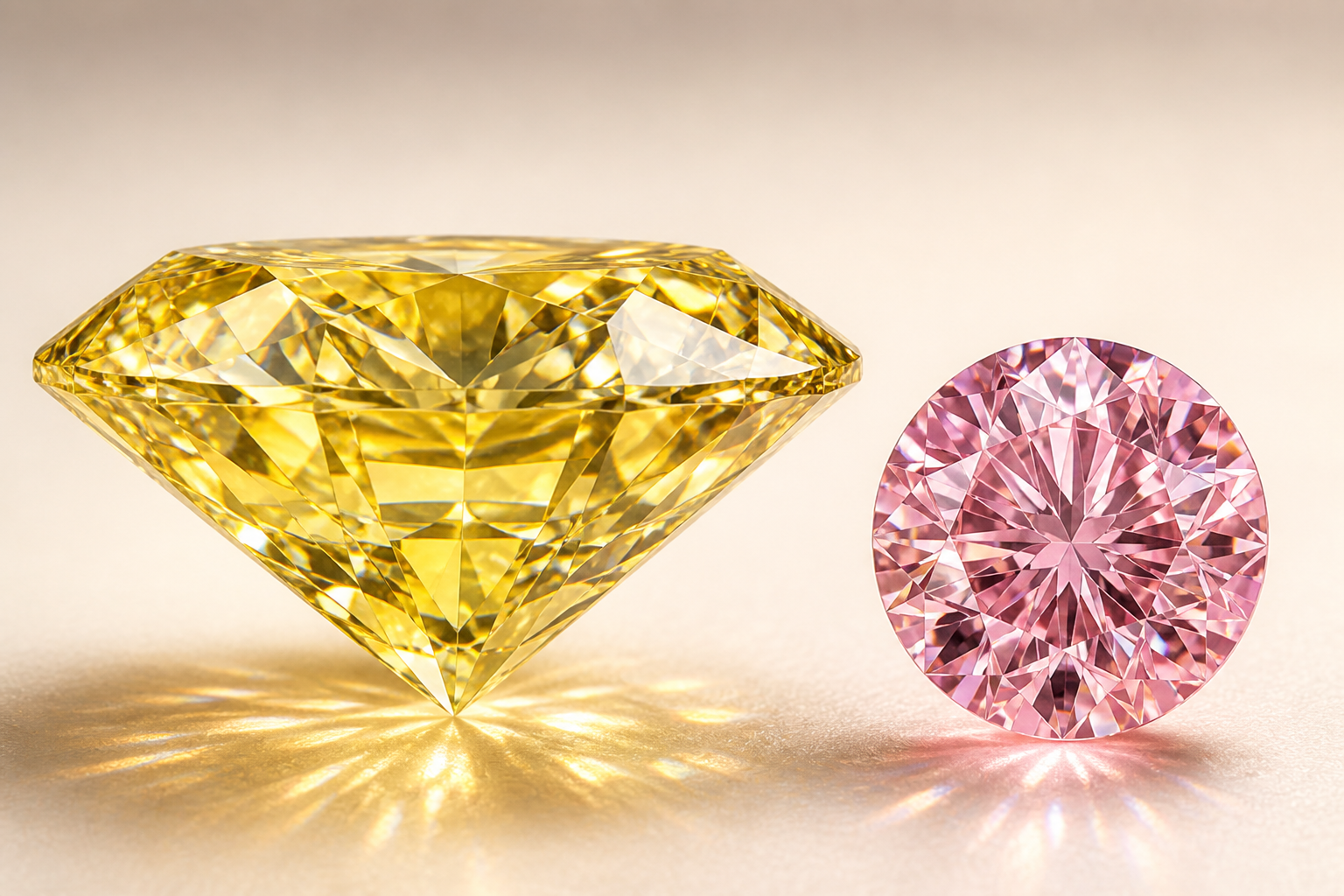
AI-generated educational visual; artistic representation.
The Essential Idea
Color may be the first thing you notice, but it is not the only quality consideration. Clarity, durability, proportions, polish, symmetry, fluorescence, and the jewelry setting all affect the finished piece.
A grading report is an expert description of a diamond at the time of examination. It is not an appraisal, a retail price, or a guarantee of beauty.
Inclusions are evaluated by their size, number, position, nature, and visibility.
Fancy-color cutting often prioritizes attractive face-up color.
Origin, color description, treatments, and measurements should be read together.
Inside the Diamond
The familiar clarity scale runs from Flawless and Internally Flawless through VVS, VS, SI, and Included grades. Graders consider the size, number, position, nature, and relief of internal and surface characteristics under magnification.
In a color diamond, strong face-up color can make some inclusions less noticeable. That does not make clarity irrelevant. Inclusions that affect transparency, durability, or everyday appearance deserve particular attention, especially near a girdle, point, or corner.
Cut & Make
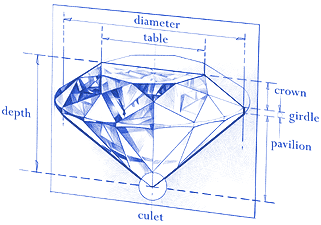
Many color diamonds are cut differently from D-to-Z diamonds. The cutter may use shape, facet arrangement, depth, and proportions to concentrate or distribute color across the face of the stone.
That does not mean craftsmanship is secondary. Look for an appealing outline, balanced proportions, secure corners and points, pleasing symmetry, good polish, and color that performs across the visible face.
The setting can also influence perceived color. A pale pink diamond placed in a rose-gold basket or bezel may pick up warm reflections that make the face-up color appear richer and visually soften lighter areas; yellow gold can play a similar role for yellow diamonds. White metal creates a cooler, more neutral frame. This is a design effect—not a change to the diamond or its laboratory color grade—so the product description should identify the metal and diamond accurately.
Under Ultraviolet Light
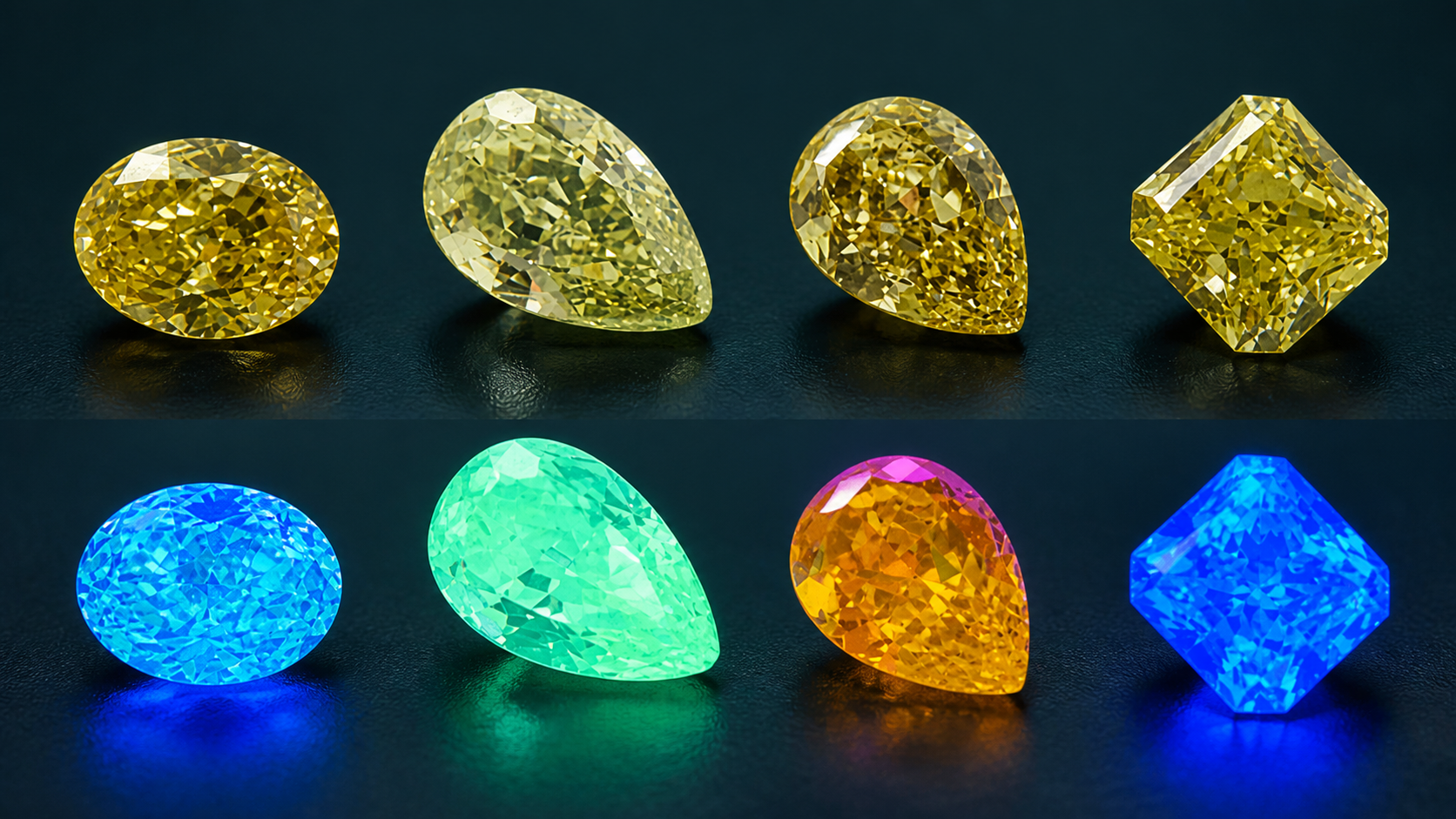
Fluorescence is visible light emitted by some diamonds while they are exposed to ultraviolet energy. GIA reports that roughly 25% to 35% of gem diamonds submitted to its laboratories show some fluorescence, and blue is by far the most common fluorescent color.
For the overwhelming majority of diamonds, fluorescence has no widely noticeable effect on appearance. Rarely, extremely strong fluorescence is associated with a hazy or oily look. Fluorescence does not weaken the diamond’s structure.
Read the Document
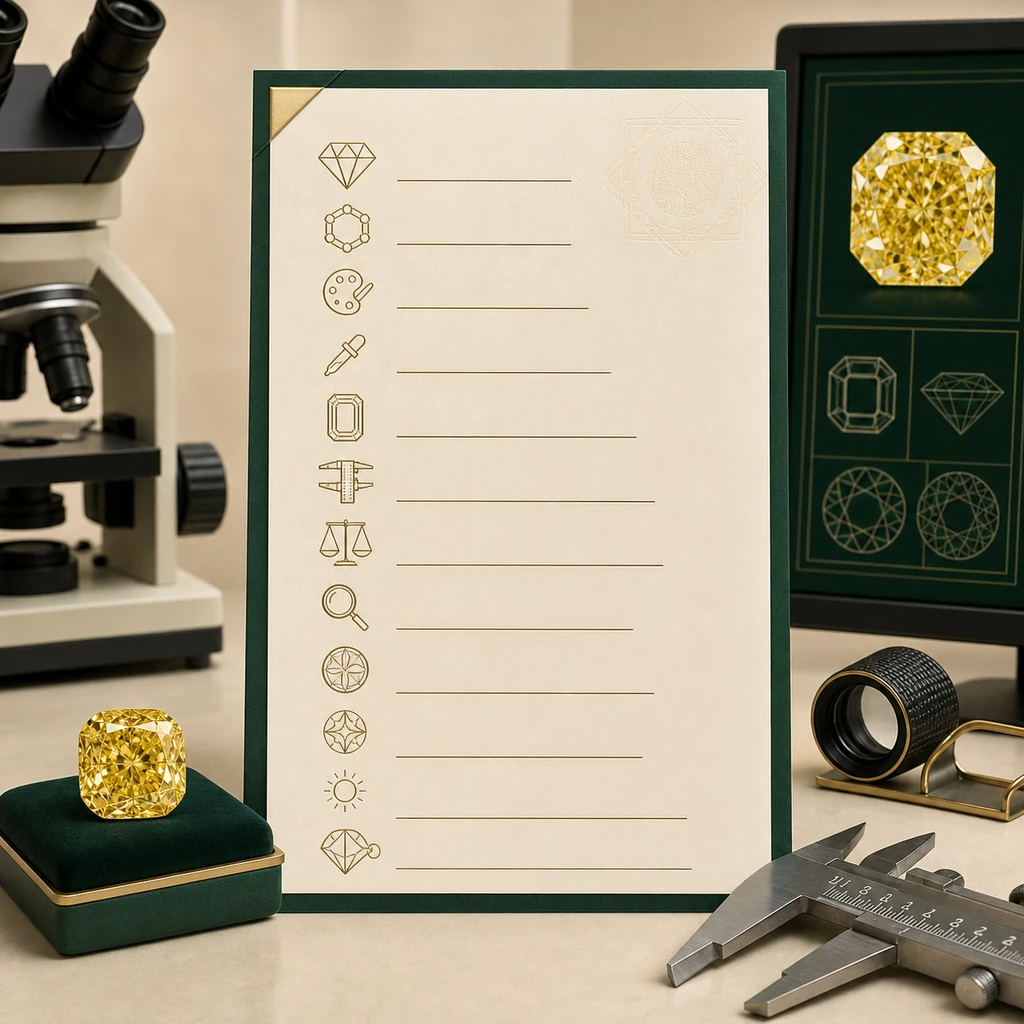
Report formats vary. A colored diamond report may include natural or laboratory-grown origin, the origin of color, detectable treatment, shape and cutting style, measurements, carat weight, color description, clarity, polish, symmetry, fluorescence, and a laser inscription.
Since October 2025, GIA has used Premium and Standard assessments for qualifying D-to-Z laboratory-grown diamonds instead of its traditional natural-diamond color and clarity nomenclature. Laboratory-grown colored diamond services and reports can follow a different format. Always identify the laboratory, service type, and exact language used on the report.
Microscopic Identification
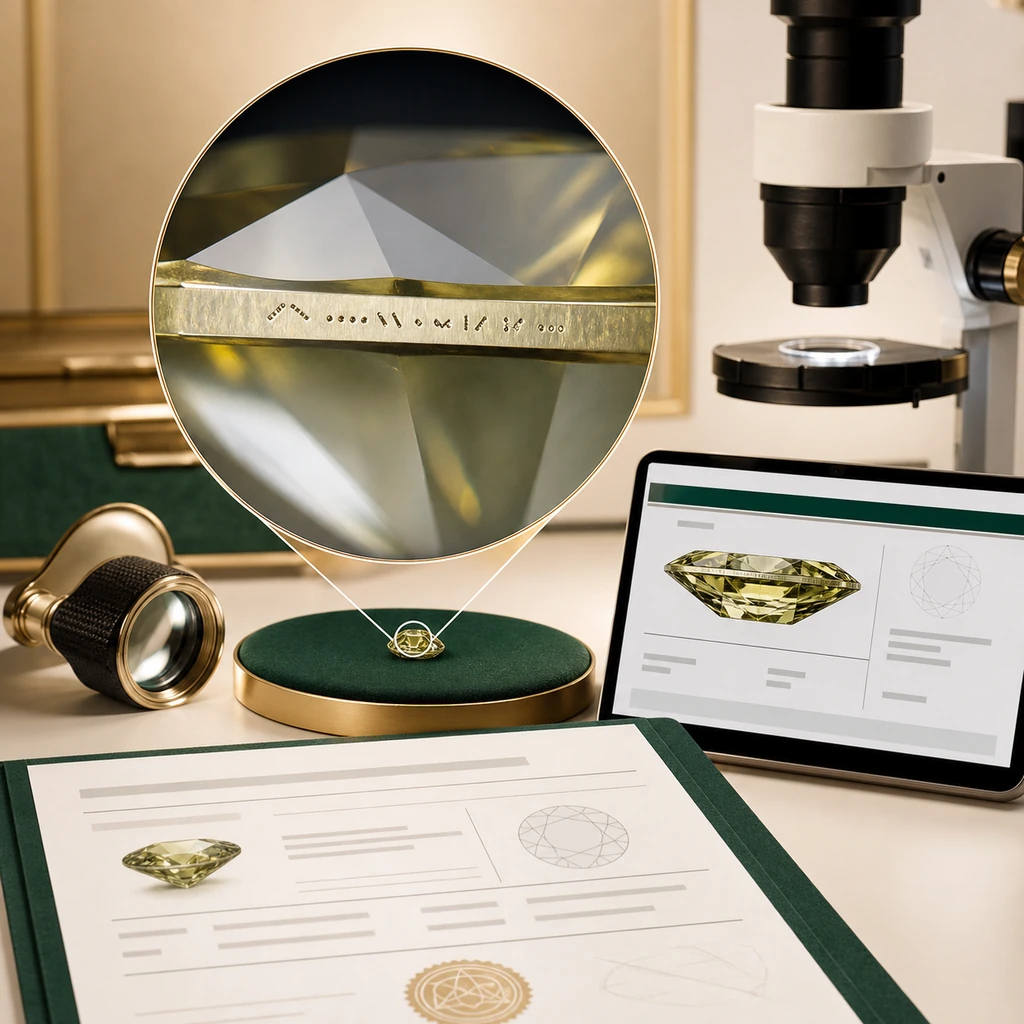
A laser inscription is a microscopic marking placed on the diamond’s girdle. Depending on the laboratory and service, it may show a report number, a laboratory-grown disclosure, or both. It is normally discreet enough to be invisible without magnification and does not determine the diamond’s grade.
When an inscription is present, compare it with the exact wording and number on the laboratory document, then verify that report through the issuing laboratory’s online service. The inscription is an identification aid—not a substitute for the report or an independent examination.
Color History
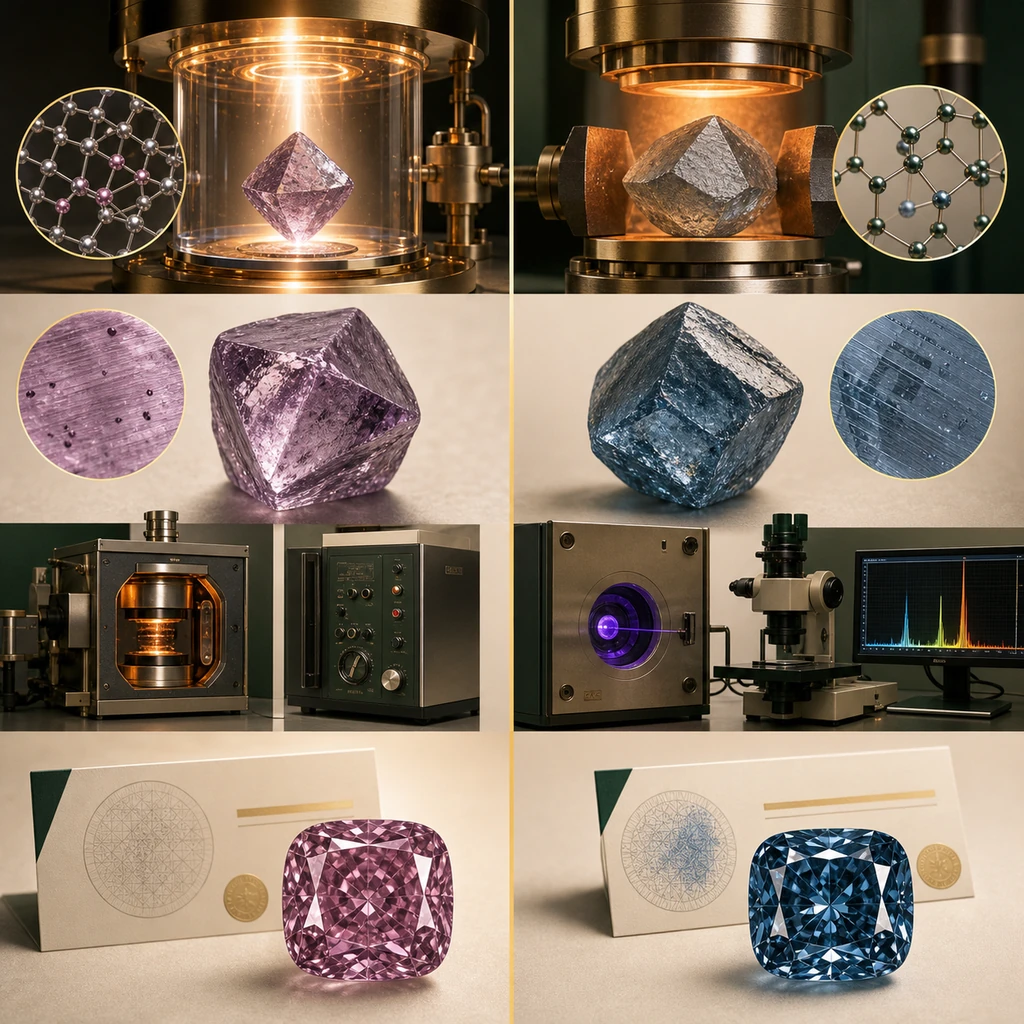
As-grown color develops during the diamond-growth process as the crystal forms. Growth method, trace elements, and atomic-scale defects can influence the color that emerges from the growth chamber.
Post-growth treatment occurs after crystal growth. Carefully controlled heat, pressure, irradiation, annealing, or combinations of processes may change or refine color. A treated laboratory-grown diamond is still a diamond; the important issue is clear disclosure of its laboratory-grown origin and any detectable post-growth treatment.
Laboratories use specialized instruments to look for growth structure and treatment evidence. Wording varies: a report may state that evidence of post-growth treatment was detected, was not detected, or could not be conclusively determined. Read that conclusion together with the growth method and color description.
From Education to Exploration
Continue From Learning to Exploring
Terminology and facts were reviewed against current guidance from independent gemological and U.S. consumer-protection authorities. Report formats and services can change.