They are diamonds
Their crystal structure and fundamental properties are those of diamond.
Begin Here
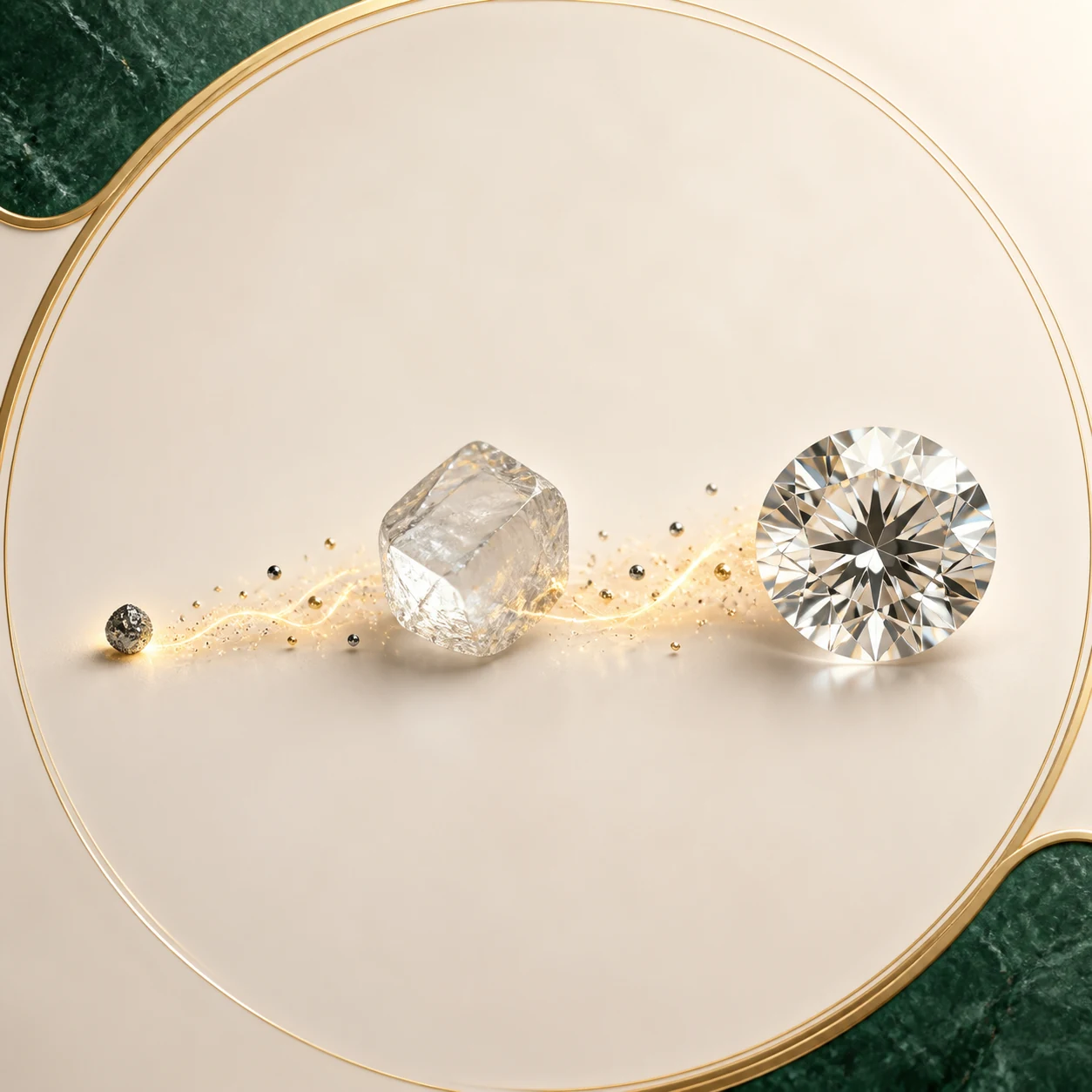
AI-generated educational visual; artistic representation.
The Essential Idea
Lab-grown diamonds are diamonds created in a controlled technological environment rather than recovered from the earth. They have essentially the same optical, physical, and chemical properties as mined diamonds.
They are not diamond imitations such as cubic zirconia or moissanite. Clear origin language, quality information, and disclosure of known post-growth treatment help customers understand exactly what they are choosing.
Their crystal structure and fundamental properties are those of diamond.
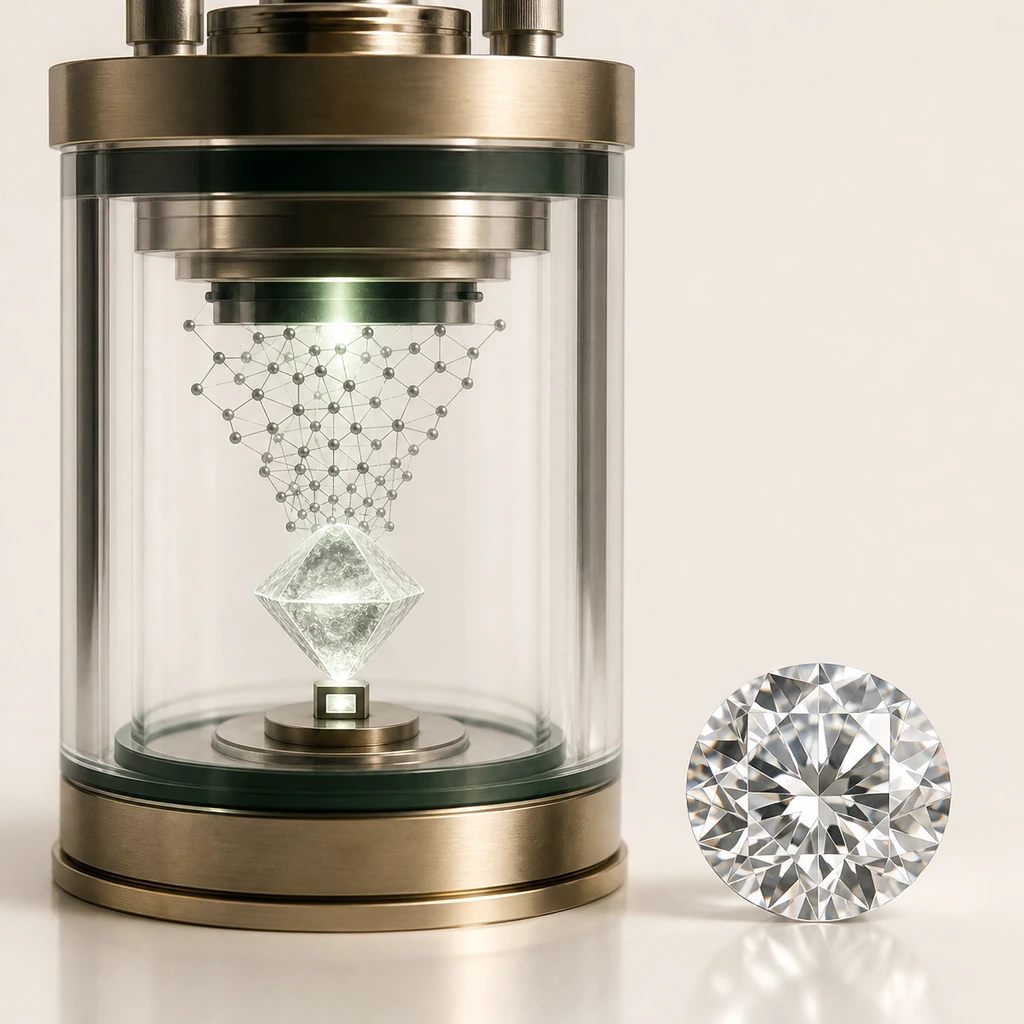
Gem-quality diamonds are commonly grown by HPHT or CVD.
Laboratory-grown origin and known treatments should be stated clearly.
The Essential Definition
A lab-grown diamond is carbon crystallized in the diamond structure through a controlled growth process. Once cut and polished, it can display the same brilliance, fire, hardness, and range of color seen in mined diamonds.
Because origin is material information, we consistently use the term lab-grown diamond. A simulant may resemble a diamond, but it does not share diamond's full set of chemical, physical, and optical properties.
Growth Technology
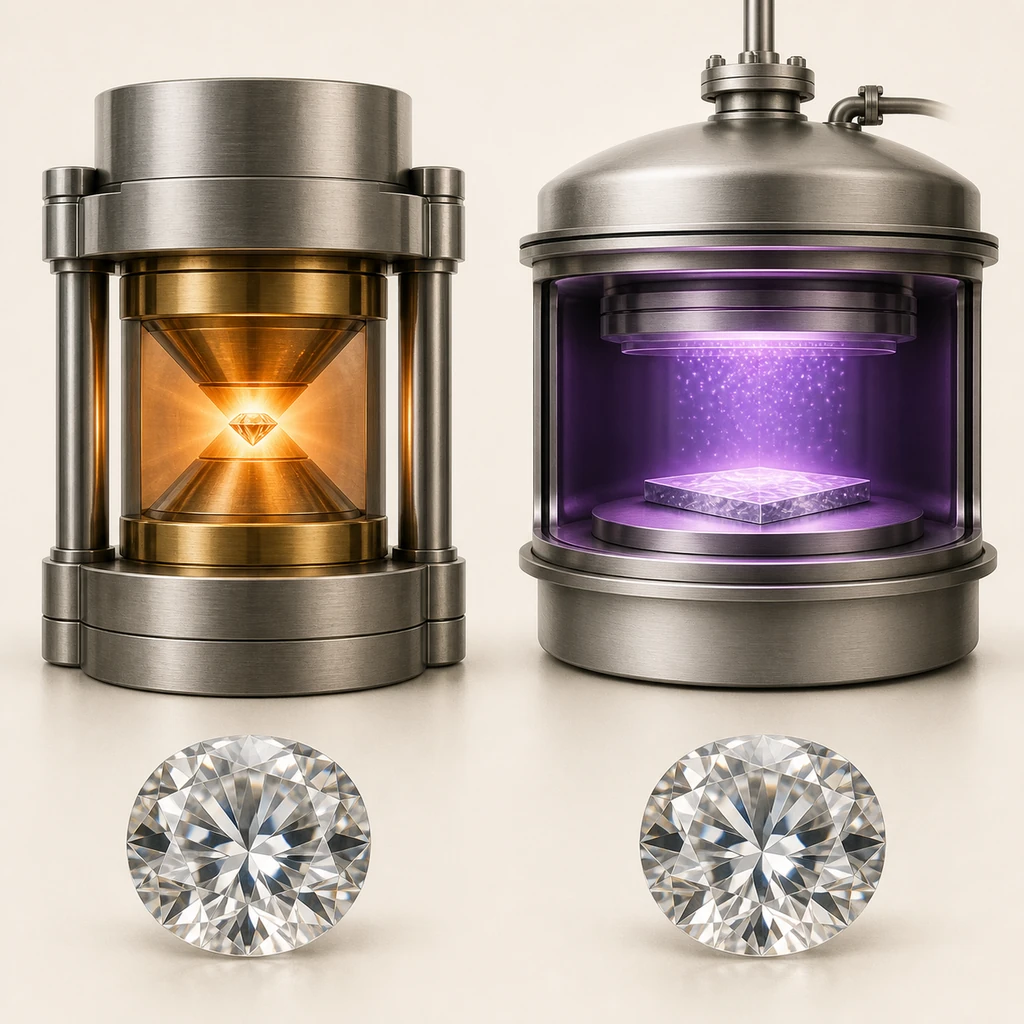
High Pressure High Temperature growth uses intense pressure and heat around a diamond seed. Chemical Vapor Deposition uses a carbon-containing gas in a low-pressure chamber, allowing carbon to build on a diamond seed in thin layers.
Both methods produce diamond crystal. Growth method does not by itself determine beauty; cutting, color, clarity, craftsmanship, and the finished design remain important.
Choosing With Confidence
Look beyond a single grade. Consider the diamond's face-up beauty, cut, color, clarity, carat weight, measurements, setting, metal, construction, and how the finished piece fits your life.
When a grading or quality document is provided, verify the issuing laboratory and report number. Also confirm lab-grown origin and whether any known post-growth treatment is disclosed.

From Education to Exploration
Continue From Learning to Exploring
Terminology and facts were reviewed against current guidance from independent gemological and U.S. consumer-protection authorities. Report formats and services can change.