Naturally white
Platinum does not depend on rhodium plating for its fundamental white color.
Platinum Education
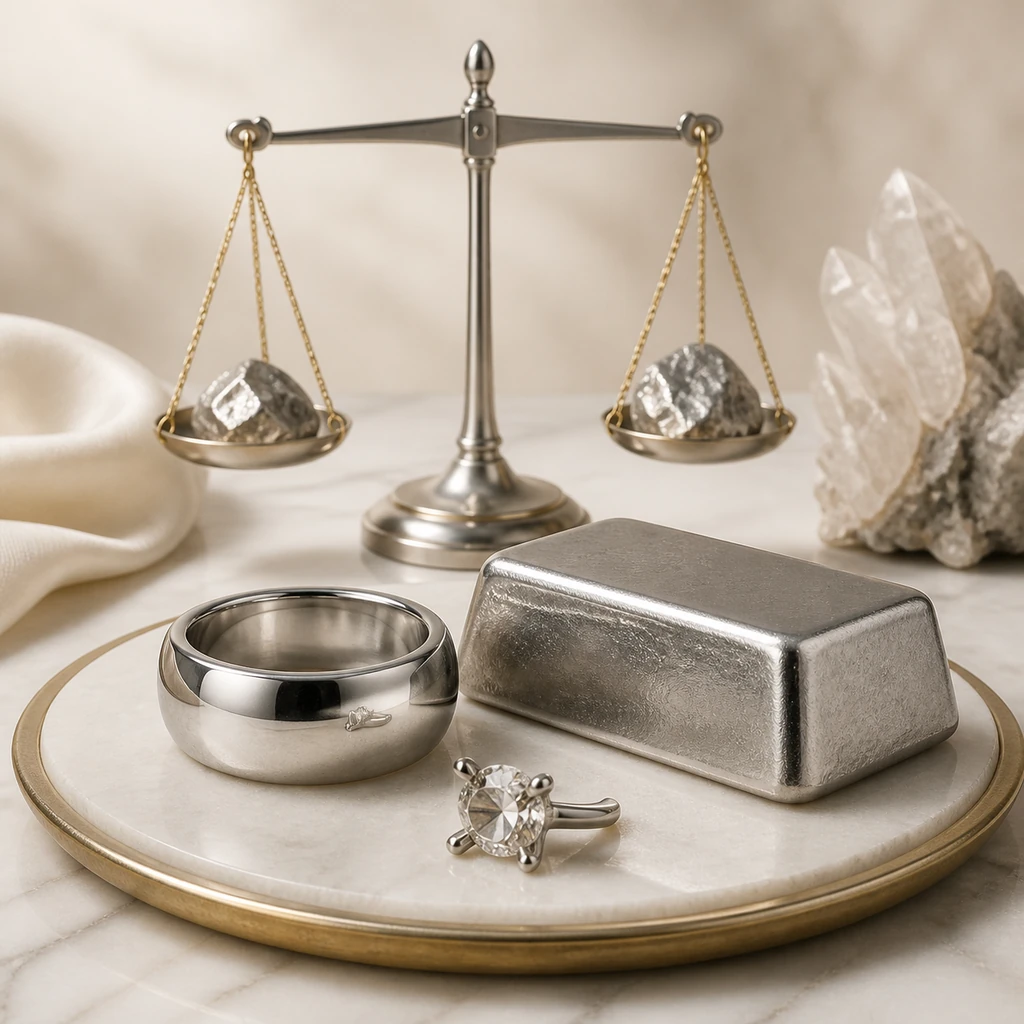
AI-generated educational visual; artistic representation.
The Essential Idea
Platinum is a naturally white precious metal prized for its density, durability, and understated color. Jewelry described simply as platinum in the United States is commonly at least 950 parts per thousand platinum, while other compositions require more specific marking.
Platinum does scratch, but its wear behavior differs from many gold alloys: metal is often displaced rather than lost quickly, creating the soft surface patina many owners appreciate.
Platinum does not depend on rhodium plating for its fundamental white color.
A similarly sized platinum piece usually feels heavier than gold or silver.
950Pt, 900Pt, and other legal compositions can have different properties.
Purity & Marking
In U.S. guidance, a product consisting of at least 950 parts per thousand pure platinum may be described as platinum without qualification. Marks such as 950Pt, 900Pt, or 850Pt state the platinum content directly.
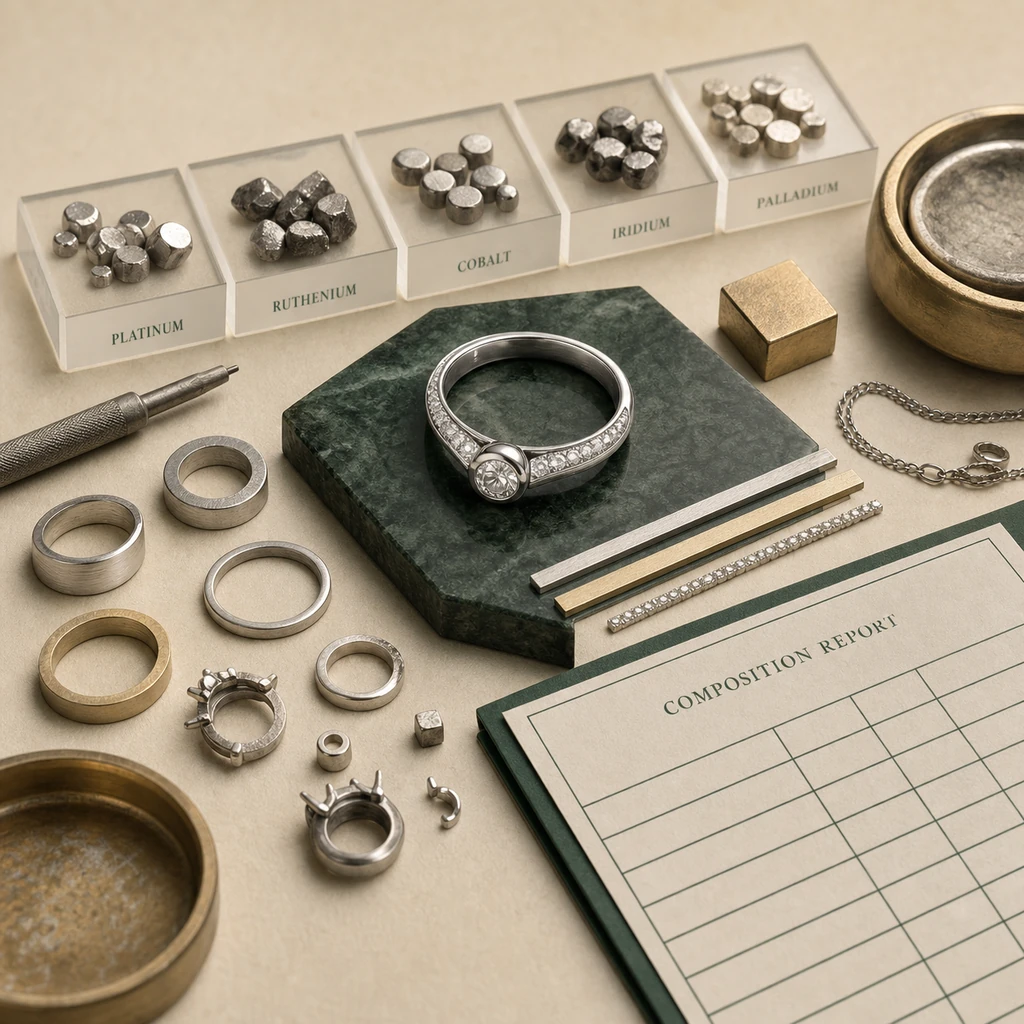
Platinum can be alloyed with ruthenium, cobalt, iridium, palladium, or other metals. The particular composition affects casting, hardness, polish, repair, and wear, so the complete mark and product specification are more useful than the word platinum alone.
Weight & Wear
Platinum's density gives it a noticeable heft. Its toughness and metal-retention behavior can make it well suited to prongs and frequently worn jewelry, but no precious metal is immune to bending, scratching, or impact.
Fine scratches gradually produce a satiny patina. Some owners enjoy it; others periodically polish the surface. Design thickness, alloy, workmanship, and maintenance remain important.
Platinum vs. White Gold
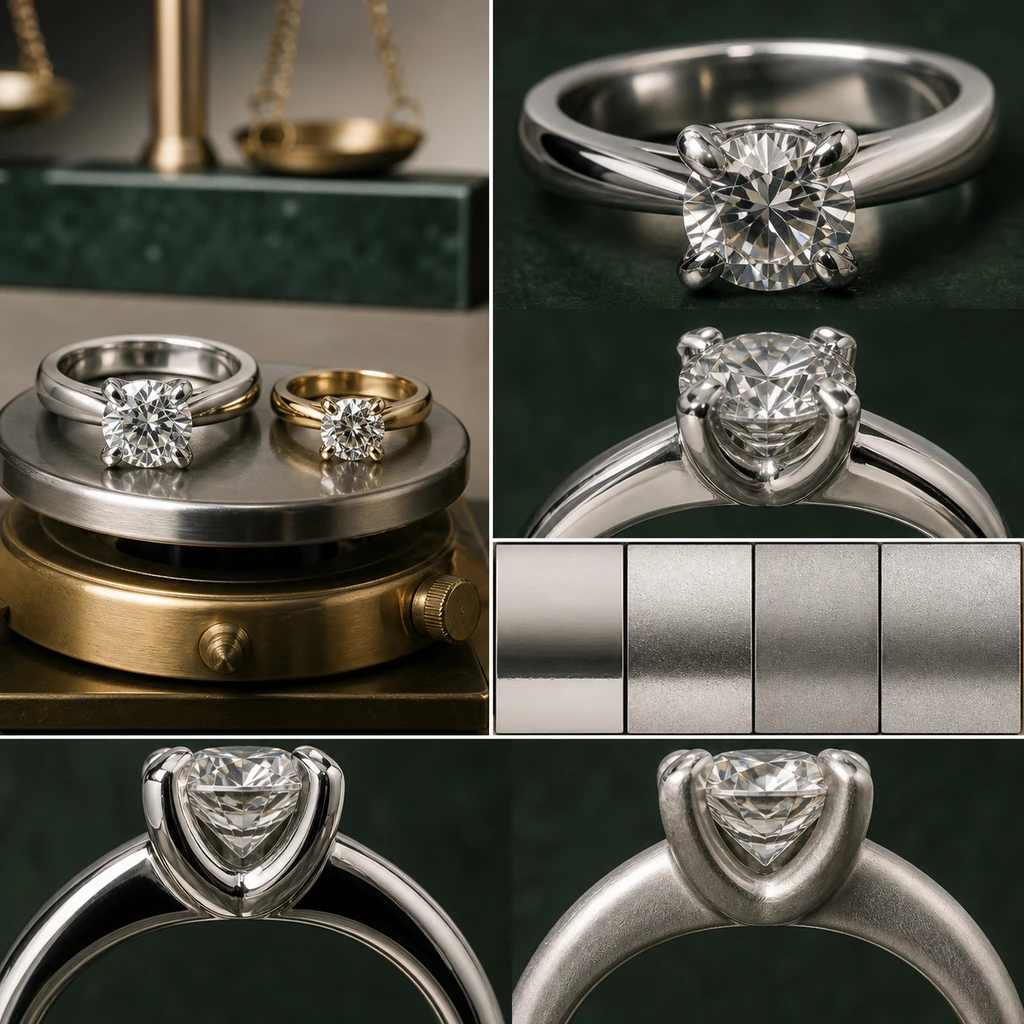
Platinum is naturally white. White gold begins as yellow gold and is alloyed toward white, then is commonly rhodium plated for a brighter finish. Platinum is generally denser; white gold is generally lighter and often less costly for a comparable design.
White gold may require rhodium replating, while platinum does not require that coating to remain white. Both can scratch and both require inspection when used in stone-set jewelry.
Naturally white, dense, and not dependent on rhodium for its basic color.
A gold alloy commonly finished with a bright white rhodium surface.
Sensitivity
High-purity platinum alloys are frequently chosen by people concerned about nickel, but no jewelry metal should be described as universally allergy-proof. A platinum alloy can contain other metals, and solder, sizing material, or mixed-metal components may differ from the main body.
If you have a known sensitivity, request the full composition and discuss it with both the jeweler and an appropriate healthcare professional.
Platinum Care
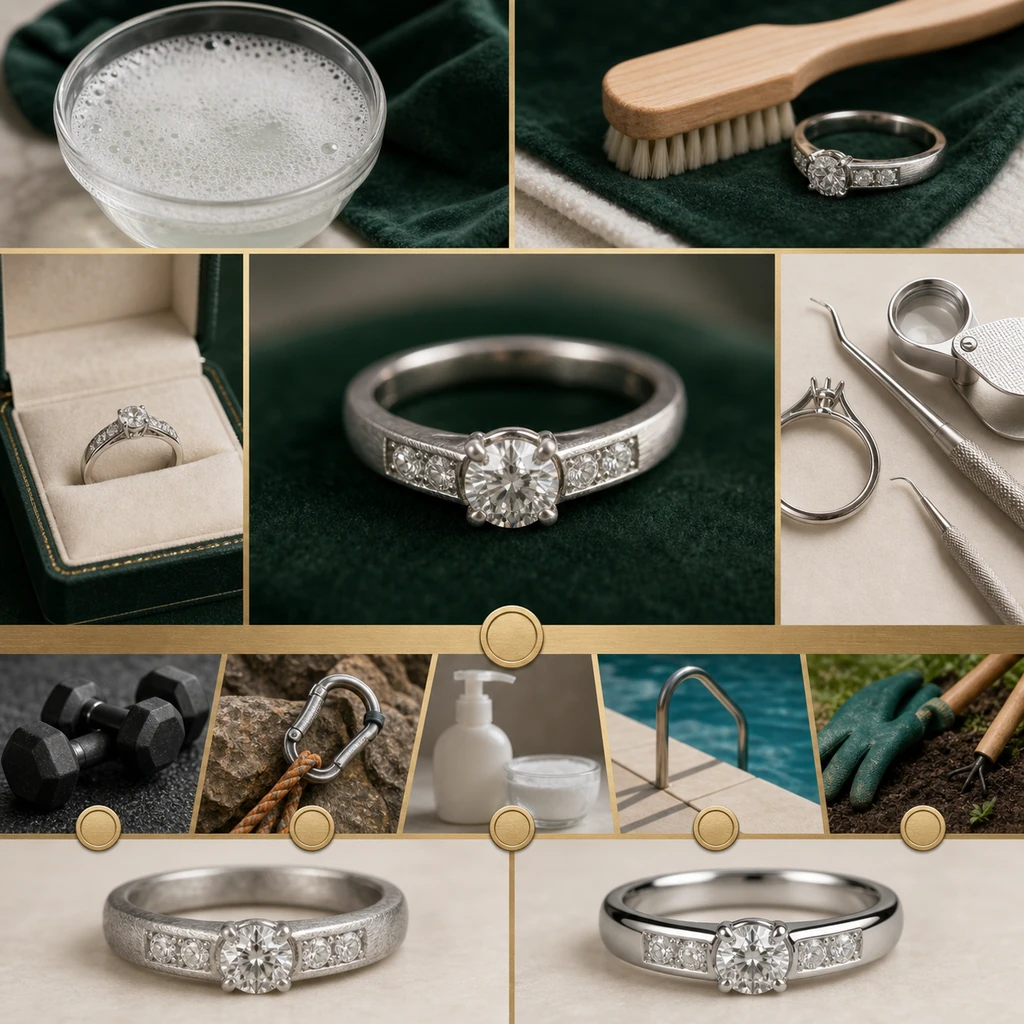
Clean appropriate platinum-and-diamond jewelry with mild soap, lukewarm water, and a soft brush. Avoid abrasive products, and follow gemstone-specific care for any non-diamond material in the piece.
Store platinum separately from softer metals, remove it for high-impact activities, and have prongs, channels, and clasps inspected periodically. Ask the jeweler before polishing if you wish to preserve the developing patina.
From Education to Exploration
Continue From Learning to Exploring
Terminology and facts were reviewed against current guidance from independent gemological and U.S. consumer-protection authorities. Report formats and services can change.